Cleaning out a grandparent’s home can uncover objects that once seemed completely ordinary but now feel almost impossible to identify.
That is especially true when a drawer or sewing box contains a collection of tiny metal caps covered with small indentations. At first glance, they may resemble miniature drinking cups, game pieces, bottle covers, or decorative ornaments.
They are most likely sewing thimbles—small finger protectors that were once essential tools in homes where clothing, bedding, curtains, and other textiles were regularly sewn or repaired by hand.
A thimble is worn over the fingertip used to push a needle through fabric. Its hard surface protects the skin from the blunt end of the needle, particularly when working with thick or resistant materials. Museums continue to preserve thimbles as important examples of domestic and textile history.
Why Thimbles Have So Many Tiny Dents
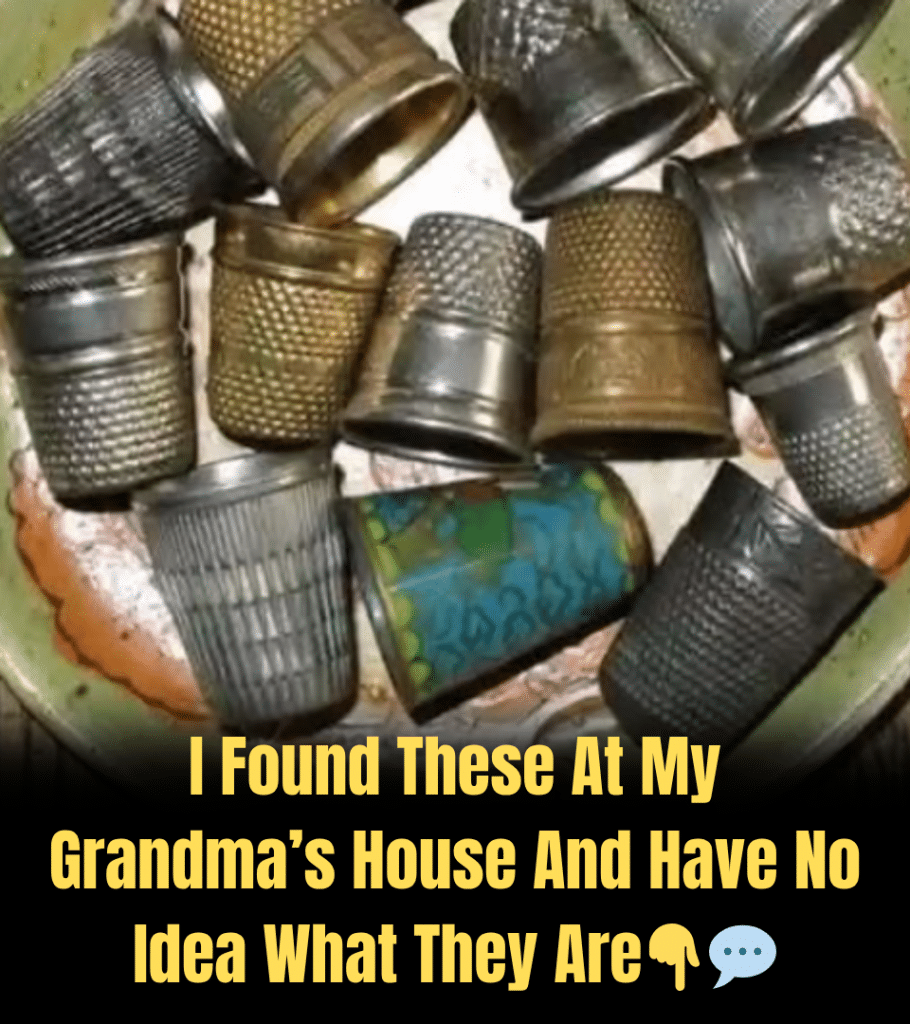
The small pits covering the outside are not merely decorative.
They help catch the end of the needle so it does not slide across the metal when pressure is applied. This gives the sewer better control and reduces the risk of the needle slipping into the finger.
A thimble was commonly worn on the middle finger, although the exact finger depended on personal technique. The protected finger pushed the needle through the material, while the other hand guided the fabric.
This feature became especially important when sewing heavier materials such as wool, denim, canvas, upholstery fabric, or leather. Without a thimble, repeatedly forcing a needle through thick cloth could quickly leave the fingertip sore or injured.
The regularity of the indentations can sometimes provide clues about how a thimble was made. For example, the British Museum describes a 17th-century silver thimble whose evenly spaced indentations suggest machine-assisted or lathe-based production rather than individually hand-punched marks.
Why Grandma May Have Owned More Than One
A collection of thimbles does not necessarily mean every piece was used for the same sewing task.
Thimbles came in different sizes to fit different fingers. Someone who sewed regularly might have owned several practical examples, replacing them as they wore out or keeping separate ones in different sewing baskets.
Some may also have been inherited from earlier generations.
By the 19th and early 20th centuries, thimbles were not only household tools but also popular gifts, souvenirs, and decorative keepsakes. They could mark a holiday, exhibition, royal event, tourist destination, anniversary, or family occasion.
A grandmother’s collection might therefore contain a mixture of working tools and sentimental objects. One may have been used daily for mending clothes, while another may have been received as a gift and rarely touched.
The wear on each item can help reveal its history.
These Small Objects Have a Very Long Past
Finger protectors have existed for centuries, and archaeological examples show that thimble-like tools have been used for more than 2,000 years. In England, metal thimbles were in use by the medieval period and became increasingly common as hand sewing remained central to domestic life.
Large-scale production expanded toward the end of the 17th century. One important manufacturer, John Lofting, established a thimble operation in England and later used water-powered production methods to manufacture them in large quantities.
Industrial production made practical metal thimbles more widely affordable.
Before ready-made clothing became common, families depended heavily on hand sewing. Shirts, dresses, undergarments, blankets, work clothes, and household linens had to be made, altered, and repaired rather than simply replaced.
A thimble may have been one of the smallest tools in the sewing box, but it supported hours of necessary work.
What Were Thimbles Made From?
Many ordinary sewing thimbles were made from brass, steel, or other durable metals.
More decorative examples were produced from silver, porcelain, enamel, wood, glass, bone, and other materials. Some silver thimbles included stronger internal components because silver alone could be too soft for repeated pressure from a needle.
The material can provide clues about whether a piece was intended for practical sewing or display.
A plain steel or brass thimble with significant wear was probably a working tool. A highly decorated porcelain example without functional indentations may have been made primarily as a souvenir.
Silver, gold, enamel, and finely decorated examples may attract collectors, but material alone does not determine value. Age, maker, condition, rarity, and documented history all matter.
Why People Collect Them
Thimble collecting remains an established hobby, and a collector is sometimes called a digitabulist.
Collectors may focus on a particular material, manufacturer, country, historical period, or decorative subject. Some search for advertising thimbles, while others collect examples commemorating exhibitions, royal events, cities, or tourist attractions.
Their small size makes them easy to display and store. More importantly, each piece can reveal something about fashion, industry, travel, domestic labor, or family history.
A collection found in a grandmother’s home may be especially appealing because it has a known connection to one person. Even if the individual thimbles are not financially valuable, their shared family history may make them irreplaceable.
Could Any of Them Be Valuable?
Some antique thimbles are collectible, but most common examples do not command extraordinary prices.
Value tends to increase when a piece has identifiable hallmarks, a respected maker, precious-metal content, unusual construction, detailed enamel work, or a documented connection to a historic event.
Examine the base, outer rim, and inside surface under strong light. Useful markings may include:
- “925” or “Sterling”
- A maker’s initials or trademark
- A city or assay-office symbol
- A country of origin
- A patent number
- A commemorative inscription
The Winterthur Museum maintains a large reference collection of American silversmith marks, illustrating how maker and metal stamps can help identify historic silver objects.
Marks should still be interpreted carefully. A number that resembles a silver mark could be a model or size number, while decorative symbols may be mistaken for official hallmarks.
A reputable antiques specialist or experienced sewing-tool collector can provide a more reliable assessment.
Wear Can Tell a Story
A dented or worn thimble is not necessarily worthless.
Heavy wear may show that someone used it for years. The top may be polished smooth from repeated contact with needles, while a tiny hole can develop after prolonged use.
From a collector’s perspective, serious damage may lower market value. From a family perspective, that same damage can make the object more meaningful.
A worn-through thimble may have helped repair children’s school clothes, patch work trousers, sew quilts, or complete hundreds of household projects.
Its imperfections are evidence of labor.
Before discarding a damaged example, consider whether it may have belonged to a particular relative. A short written label identifying the owner can preserve more value for future generations than aggressive restoration ever could.
How to Clean Old Thimbles Safely
Avoid soaking the entire collection in harsh metal cleaner.
Different thimbles may be made from different materials, and a product that improves one could permanently damage another. Chemical polish can remove plating, darken porous materials, loosen enamel, or erase the patina that helps establish age.
Begin with a soft, dry cloth and a gentle brush to remove loose dust.
Do not scrape inside the indentations with a knife or metal tool. Avoid washing pieces made from unknown materials until they have been identified.
Silver items may benefit from careful specialist cleaning, but excessive polishing can soften engravings and wear away fine details.
Photograph each thimble before doing anything to it. Capture the top, sides, base, interior, and all visible marks. These images will help with identification and preserve a record of the collection’s original condition.
More Than Miniature Sewing Tools
These tiny objects represent a period when repairing possessions was part of ordinary life.
Clothing was not always inexpensive or easily replaced. Sewing skills had direct financial value because they helped families extend the life of garments and household textiles.
A thimble therefore reflects more than fashion history.
It represents patience, resourcefulness, craftsmanship, and care.
The collection found in Grandma’s house may have protected her fingers while she hemmed dresses, replaced buttons, repaired torn sleeves, or worked on quilts passed down through the family.
What first appeared to be a box of mysterious little metal cups may actually be a record of countless quiet hours spent making and mending things for the people she loved.


