Looking down after a long bath, swim, or session of washing dishes and seeing deeply wrinkled fingertips can be surprising. The skin may look pale, ridged, and similar to the surface of a dried prune.
In most cases, this familiar “pruney fingers” effect is temporary and harmless. It normally develops after the hands or feet have remained in water and gradually disappears after the skin dries.
However, wrinkles that appear unusually quickly, remain for an extended period, affect only one hand, or occur with pain, numbness, swelling, or color changes deserve closer attention.
Wrinkled hands alone cannot diagnose a medical condition. Understanding the surrounding symptoms is essential before deciding whether the change is ordinary or worth discussing with a healthcare professional.
Why Do Fingers Become Wrinkled in Water?
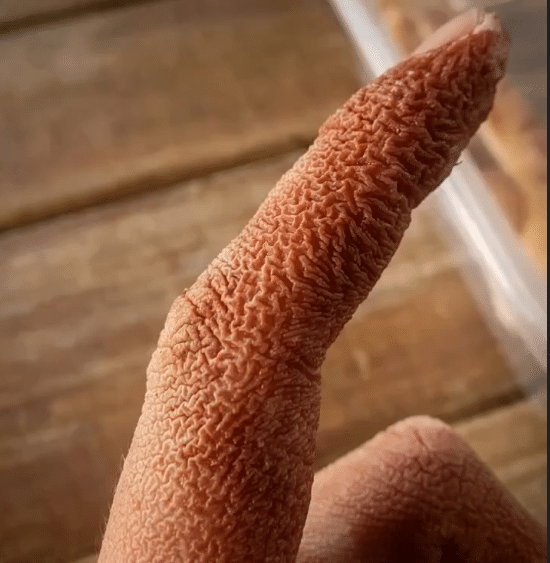
People once believed fingertips wrinkled simply because the outer skin absorbed water and expanded.
Research has shown that the process is more complex. Water-induced wrinkling is an active response involving the autonomic nervous system—the part of the nervous system that manages automatic functions throughout the body. Nerve signals cause blood vessels beneath the skin of the fingers to narrow, reducing the volume of tissue below the surface and creating visible folds.
This explains why the effect is most noticeable on the fingertips, palms, toes, and soles rather than across the entire body.
Studies have investigated whether these ridges help people handle wet objects more efficiently. Some experiments found that wrinkled fingertips reduced the gripping force needed to hold wet objects, although scientists continue to debate whether improved grip is the primary biological purpose of the response.
For most people, this reaction is simply part of normal nervous-system function.
When Wrinkling Is Probably Normal
Wrinkled fingers are generally not alarming when they:
- Develop after bathing, swimming, cleaning, or washing dishes
- Affect both hands in a similar way
- Cause no pain, itching, weakness, or numbness
- Gradually return to their usual appearance after drying
- Do not involve sores, swelling, or unusual skin colors
The degree of wrinkling varies between individuals. Water temperature, exposure time, skin condition, and normal differences in circulation may influence how quickly the change appears.
Frequent exposure to water, soaps, detergents, cleaning chemicals, and wet wipes can also remove protective oils from the skin. This may leave the hands dry, irritated, rough, or cracked even after the temporary water-related wrinkles disappear.
Warning Sign No. 1: The Skin Stays Wrinkled Without Water Exposure
Hands that remain puckered or unusually lined while completely dry may not be experiencing the normal immersion response.
Sometimes the appearance is caused by simple dryness. Cold weather, indoor heating, frequent handwashing, harsh soap, and household cleaning products can damage the skin barrier and make fine lines appear deeper.
Applying a fragrance-free moisturizer after washing and limiting exposure to irritating products may help. Protective gloves can also be useful when handling detergents or spending extended periods in water.
Persistent, recurring, or severe dryness—especially when accompanied by cracking, redness, burning, itching, or blisters—may indicate contact dermatitis, eczema, or another skin condition that requires professional evaluation.
Warning Sign No. 2: Fingers Change Color or Become Numb
Wrinkling accompanied by coldness, numbness, tingling, or noticeable color changes should not automatically be blamed on dry skin.
Raynaud’s phenomenon causes blood vessels in the extremities to narrow, temporarily restricting circulation. Episodes are commonly triggered by cold temperatures or emotional stress and usually affect the fingers or toes.
During an episode, affected fingers may become pale or white and then blue or purple. As circulation returns, they may turn red, throb, sting, tingle, or swell. The exact appearance can vary with skin tone.
Raynaud’s can occur by itself, but in some people it is associated with another health condition. A clinician may need to evaluate new, severe, or worsening symptoms, particularly when they affect only one side or lead to sores.
Warning Sign No. 3: The Hands Wrinkle Extremely Quickly in Water
A rare condition called aquagenic wrinkling of the palms causes exaggerated wrinkling, swelling, or pale raised areas after brief contact with water.
The reaction may appear far more quickly and dramatically than ordinary pruney fingers. Some people also experience tightness, discomfort, burning, or itching.
Its exact mechanism remains uncertain, but researchers believe that sweating, salt movement within skin cells, and altered water handling may be involved.
Aquagenic wrinkling has a recognized association with cystic fibrosis and with some people who carry a cystic fibrosis gene variant. That association does not mean everyone with fast-wrinkling palms has cystic fibrosis. The condition is uncommon, and an online image or symptom list cannot establish the cause.
Anyone experiencing repeated, rapid, uncomfortable palm wrinkling after minimal water exposure should show the change to a dermatologist or other qualified healthcare professional.
Taking photographs before water exposure and several minutes afterward may help document what is happening.
Warning Sign No. 4: Only One Hand Is Affected
Normal water-induced wrinkling usually develops on both hands.
A noticeable difference between the two sides may warrant evaluation, particularly when it begins after an injury or appears with weakness, reduced sensation, burning pain, or difficulty moving the fingers.
Because the wrinkling response depends partly on functioning sympathetic nerves, changes in nerve signaling can alter how the skin responds to water. Water-immersion wrinkling has even been studied as a possible clinical measure of sympathetic nerve function, although it is not something people should use to diagnose nerve damage at home.
Asymmetry by itself does not prove a neurological disorder. It simply provides useful information that should be considered alongside other symptoms and a physical examination.
Warning Sign No. 5: There Are Sores, Swelling, or Delayed Healing
Contact a healthcare professional when wrinkled or dry-looking hands are accompanied by:
- Open sores or ulcers
- Bleeding cracks
- Significant swelling
- Pus, drainage, or signs of infection
- Severe pain or burning
- Weakness or loss of sensation
- Skin that becomes persistently blue, gray, or unusually pale
- A wound that does not appear to be healing
Painful cracks, weeping skin, and spreading inflammation can indicate severe dermatitis or infection. Delaying care may allow the problem to worsen.
Sudden weakness, severe numbness, or a major color change affecting one hand requires more urgent medical attention, especially when other new symptoms are present.
Does Wrinkled Skin Mean You Are Dehydrated?
Online posts frequently claim that wrinkled fingertips are a dependable sign of dehydration.
That is an oversimplification.
The normal pruning response after water exposure is controlled largely by nerves and blood-vessel constriction. Wrinkled fingertips alone therefore cannot determine a person’s hydration status.
A person who is concerned about dehydration should consider the complete situation rather than relying on hand appearance. Illness, heat exposure, fluid intake, dizziness, weakness, urination changes, and other symptoms may all be more relevant.
Young children, older adults, and people who are vomiting, experiencing diarrhea, or unable to drink may require prompt medical guidance.
How to Protect Dry or Frequently Wrinkled Hands
Gentle daily care may help when dryness and irritation are making the skin appear older or more deeply lined.
Wash with lukewarm rather than very hot water. Use a mild, fragrance-free cleanser and pat the hands dry instead of rubbing aggressively.
Apply an emollient or thick moisturizer after every handwashing and before bed. Gloves can reduce contact with detergents, cleaning chemicals, and repeated moisture.
Avoid scraping, aggressively exfoliating, or applying strong home remedies to cracked skin. These practices can worsen irritation and create openings where infection may develop.
When to Schedule an Appointment
Consider arranging a medical evaluation when the change:
- Continues when the hands are dry
- Regularly develops after only brief water exposure
- Is substantially worse on one side
- Keeps returning or progressively worsens
- Is accompanied by numbness, weakness, pain, itching, or swelling
- Includes white, blue, purple, gray, or red color changes
- Produces cracks, ulcers, bleeding, or delayed healing
A healthcare professional may examine the skin, review medications and exposures, assess circulation and nerve function, and decide whether additional tests are appropriate.
The Bottom Line
Wrinkled hands after swimming or bathing are usually a normal response controlled by the autonomic nervous system. The folds commonly fade after the hands dry and are not, by themselves, evidence of illness.
The situation becomes more concerning when wrinkling persists without water exposure, develops unusually rapidly, affects only one side, or appears with pain, numbness, sores, swelling, or significant color changes.
Do not attempt to diagnose a thyroid disorder, vitamin deficiency, circulation problem, or neurological condition based only on photographs of wrinkled hands.
The appearance is a clue—not a diagnosis.


