Cleaning out a grandparent’s house can turn into an unexpected journey through everyday history. Old drawers often contain familiar objects—silverware, sewing supplies, bottle openers, handwritten recipes, and tools that have been used for decades.
Every so often, however, a family discovers something that leaves everyone completely puzzled.
That happened when a child found an unusual metal object tucked inside a kitchen drawer. It had a small bell-shaped cup, a long central rod, and a weighted ball that could slide up and down. It looked too carefully engineered to be decorative, yet it did not resemble any common utensil used in a modern kitchen.
Some family members thought it might be part of a tobacco tool. Others wondered whether it belonged to an old sewing machine, workshop kit, or piece of medical equipment.
Based on that distinctive design, the object was most likely an egg topper, also known as an egg clacker, egg cracker, or eggshell opener.
Its purpose was surprisingly specific: removing the top of a boiled egg in a neat circle.
What Is an Egg Topper?
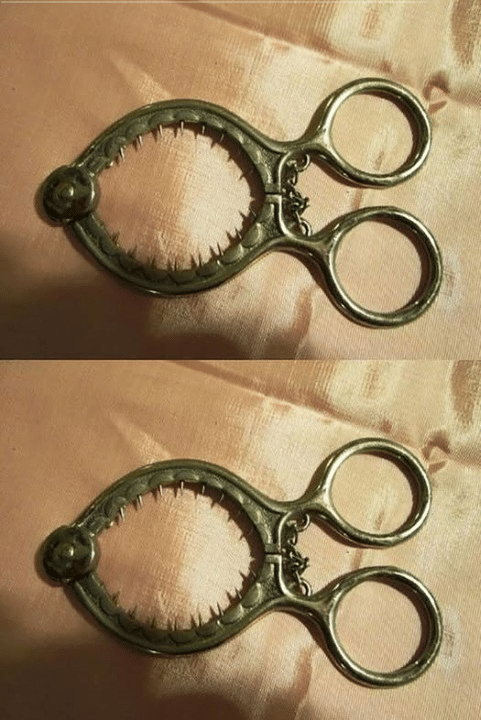
An egg topper is a small kitchen utensil designed primarily for opening soft-boiled eggs while they are standing upright in an egg cup.
Instead of tapping the shell repeatedly with a spoon and peeling away broken pieces, the tool creates a controlled line of cracks around the top. The resulting shell “cap” can then be lifted away, exposing the egg inside with less mess.
Several types of egg toppers exist. Some resemble circular scissors with small teeth, while others use a spring-loaded handle. The version with a bell-shaped metal cup, vertical rod, and sliding weight is commonly known as a weighted egg topper or egg clacker.
The utensil may appear mysterious when separated from an egg cup, but every part has a practical function.
How the Weighted Mechanism Works
To use this style of egg topper, the cooked egg is placed upright in an egg cup. The bell-shaped end of the tool is positioned over the egg’s crown.
The user lifts the sliding weight along the rod and releases it. When the weight falls, it strikes the top of the bell and transfers a short impact to the circular edge resting against the shell.
A German patent describing this type of device explains that the sliding weight hits the bell-shaped cutter, allowing its circular edge to crack or detach the upper portion of the shell.
One strike may be enough, although some eggs require a second attempt. After the shell has been scored, the top can usually be removed with a spoon, knife tip, or fingers.
The mechanism does not produce a perfectly smooth result every time. Egg size, shell strength, placement, and the force of the impact all affect how neatly it works. Still, with practice, it can produce a cleaner opening than repeatedly hitting an egg with a spoon.
Why Would Anyone Need a Tool This Specific?
For people who regularly ate soft-boiled eggs, the utensil solved a familiar breakfast problem.
A soft-boiled egg is often served upright in a small cup because the center may remain partially liquid. The diner opens the top and eats the egg directly from the shell with a spoon, sometimes dipping narrow strips of toast into the yolk.
Opening the shell manually can be awkward. Tapping too gently may create only tiny cracks, while striking too hard can crush the shell or spill the egg. Small fragments may also fall into the food.
An egg topper makes the process faster and more consistent. It is a specialized tool, but so are many older kitchen utensils designed for routines that were once more common.
Why Many People Have Never Seen One
Modern kitchens have changed dramatically.
Many families no longer serve eggs in traditional egg cups. People are more likely to scramble, fry, poach, or peel boiled eggs completely. Packaged breakfasts and faster morning routines have also made specialized table utensils less common.
As a result, an egg topper that once had an obvious purpose can now look like an unidentified mechanical device.
This happens frequently with inherited kitchen equipment. Butter paddles, sugar nippers, cherry pitters, pastry jiggers, jar lifters, and hand-cranked grinders can all confuse younger family members who have never seen them used.
The object itself has not become less functional. The routine surrounding it has simply faded from everyday life.
Is It an Antique?
Finding an egg topper in a grandparent’s drawer does not automatically mean it is a valuable antique.
Weighted and spring-operated versions are still manufactured today. Similar tools may have been purchased recently or kept for decades, and the basic design has remained relatively consistent.
To estimate its age, inspect it for a manufacturer’s name, country of origin, patent number, logo, or stamped markings. The material can also offer clues. Older examples may show heavier construction, handmade details, worn plating, or distinctive packaging.
Avoid aggressive polishing before identifying it. Removing patina or faint markings could reduce its historical or sentimental value.
Even when the object has little resale value, it may still be meaningful as part of a grandparent’s daily routine. Perhaps it was used during weekend breakfasts, holiday gatherings, or quiet mornings that other family members no longer remember.
How to Clean It Safely
An inherited kitchen tool should be examined carefully before it is used with food.
Check the bell and rod for corrosion, peeling metal, residue, loose parts, or sharp damaged edges. If the item is stainless steel and remains in good condition, gentle washing with dish soap and warm water may be appropriate.
Do not automatically place it in a dishwasher. Older plated metals, adhesives, springs, and decorative finishes may not tolerate high heat or strong detergent.
If the material is unknown or heavily corroded, preserving it as a display item may be safer than returning it to kitchen use.
A Note About Soft-Boiled Egg Safety
Although egg toppers are traditionally associated with soft-boiled eggs, undercooked eggs may carry a risk of Salmonella.
The U.S. Food and Drug Administration recommends cooking eggs until both the yolk and white are firm. For dishes intended to remain raw or undercooked, the agency advises using pasteurized shell eggs or pasteurized egg products.
This precaution is particularly important for young children, pregnant people, older adults, and anyone with a weakened immune system.
The tool can also be used to open thoroughly cooked eggs for decorative presentation, although removing the shell cap may be more difficult when the egg is firm.
Why the Discovery Feels So Meaningful
Once the object is identified, it stops looking like a strange piece of metal.
The sliding weight, long rod, and bell-shaped base suddenly make sense. What appeared to be an overly complicated gadget was actually designed to solve one small, ordinary problem elegantly.
That is what makes inherited household tools so fascinating.
They reveal that previous generations often approached daily routines with specialized objects built to last. A tool did not need electronics, batteries, or complicated instructions to be clever. A metal weight, a guide rod, and a precisely shaped edge were enough.
The egg topper may never become the most essential utensil in a modern kitchen. But it offers something more interesting than convenience: a connection to how breakfast was once served and enjoyed.
What began as a mystery hidden in a drawer turned out to be a small piece of culinary history—one designed to open an egg with a single satisfying clack.


