Noticing a small white or yellow lump near the back of your mouth can be alarming. Many people immediately worry about strep throat, tonsillitis, or another serious infection. In some cases, however, the mysterious bump is something far more common and usually less dangerous: a tonsil stone.
Tonsil stones, medically known as tonsilloliths, are firm deposits that develop inside the small folds and pockets of the tonsils. They are generally harmless, although they can cause unpleasant breath, throat irritation, coughing, or the sensation that something is stuck in the back of the throat.
Still, it is important not to assume that every white mark is a tonsil stone. White patches accompanied by fever, significant pain, swollen tonsils, or difficulty swallowing may be related to tonsillitis or another infection and should be evaluated appropriately.
What Exactly Are Tonsil Stones?
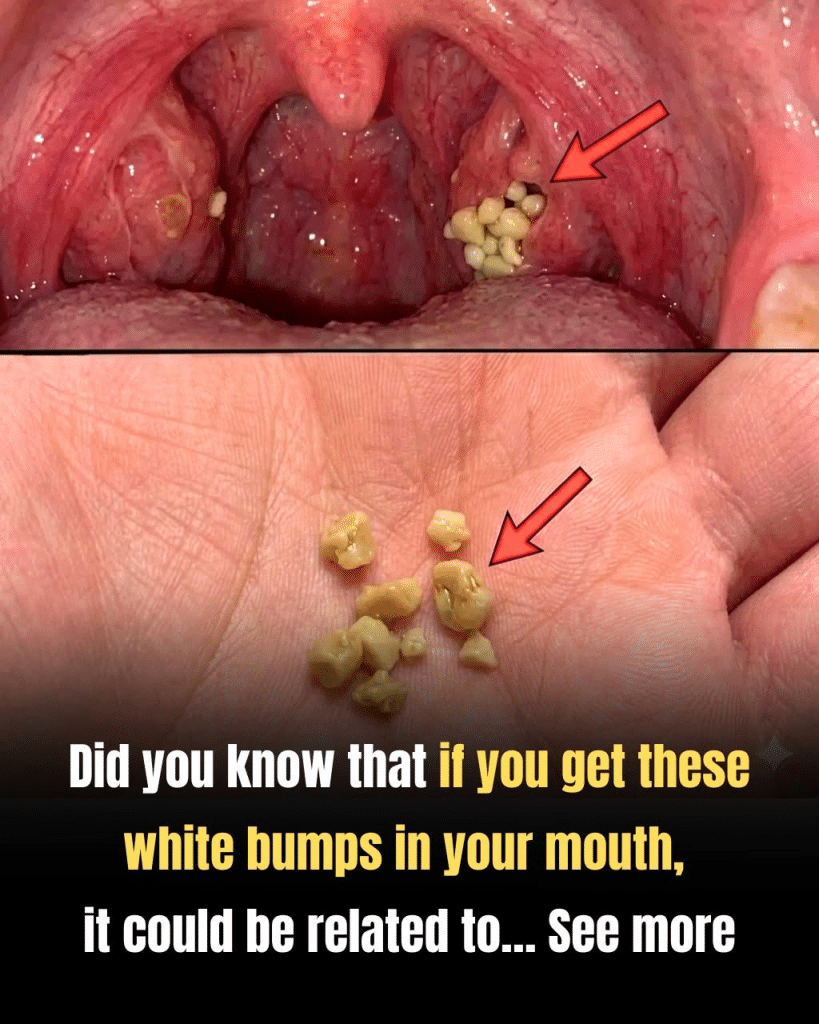
The tonsils are two pads of tissue located at the back of the throat. Their surfaces are not completely smooth. They contain small grooves and pits known as tonsillar crypts.
Food particles, bacteria, dead cells, mucus, and other material can become trapped inside those spaces. Over time, the debris may harden or calcify, creating a white, cream-colored, or yellowish lump.
Some stones are tiny and remain hidden deep inside the tonsil. Others become large enough to see when looking into a mirror. Many people never realize they have them because tonsil stones frequently cause little or no discomfort and may eventually loosen on their own.
They are not contagious, and accidentally swallowing one is generally not harmful.
The Most Common Warning Sign: Persistent Bad Breath
Bad breath is one of the most frequently reported symptoms associated with tonsil stones. The trapped material can collect bacteria and produce an unpleasant odor that brushing, gum, or ordinary mouthwash may not fully resolve.
Someone may maintain good dental hygiene and still notice that their breath remains unpleasant. In those cases, a dentist or healthcare professional may check the tonsils as well as the teeth and gums.
Bad breath can have many possible causes, including gum disease, dry mouth, dental decay, sinus problems, and certain medical conditions. A tonsil stone is only one possibility, so persistent halitosis should not automatically be self-diagnosed.
Other Symptoms Tonsil Stones May Cause
Larger or more irritating stones may cause a mild sore throat, coughing, discomfort while swallowing, enlarged tonsils, or a foreign-body sensation in the throat. Some people cough up a small, irregular, foul-smelling piece of white or cream-colored material without realizing where it came from.
A large or chronic stone can occasionally contribute to swelling or make swallowing more difficult. However, severe pain, rapidly increasing swelling, or an inability to swallow saliva is not typical of a simple, uncomplicated tonsil stone and requires medical attention.
Ear discomfort may sometimes occur with throat or tonsil problems because of the way nerves in the area are connected. But ear pain can also have many unrelated causes, making professional evaluation important when it persists.
Why Some People Get Them Repeatedly
People with large tonsils or deeper tonsillar crypts may have more places where debris can collect. Repeated inflammation or previous episodes of tonsillitis may also enlarge those pockets, increasing the likelihood of recurring stones.
Poor oral hygiene may increase the amount of bacteria and debris present in the mouth, although tonsil stones can occur even in people who brush and floss regularly. Sinus problems and postnasal drainage may also add mucus to the back of the throat and contribute to buildup in susceptible individuals.
Smoking and dehydration may worsen oral conditions that allow debris and bacteria to accumulate. Staying hydrated and maintaining consistent dental care may reduce the risk, but no preventive routine can guarantee that stones will never return.
The Safest Things to Try at Home
If the suspected stone is small and there are no signs of infection, gargling with warm salt water is one of the gentlest home-care options. Coughing may also help a loose stone come out naturally.
Good oral care may help reduce future buildup. Brush the teeth regularly, clean the tongue gently, floss daily, drink enough water, and consider gargling after meals.
It may be tempting to dig out a visible stone using a toothpick, metal tool, fingernail, or another pointed object. That is not a safe approach. Tonsil tissue is delicate and can bleed easily, and makeshift tools may cause injury, infection, or accidental inhalation of a foreign object. NHS guidance also advises against forceful water irrigation and manual removal because of those risks.
Although some medical resources mention gentle cotton-swab or low-pressure irrigation methods, safety advice differs. The more cautious choice is to avoid manipulating the tonsil when the stone is deep, painful, difficult to reach, or surrounded by inflamed tissue. A clinician can remove a troublesome stone in an office setting when home care is unsuccessful.
When White Spots May Be an Infection Instead
Tonsillitis can produce white or pus-filled patches on red, swollen tonsils. It may also cause fever, sore throat, painful swallowing, swollen neck glands, fatigue, headache, earache, nausea, and bad breath.
Because tonsil stones and infections can both appear white, appearance alone may not provide a definite answer. A stone often looks like a distinct, firm lump sitting inside a tonsil pocket. An infection may produce a broader coating or several patches along with redness, swelling, fever, and feeling generally unwell.
Antibiotics are not a routine treatment for tonsil stones. They may be prescribed when a healthcare professional confirms or strongly suspects a bacterial infection, but they are not a permanent solution for recurring stones.
Warning Signs That Need Prompt Care
Seek urgent medical attention for trouble breathing, severe throat swelling, drooling because swallowing is impossible, or rapidly worsening symptoms. A peritonsillar abscess can cause intense one-sided throat pain, fever, difficulty opening the mouth, a muffled voice, drooling, facial or neck swelling, and difficulty swallowing. Severe swelling can threaten the airway.
A persistent sore throat, blood in the saliva, a sore that does not heal, a neck lump, one tonsil that remains noticeably larger than the other, or ongoing difficulty swallowing should also be examined. These symptoms usually have less serious explanations, but persistent changes should not be ignored.
Contact a doctor, dentist, or ear, nose, and throat specialist when the stones repeatedly return, cause significant bad breath or discomfort, or cannot be managed safely at home.
Is Tonsil Surgery Necessary?
Most people with tonsil stones do not need surgery. The stones commonly clear on their own or can be managed conservatively.
Tonsillectomy may occasionally be discussed when a person has severe recurring symptoms, repeated infections, or another established medical reason for removing the tonsils. However, some health systems do not routinely recommend tonsillectomy solely for ordinary tonsil stones because surgery has meaningful risks and recovery requirements.
A specialist can explain whether an office procedure, continued observation, or another treatment is appropriate based on the individual case.
The Bottom Line
A tiny white or yellow lump hiding in a tonsil pocket is often a tonsil stone rather than a dangerous illness. These deposits form when material becomes trapped and hardens inside the natural folds of the tonsils. They may cause bad breath, coughing, throat irritation, or no symptoms at all.
Gentle saltwater gargling, hydration, and consistent oral hygiene may help. Avoid poking the throat with sharp objects or trying aggressive internet removal methods.
Most importantly, pay attention to the complete picture. Fever, severe pain, spreading white patches, trouble swallowing, breathing difficulty, bleeding, or persistent one-sided changes deserve professional evaluation.
What looks like a mysterious white bump may be harmless—but an accurate diagnosis is always safer than guessing.


