Waking up with a damp pillow can feel embarrassing, but occasional drooling during sleep is usually harmless. It often happens when the mouth opens during sleep, saliva collects, and the body does not swallow it quickly enough. Sleeping position and temporary nasal congestion can also make drooling more noticeable.
Frequent or suddenly worsening drooling, however, may deserve closer attention—especially when it appears with breathing problems, trouble swallowing, pain, weakness, or other new symptoms. Drooling is not a diagnosis by itself, and it does not automatically mean that someone has a serious disease. It is simply one possible clue that should be considered alongside the rest of a person’s health.
Here are six conditions or health issues that may sometimes contribute to nighttime drooling.
1. Nasal Congestion and Mouth Breathing
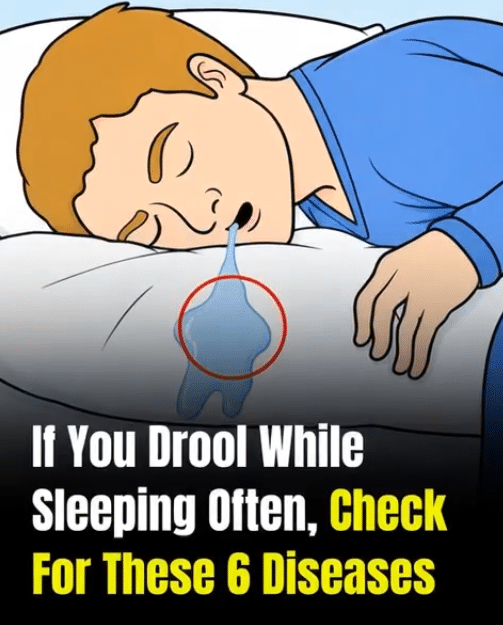
A blocked nose is one of the most common explanations for drooling during sleep.
When nasal passages are congested, people may automatically breathe through their mouths. An open mouth makes it easier for saliva to escape onto the pillow. Colds, seasonal allergies, sinus infections, nasal polyps, or structural problems inside the nose can all interfere with comfortable nasal breathing.
Cleveland Clinic lists drooling during sleep among the possible signs of habitual mouth breathing. Other symptoms can include snoring, dry mouth, bad breath, hoarseness, and daytime tiredness.
Additional signs of nasal obstruction may include:
- A frequently stuffy or runny nose
- Sneezing or itchy eyes during allergy season
- Facial pressure or sinus discomfort
- Difficulty breathing through one or both nostrils
- Regularly waking with a dry mouth
Temporary congestion from a cold often resolves on its own. Persistent blockage, recurring sinus symptoms, or difficulty breathing through the nose may be worth discussing with a primary care doctor or an ear, nose, and throat specialist.
2. Obstructive Sleep Apnea
Drooling alone does not prove that someone has sleep apnea. However, nighttime mouth breathing and drooling may appear alongside this potentially serious sleep disorder.
Obstructive sleep apnea occurs when the airway repeatedly narrows or closes during sleep, temporarily interrupting normal breathing. Common warning signs include loud snoring, repeated pauses in breathing, gasping or choking noises, frequent awakenings, morning headaches, and significant daytime fatigue.
A sleeping partner may notice the symptoms before the affected person does.
People should consider speaking with a healthcare professional when drooling occurs along with:
- Loud, persistent snoring
- Witnessed pauses in breathing
- Gasping, choking, or snorting during sleep
- Severe daytime sleepiness
- Difficulty concentrating
- Headaches upon waking
Sleep apnea should not be self-diagnosed from an online symptom list. A medical evaluation and, when appropriate, an overnight sleep study can determine whether breathing interruptions are occurring and how severe they are.
3. Acid Reflux and GERD
Gastroesophageal reflux disease, commonly known as GERD, may sometimes cause increased saliva production.
One reflux-related symptom is known as “water brash.” It occurs when stomach acid moves into the esophagus and the salivary glands respond by producing additional saliva. People may notice a sudden watery feeling in the mouth combined with a sour or acidic taste. Not everyone with GERD experiences this symptom, and ordinary nighttime drooling does not necessarily indicate reflux.
Other possible reflux symptoms include:
- Heartburn
- Sour or bitter fluid in the throat
- Regurgitation
- Chest discomfort not caused by the heart
- Nausea
- Chronic throat irritation
- A sensation that food is sticking during swallowing
Symptoms may become more noticeable after large meals or when lying down soon after eating. People with recurring heartburn, swallowing difficulty, unexplained chest discomfort, or persistent nighttime symptoms should seek medical advice rather than relying only on over-the-counter treatment.
Chest pain should never automatically be assumed to be reflux, particularly when it is severe, new, or accompanied by shortness of breath, sweating, nausea, or pain spreading to the arm or jaw.
4. Swallowing Problems or Neurological Conditions
Many adults who drool do not actually produce too much saliva. Instead, they may have difficulty controlling or swallowing the normal amount their bodies make.
Medical guidance on chronic drooling notes that the problem is often related to reduced oral muscle control, sensory changes, or inefficient swallowing rather than excessive saliva production. Neurological conditions associated with drooling can include Parkinson’s disease, stroke, multiple sclerosis, motor neuron disease, and other disorders affecting muscles or nerves involved in swallowing.
This does not mean that someone who occasionally drools has a neurological disease. Concern is greater when drooling begins suddenly or appears with symptoms such as:
- Difficulty swallowing food, drinks, or saliva
- Coughing or choking while eating
- A wet or gurgling voice after swallowing
- New muscle weakness
- Tremors or changes in coordination
- Slurred speech
- Facial drooping
- Repeated chest infections
- Unexplained weight loss
The NHS advises seeking medical care for swallowing difficulty, choking during meals, food feeling stuck, shortness of breath after eating, or recurring chest infections. Untreated swallowing problems can lead to dehydration, weight loss, or food and saliva entering the airway.
Sudden facial weakness, arm weakness, speech difficulty, confusion, or loss of balance may indicate a stroke and requires emergency care.
5. Oral and Dental Problems
Problems inside the mouth can sometimes change saliva production or make swallowing uncomfortable.
Cleveland Clinic notes that untreated cavities may prompt the mouth to produce additional saliva. Severe dental infections can also cause swelling, pain, and difficulty swallowing, although these are less common explanations for ordinary nighttime drooling.
Possible warning signs include:
- Persistent tooth pain
- Swollen or bleeding gums
- Facial or jaw swelling
- Pain when chewing
- Mouth sores that do not heal
- An unpleasant taste or drainage in the mouth
- Difficulty opening the mouth
- Fever accompanying dental pain
Routine dental care may identify cavities, gum disease, poorly fitting dentures, or infections before they become more serious. Sudden swelling beneath the tongue or jaw, difficulty swallowing, drooling while awake, or breathing problems can indicate a rapidly spreading dental infection and requires urgent medical attention.
6. Tonsil and Throat Conditions
Inflammation or swelling in the throat can make swallowing painful or less efficient, allowing saliva to collect.
Throat infections and tonsillitis may cause severe discomfort when swallowing, red or swollen tonsils, fever, enlarged neck glands, and sometimes white patches in the throat. More serious complications, such as a tonsillar abscess, may cause drooling, a muffled voice, severe one-sided throat pain, and difficulty opening the mouth.
Seek prompt medical attention when drooling appears with:
- Severe or rapidly worsening throat pain
- High fever
- Difficulty swallowing saliva
- A muffled or unusually hoarse voice
- Neck or throat swelling
- Noisy breathing
- Shortness of breath
Drooling combined with severe throat pain and breathing difficulty can be an emergency. Epiglottitis, although uncommon, may rapidly obstruct the airway and requires immediate treatment.
When Should You See a Doctor?
An occasional wet pillow without other symptoms is usually not a reason to panic. Consider scheduling a medical appointment when drooling is new, persistent, excessive, or interfering with sleep and daily life.
Medical evaluation is especially important when it occurs with loud snoring, witnessed breathing pauses, regular choking, swallowing difficulty, unexplained weakness, recurring reflux, dental swelling, or significant throat pain.
Call emergency services immediately if drooling begins with sudden facial drooping, weakness on one side of the body, difficulty speaking, severe trouble breathing, inability to swallow, blue or gray lips, or rapidly increasing mouth or neck swelling.
The Bottom Line
Drooling during sleep is common and often reflects something simple, such as sleeping with the mouth open or having a temporarily blocked nose. It should not be treated as proof of any particular illness.
Still, persistent changes can sometimes provide useful information. Rather than focusing only on the wet pillow, pay attention to accompanying symptoms involving breathing, swallowing, digestion, dental health, or neurological function.
A healthcare professional can review the complete picture, identify the most likely cause, and recommend appropriate testing or treatment. Early attention to meaningful symptoms can improve sleep, comfort, and long-term health without creating unnecessary fear.


