Finding unfamiliar insects inside a sofa can be deeply unsettling. Upholstered furniture contains countless seams, folds, zippers, and narrow gaps where small pests can remain hidden for long periods. In many cases, homeowners do not discover a problem until they notice moving insects, pale eggs, shed skins, dark stains, or unexplained bites.
If the insects are flat, oval, and reddish-brown, and they are clustered around the seams of a couch, they may be bed bugs. Smaller, pale insects could be young bed bugs called nymphs, while tiny white specks attached to fabric fibers may be eggs.
However, identification from appearance alone is not always reliable. Fleas, carpet beetles, cockroach nymphs, and other household pests can also be found around upholstered furniture. Before beginning treatment, collect a clear photograph or secure a specimen in a sealed container and ask a licensed pest-control professional to confirm what it is.
Correct identification matters because each pest requires a different treatment strategy.
Why Bed Bugs May Hide in a Sofa
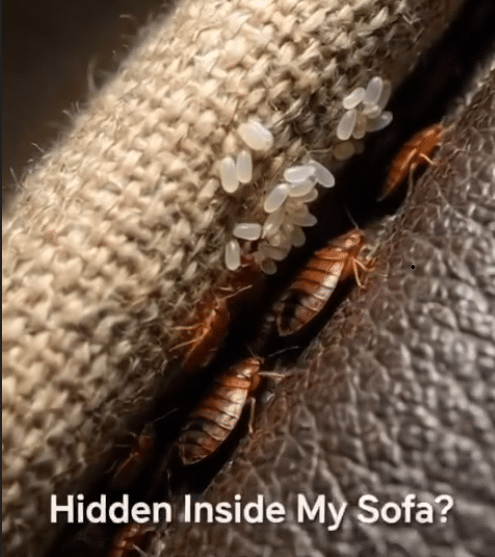
Despite their name, bed bugs do not live only in beds. They can settle anywhere people regularly sit, rest, or sleep. Sofas, recliners, upholstered chairs, and pullout beds can all provide suitable hiding places.
These insects prefer narrow spaces where their bodies touch surrounding surfaces. Common hiding locations include:
- Cushion seams and piping
- Zippers and fabric folds
- Gaps between the arms and seat
- Staple lines beneath the furniture
- Wooden joints inside the frame
- Areas beneath the thin fabric covering the bottom
A sofa can be especially attractive when someone regularly naps there or spends long periods watching television. Bed bugs respond to signals associated with a nearby host, including body heat and exhaled carbon dioxide.
They do not appear because a home is dirty. Bed bugs can enter clean apartments, luxury homes, hotels, dormitories, and public buildings. They usually spread by hitchhiking on luggage, clothing, bags, bedding, or secondhand furniture.
Signs That May Point to Bed Bugs
A live insect is the clearest warning, but other signs can suggest that bed bugs are hiding in or around furniture.
Adult bed bugs are usually reddish-brown, flat, oval-shaped, and roughly comparable in size to an apple seed. Younger nymphs are smaller and may appear pale or nearly translucent before feeding.
Other possible signs include tiny white eggs, pale shed skins, and dark spots that resemble marks from a fine-tipped pen. These dark stains may appear along seams, beneath cushions, or around nearby baseboards.
A larger infestation can sometimes create a musty odor, although smell alone is not enough to confirm the insects’ identity.
Bites are also not a reliable diagnostic tool. Different people react differently, and some develop no visible marks at all. Skin irritation can also have many unrelated causes. Finding and identifying the insect itself is far more useful than relying on bite patterns.
How to Inspect the Sofa Carefully
Begin with a bright flashlight, disposable gloves, and a clear plastic bag or sealed container for any specimen you find.
Remove blankets, pillows, slipcovers, and other loose items without carrying them through multiple rooms. Place washable materials directly into sealed bags until they can be treated.
Take off each removable cushion and inspect the seams, piping, labels, and zippers. Run the flashlight slowly along the fabric rather than checking only the most visible surfaces.
Next, examine the gaps where the arms meet the seat. Look beneath the cushions and inside folds or tufted areas. If it can be done safely, tilt the sofa and inspect the underside, legs, frame joints, staples, and dust cover.
Continue the inspection around the sofa. Check nearby baseboards, curtains, rugs, wall cracks, side tables, and upholstered chairs. If the suspected insects are bed bugs, they may not be limited to one piece of furniture.
Avoid dragging the sofa through the home. Moving an infested item without containing it can scatter insects into hallways, bedrooms, vehicles, or other living spaces.
What to Do Immediately
Vacuuming can remove some visible insects, eggs, and debris, although it rarely eliminates an established infestation by itself.
Use the crevice attachment and move slowly along seams, zippers, tufts, and frame joints. Afterward, seal the vacuum bag in plastic and place it in an outdoor trash container. With a bagless vacuum, empty the contents outdoors into a sealed bag and clean the canister according to the manufacturer’s instructions.
Wash removable covers, blankets, and clothing only when the care labels permit it. The dryer’s sustained heat is generally more important than washing alone, but fabrics can shrink or become damaged if exposed to temperatures they were not designed to tolerate.
Keep treated items in clean, sealed bags or containers so they do not become infested again.
Be Careful With Steam and Heat
Heat can be an effective part of bed-bug management, but do-it-yourself treatment must be approached cautiously.
A suitable steamer may help treat seams and fabric folds when the furniture manufacturer permits steam cleaning. The tool should produce a controlled flow rather than forcefully blowing insects away from the treatment area. Excessive moisture can damage furniture, create mold, or affect electrical components inside powered recliners.
Do not attempt to heat an entire room with household space heaters, ovens, fireplaces, or other improvised equipment. These methods create serious fire, electrical, and carbon-monoxide risks and may still fail to heat every hiding place sufficiently.
Professional whole-room heat treatments use specialized equipment, temperature monitoring, and trained technicians. They are not equivalent to raising the thermostat or placing heaters around a room.
Avoid Dangerous Home Remedies
Do not spray rubbing alcohol, gasoline, kerosene, bleach, or random combinations of cleaning products onto upholstered furniture. These substances can create fire hazards, damage fabric, produce harmful fumes, and expose people or pets to unnecessary risk.
Foggers and “bug bombs” are also often ineffective against insects hidden deep inside furniture. The pesticide may not reach the narrow spaces where pests are living, and the disturbance can cause them to spread farther.
Use only products that are legally registered for the target pest and specifically labeled for application to the intended surface. Follow every instruction concerning ventilation, protective equipment, reentry time, and treatment frequency.
More pesticide does not mean better control.
When to Contact a Professional
Professional assistance is strongly recommended when you find several insects, eggs, or multiple life stages. Those signs can indicate that the population has been present long enough to reproduce.
A licensed pest-management professional can confirm the species, inspect the surrounding rooms, identify overlooked hiding areas, and design a treatment plan. Effective bed-bug control often combines several methods rather than relying on one spray or one cleaning session.
Professional treatment may involve targeted insecticide applications, vacuuming, monitored heat, steam, encasements, traps, and follow-up inspections.
Ask for a written plan, preparation instructions, pricing details, and information about follow-up visits. Homeowners and renters should also review pest-control responsibilities under their lease, local housing rules, and insurance coverage. Standard home or renters insurance does not always pay for insect infestations, so understanding potential costs early can help with personal finance planning.
Apartment residents should notify property management promptly because bed bugs can move between neighboring units. Treating only one apartment may not solve a building-wide problem.
Should You Throw the Sofa Away?
Do not automatically discard the furniture. Many sofas can be treated successfully.
Throwing an infested couch onto the curb without wrapping or labeling it can spread the problem to neighbors or anyone who takes the item home. Moving it through the house can also dislodge insects.
If disposal is recommended, ask the pest-control company or local waste service how to wrap, mark, and remove it safely. In some communities, furniture must be rendered unusable before collection so no one unknowingly brings it into another home.
Replacing a sofa before the infestation is controlled can also be costly and ineffective. The new furniture may become infested if insects remain elsewhere in the room.
How to Reduce the Risk in the Future
Inspect secondhand furniture carefully before bringing it indoors. Use a flashlight to examine seams, undersides, screw holes, frame joints, and fabric folds.
Avoid collecting upholstered furniture left beside dumpsters or on the street, even if it looks clean. Visible surfaces may reveal nothing while insects remain deep inside the frame.
After traveling, inspect luggage before placing it on a bed or sofa. Wash and dry travel clothing as appropriate, and store suitcases away from sleeping areas when possible.
Reduce unnecessary clutter near furniture, seal cracks where practical, and continue checking treated areas after the initial problem appears to be gone.
Finding suspicious bugs in a sofa is disturbing, but panic can lead to expensive or unsafe decisions. Preserve a specimen, confirm the identification, contain loose items, and choose a treatment based on evidence rather than internet rumors.
With careful inspection and the right professional support, most household pest problems can be brought under control.