Finding greenish meat inside chicken can be shocking, especially when you are preparing a meal for your family. One moment, you are cutting into what looks like a normal piece of chicken. The next, you notice an unusual green or gray-green color inside the meat — and maybe even a strange smell.
Naturally, most people immediately worry that the chicken has spoiled or could make someone sick.
That concern is understandable. Raw poultry must be handled carefully because it can carry bacteria that cause foodborne illness. When chicken looks unusual, smells unpleasant, or feels slimy, it is important to take the situation seriously.
However, green chicken meat does not always mean the same thing. In some cases, the discoloration may come from a condition in the bird’s muscle tissue. In other cases, it may be a sign that the chicken is spoiled and should not be eaten.
Knowing the difference can help you make safer choices in the kitchen.
Why Chicken Meat Can Look Green
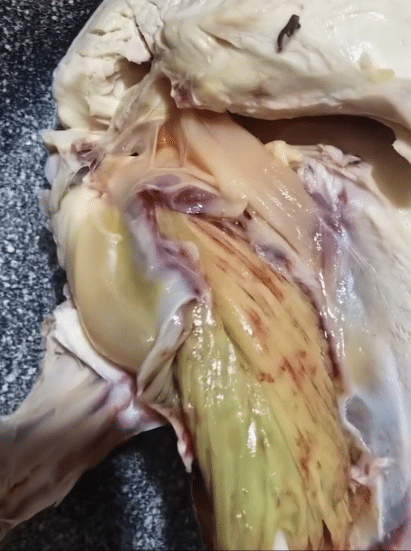
One possible reason chicken meat may appear green is a condition often called Green Muscle Disease, also known as Deep Pectoral Myopathy.
This condition can happen when part of a chicken’s breast muscle becomes damaged due to reduced blood flow. When the tissue does not receive enough oxygen, it begins to break down. Over time, the affected area may turn green, gray-green, or slightly yellowish.
The color can look very unpleasant, especially when the outside of the chicken appeared normal before cooking or cutting into it.
Green Muscle Disease is most often found deep inside the breast meat, which is why many people do not notice it until they slice the chicken open. It is not the same as mold or surface spoilage, and it does not always mean the meat is contaminated.
Still, many people choose not to eat the affected part because the texture and appearance can be unappealing.
When Green Chicken May Be Unsafe
While some green discoloration can be related to muscle damage, green chicken can also be a warning sign of spoilage.
That is especially true when the color comes with a bad smell.
Fresh chicken should not have a strong, sour, rotten, or sulfur-like odor. If the meat smells strange, unpleasant, or “off,” it is safest to throw it away. A weird smell is one of the clearest signs that the chicken may no longer be safe.
Texture is another important clue.
If raw chicken feels slimy, sticky, or tacky even after rinsing is avoided and normal handling is considered, that may indicate bacterial growth. Chicken that feels unusually slippery or has a film on the surface should not be used.
In your case, because the meat was greenish and had a weird smell, the safest choice would be not to cook or eat it. It is better to discard it or return it to the store for a refund than risk serving spoiled poultry to your family.
Don’t Judge by Color Alone
Color matters, but it should never be the only factor you use to decide whether chicken is safe.
Chicken can vary slightly in color depending on the cut, age, processing, packaging, and storage conditions. Some areas may appear pink, pale, yellowish, or slightly darker than others.
But when chicken has multiple warning signs at the same time — unusual green color, bad smell, slimy texture, damaged packaging, or an expired date — that is when concern becomes much more serious.
Before cooking chicken, check:
The smell
The texture
The expiration or sell-by date
The packaging condition
The storage temperature
The overall appearance
If several things seem wrong, do not take chances.
Proper Cooking Matters, But It Cannot Fix Spoiled Meat
Chicken should always be cooked to an internal temperature of 165°F. This helps destroy harmful bacteria commonly associated with poultry, including Salmonella and Campylobacter.
However, proper cooking does not make spoiled meat safe in every situation.
If chicken has already developed a strong rotten odor, slime, or signs of decomposition, cooking it is not a good solution. Some bacteria can produce toxins or byproducts that heat may not fully eliminate. Even if the meat reaches the correct temperature, it may still be unsafe or unpleasant to eat.
That is why smell and texture matter before the chicken ever reaches the pan.
When in doubt, throw it out.
What To Do If You Find Green Meat Inside Chicken
If you cut into chicken and see a greenish area, stop preparing it and inspect it carefully.
If the chicken smells normal, feels firm, has been stored properly, and only has a small green section deep inside the muscle, it may be related to muscle damage. Some people trim away the discolored part and cook the rest thoroughly.
But if the chicken smells strange, feels slimy, or looks spoiled in more than one area, do not use it.
Place it in a sealed bag and throw it away, or return it to the store if you still have the receipt and packaging. Many grocery stores will offer a refund or replacement for spoiled meat, especially if it was recently purchased.
A package of chicken can be replaced.
Your family’s health is more important.
How To Reduce the Risk Next Time
Although you cannot always see internal discoloration before buying chicken, you can reduce the chances of bringing home poor-quality poultry.
Choose chicken from reputable stores with good turnover. Avoid packages with torn wrapping, excessive liquid, swollen packaging, or meat that already looks discolored from the outside.
After purchasing, refrigerate the chicken as soon as possible. Raw poultry should not be left sitting at room temperature for long periods, especially in warm weather.
Use fresh chicken within a day or two, or freeze it if you are not planning to cook it soon. Proper storage is one of the best ways to reduce bacterial growth and preserve quality.
Also, keep raw chicken separate from other foods to avoid cross-contamination. Use clean cutting boards, wash your hands thoroughly, and sanitize surfaces after handling poultry.
Green Chicken and Meat Quality
Even when green discoloration is caused by muscle damage rather than spoilage, the eating quality may not be ideal.
The affected portion may be tough, fibrous, spongy, or dry. This can make the chicken less enjoyable, especially in recipes where tenderness matters, such as grilled chicken, baked chicken breast, chicken salad, or stir-fry.
That is one reason many people prefer to remove the green area even if they believe the rest of the meat is safe after proper cooking.
Food should not only be safe. It should also be something you feel comfortable serving.
Final Thoughts
Greenish chicken meat can mean different things depending on the situation.
Sometimes, it may be caused by muscle damage inside the bird and may not be dangerous if the chicken is otherwise fresh and fully cooked. But when green discoloration comes with a strange smell, sliminess, or other signs of spoilage, the safest choice is to avoid eating it.
In this case, because the chicken had both an unusual green color and a weird odor, it should not be served to children or anyone else.
Trust your senses. Inspect meat carefully. Store poultry properly. Cook it to the correct temperature. And when something seems wrong, choose safety over saving money.
Dinner can be remade.
Health is not worth the risk.


