Some songs become hits for a moment, then slowly fade into the background of music history. Others remain beloved for decades because they express something deeper than fashion, production trends, or chart performance.
“Unchained Melody” belongs to that rare second category.
For many listeners, the song is more than a romantic ballad. It is a memory, a wedding dance, a long-distance love story, a scene from a favorite movie, or a reminder of someone they once missed deeply. Generation after generation has discovered it, and somehow, it still carries the same emotional force.
The version most people know today is The Righteous Brothers’ unforgettable 1965 recording, powered by Bobby Hatfield’s soaring lead vocal. But the song’s story began a decade earlier, long before it became one of the most recognizable love songs in popular music.
A Song Born From a Forgotten Film
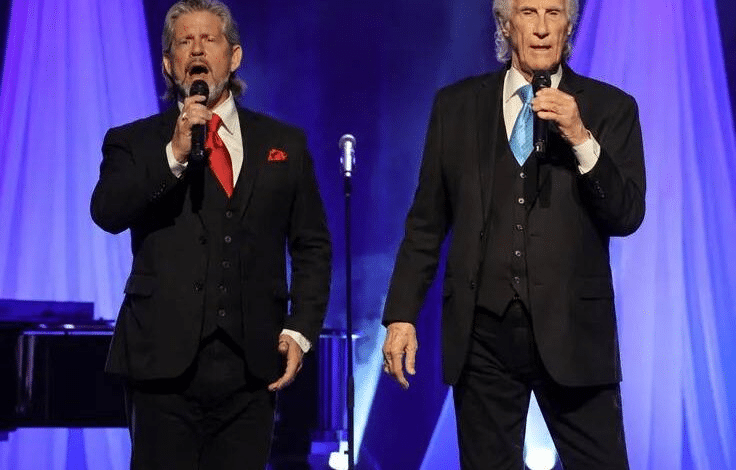
“Unchained Melody” was written in 1955 by composer Alex North and lyricist Hy Zaret. North created the music for the prison film Unchained, which explains the unusual title. Todd Duncan performed the song for the film soundtrack.
That origin surprises many people because the word “unchained” does not appear in the song’s lyrics. The title came from the movie, but the emotion of the song went far beyond the film’s plot.
The movie itself did not become a lasting cultural landmark. The song did.
In 1955, multiple versions of “Unchained Melody” reached major charts, including recordings by Les Baxter, Al Hibbler, and Roy Hamilton. The Songwriters Hall of Fame later noted that several versions became successful in the United States and the United Kingdom during the song’s first wave of popularity.
That early success proved the song had unusual power even before The Righteous Brothers recorded it.
The Righteous Brothers Made It Immortal
The Righteous Brothers’ 1965 version became the definitive recording for millions of listeners.
Although the duo consisted of Bill Medley and Bobby Hatfield, “Unchained Melody” is essentially a Bobby Hatfield solo performance released under The Righteous Brothers name. The Songwriters Hall of Fame identifies Hatfield’s vocal as the solo that helped make the recording the jukebox standard.
Hatfield’s performance is the reason the song still stops people in their tracks.
He begins with restraint, allowing the emotion to build slowly. Then the vocal opens up, climbing with a mixture of longing, control, and vulnerability. The result feels dramatic without becoming artificial.
That balance is difficult to achieve.
A less controlled singer might have turned the song into pure melodrama. A more restrained singer might have made it beautiful but distant. Hatfield found the emotional center: passionate, lonely, and completely believable.
Why the Melody Works So Well
The melody of “Unchained Melody” is elegant because it feels both simple and enormous.
It does not rush. It gives each phrase room to breathe. The slow movement allows the listener to feel the weight of waiting, longing, and hope.
That emotional space is one reason the song works so well across generations.
It does not depend on slang, fashion, or a specific cultural moment. It speaks in universal feelings: missing someone, needing someone, hoping love can survive distance and time.
Those emotions are not tied to 1955, 1965, or 1990.
They remain recognizable in every era.
A Love Song About Longing
Many love songs celebrate the joy of being together.
“Unchained Melody” is different because it focuses on the ache of separation.
That theme makes it powerful for couples, but also for anyone who has experienced distance, grief, waiting, or emotional uncertainty. The song’s romantic meaning is obvious, yet its emotional reach is wider than romance alone.
It can feel like a song about someone far away.
It can feel like a song about someone who may never return.
It can even feel like a song about memory itself.
That flexibility is part of its lasting appeal. Listeners bring their own stories to it, and the song makes space for them.
The Song Became a Standard
“Unchained Melody” has been recorded again and again by artists across different genres and generations.
According to the Songwriters Hall of Fame, the song’s publishing administrator reported more than 1,500 recordings by more than 670 artists in multiple languages.
That number helps explain its unusual place in music history.
A song does not receive that many interpretations by accident. Singers return to it because it gives them something meaningful to express. Audiences return to it because the emotional message remains clear no matter who performs it.
Still, for many listeners, The Righteous Brothers’ recording remains the version against which all others are measured.
A Second Life Through Ghost
The song experienced another major cultural moment in 1990 when The Righteous Brothers’ 1965 recording was featured in the film Ghost, starring Patrick Swayze and Demi Moore. The scene introduced the song to a new generation and helped turn it into one of cinema’s most memorable romantic music moments.
The revival was not just nostalgic. It was commercially powerful.
In the United Kingdom, the 1990 release of “Unchained Melody” by The Righteous Brothers reached No. 1 on the Official Singles Chart and spent four weeks in the top position.
The Recording Academy also lists The Righteous Brothers’ 1990 re-recording of “Unchained Melody” as a nominee for Best Pop Performance by a Duo or Group with Vocal at the 33rd Annual GRAMMY Awards.
The song had already been famous for decades. Ghost proved that it could still become a phenomenon all over again.
Recognition Beyond the Charts
The Songwriters Hall of Fame honored “Unchained Melody” as its 2007 “Towering Song,” an award given to songs that have influenced culture in a unique way over many years.
That recognition fits the song’s legacy.
“Unchained Melody” is not remembered only because it sold records. It is remembered because it became part of people’s emotional lives.
It is played at weddings, anniversaries, memorials, reunions, and quiet private moments. It belongs to public culture and personal memory at the same time.
Few songs achieve that kind of reach.
Why It Still Sounds Powerful Today
Modern music production has changed dramatically since 1965.
Recording technology, vocal styles, streaming platforms, and pop trends are all different now. Yet “Unchained Melody” still connects because its strength does not depend on modern polish.
The arrangement gives the voice space.
The melody carries emotional momentum.
The performance feels sincere.
Most importantly, the song expresses a feeling that has not changed: the deep human need to be close to someone who matters.
That is why young listeners continue discovering it and older listeners continue returning to it.
A truly great love song does not merely describe romance. It makes people remember what longing feels like.
“Unchained Melody” does exactly that.
More than half a century after The Righteous Brothers’ version became a classic, it still sounds like someone reaching across time, distance, and silence to say what the heart cannot easily say.
That is why generations have fallen in love to it.
And that is why it still has the power to leave a room completely quiet.