A disturbing headline has been circulating online:
“Couple adopts child and when coming home with the baby he ate…”
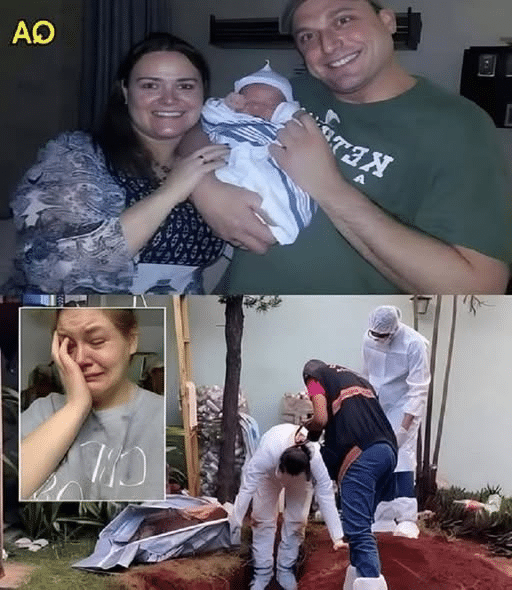
The sentence abruptly ends before revealing what supposedly happened. It is often paired with an emotional family photograph and a second image showing police officers, medical workers, or investigators.
The combination is designed to make viewers assume that a horrifying event occurred after the couple brought the child home.
However, posts like this frequently provide no names, location, police report, hospital statement, or credible news source. Instead of presenting a verifiable event, they use incomplete wording and unrelated imagery to generate clicks.
The viral post is a useful example of how sensational social media content manipulates curiosity—and why users should pause before sharing a shocking claim.
The Missing Ending Is Intentional
The unfinished phrase “he ate…” is not a writing mistake.
It is a deliberate technique commonly known as the curiosity gap. The post gives readers enough information to create concern but withholds the detail needed to understand the story.
The human brain naturally wants to complete an unfinished thought.
Readers may begin imagining possible endings:
Did the child eat something dangerous?
Did a family pet attack?
Was someone poisoned?
Did a medical emergency occur?
The headline does not answer those questions because uncertainty is the product being sold.
Users must tap “See more,” open the comments, or visit an external website to discover the supposed conclusion. Every interaction can help the post reach a larger audience.
The more frightening the imagined outcome, the more likely people are to click.
Two Images Can Create a Story That Never Happened
Another common feature of these posts is the use of a split-image collage.
The first photograph may show a smiling couple holding a baby. It creates an atmosphere of hope, celebration, and family happiness.
The second image may show emergency responders, a crying person, a covered area, or an apparent crime scene.
When placed together, the photographs appear connected.
Viewers instinctively assume that the people in the first picture are involved in whatever happened in the second. Yet the post may provide no evidence that the images came from the same place, date, or event.
This is a powerful form of visual manipulation.
The creator does not always need to make a detailed accusation. The arrangement of the photographs encourages the audience to construct the frightening narrative on its own.
In many cases, the images may have been copied from unrelated family announcements, news reports, stock photography, or public social media accounts.
Without original captions or source links, viewers cannot safely assume that the photographs tell one continuous story.
Why Family Photographs Are Frequently Used
Pictures of parents and babies generate strong emotional reactions.
People are naturally protective of children, and stories involving adoption, pregnancy, or newborns often receive immediate attention. A joyful family image can also make the later suggestion of tragedy feel more shocking.
That emotional contrast is valuable to pages trying to maximize engagement.
A photograph originally shared to celebrate an adoption or birth can be copied, cropped, and republished with a completely different caption. The family may never know that its image has been connected to a disturbing fictional story.
This creates a serious privacy concern.
The people pictured may face unwanted attention, rumors, harassment, or questions from friends who encounter the false post. A meaningful personal milestone can be transformed into content created for advertising revenue.
Even when the page does not identify the family by name, the image may still be recognizable.
The Business Model Behind Sensational Posts
Many clickbait pages are built around a simple financial strategy.
First, they publish an emotionally provocative headline on social media. Next, they direct readers to an external website filled with advertisements, recommendation boxes, and additional attention-grabbing headlines.
The publisher may earn advertising revenue when users visit the page, scroll through the story, or open additional content.
A shocking headline can therefore have direct financial value.
The actual article may contain very little information. Some pages delay the conclusion for dozens of paragraphs, forcing readers to move past multiple advertisements before receiving an answer.
Others never provide a clear answer at all.
The goal is not necessarily to inform the audience. It is to keep people clicking, scrolling, and viewing ads for as long as possible.
That explains why the wording is often exaggerated, incomplete, or intentionally confusing.
Warning Signs of a Misleading Viral Story
Several clues can indicate that a post was created primarily to manipulate engagement.
The headline may stop in the middle of a sentence or use phrases such as “You won’t believe what happened next.” It may contain excessive punctuation, capital letters, or emojis designed to create urgency.
The post may offer no full names, date, city, official statement, or identifiable news organization.
The accompanying images may differ noticeably in quality, lighting, weather, or visual style. That can suggest they were collected from separate sources.
The external website may also contain long, repetitive paragraphs that avoid explaining what happened.
Another warning sign is the absence of independent reporting. A genuine major incident involving an adopted child, a police investigation, and a family tragedy would likely produce some form of official or local coverage.
When only anonymous entertainment pages repeat the claim, skepticism is appropriate.
How to Check Whether the Story Is Real
Before sharing a shocking post, search for the key details independently.
Use the most specific information available, such as the names of the alleged family members, location, date, or quoted statements. Do not simply copy the dramatic headline, because that may return pages repeating the same unsupported claim.
Look for reports from established local news outlets, law enforcement agencies, hospitals, courts, or recognized organizations connected to the story.
A reverse image search can also help identify where the photographs appeared originally. The family picture may come from an old adoption announcement, while the investigation photograph may belong to an unrelated event in another country.
Users should also open the website’s “About” section. A page that hides its ownership, publishes no corrections policy, and provides no contact information may not operate according to professional editorial standards.
Why These Hoaxes Can Cause Real Harm
Sensational stories are sometimes dismissed as harmless entertainment, but their effects can extend beyond wasted time.
False adoption stories may create unnecessary fear around foster care and adoptive families. They can reinforce harmful ideas about children entering new homes or suggest that tragedy is unusually common in these situations.
They may also exploit the emotions of people who are considering adoption, struggling with infertility, or navigating a difficult family transition.
The unauthorized use of photographs can harm the real individuals pictured. Families may discover that their baby’s image has been associated with violence, neglect, death, or criminal accusations.
There is also a broader social cost.
When people repeatedly encounter fabricated stories, they may become less able to distinguish trustworthy reporting from entertainment. That confusion can reduce public confidence in legitimate news and make harmful misinformation easier to spread.
Platforms and Users Both Have Responsibilities
Social media companies can limit deceptive content by reducing the reach of pages that repeatedly publish false headlines, misuse photographs, or redirect users to low-quality websites.
Clearer labels, better reporting systems, and stronger enforcement against impersonation and manipulated media can also help.
However, users remain an important part of the solution.
Avoid commenting on a post solely to demand the answer. Even a critical comment may increase its visibility.
Do not share the headline until the underlying claim has been verified. Use the platform’s reporting tools when a page appears to be misusing images or spreading fabricated information.
When possible, warn friends without reposting the disturbing content itself.
The Real Lesson Behind the Viral Headline
The most important part of this story is not the missing ending after the words “he ate.”
It is the method used to make people desperate to discover that ending.
The post combines a vulnerable child, a joyful family photograph, a disturbing second image, and an incomplete sentence. Together, those elements create fear without providing evidence.
That is not responsible storytelling.
It is attention engineering.
The next time a headline appears too shocking to ignore, pause before clicking. Ask who published it, what evidence is provided, and whether credible sources report the same event.
Curiosity is natural.
But online, curiosity is also profitable—and some publishers are willing to manipulate fear, family photographs, and completely unrelated events to turn that curiosity into revenue.


