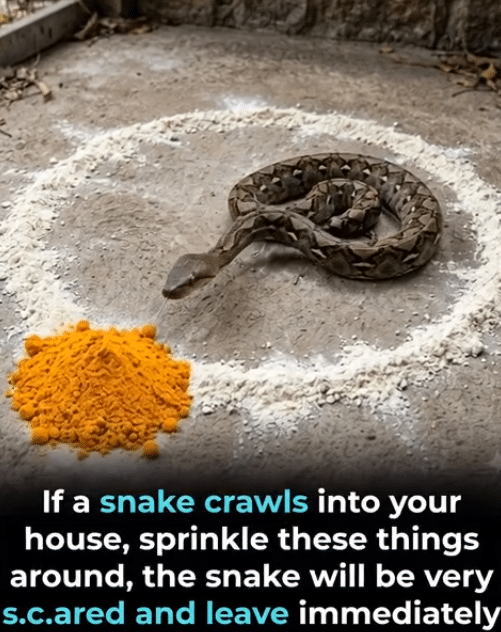
Finding a snake inside the house can be terrifying. The first instinct may be to grab vinegar, ammonia, sulfur, mothballs, essential oils, or another strong-smelling substance believed to drive the animal away.
Unfortunately, there is no dependable household ingredient that will instantly force a snake to leave. Wildlife experts warn that many commercial and homemade snake repellents are ineffective, while some chemicals can expose people and pets to toxic fumes or create a false sense of security.
The safest response is not to confront or chemically attack the snake. Create distance, isolate the area, keep everyone away, and contact a trained wildlife professional whenever the species is unknown.
Move Away and Keep Other People Out
Step back slowly and give the snake plenty of space. Do not touch it, strike it, throw objects at it, or try to pin its head with a household tool.
Many bites happen when people attempt to catch, kill, or handle a snake. Even a species that is normally considered harmless can bite defensively when cornered.
Move children and pets into another room and close the door between them and the snake. Warn everyone else in the home about its location.
Try to keep the animal in sight from a safe distance, but do not block its escape route or follow it into a confined space. If it disappears behind an appliance, cabinet, or wall opening, do not reach inside to search for it.
Isolate the Room When It Is Safe to Do So
When the snake is contained in one room, close interior doors leading to the rest of the house. A rolled towel placed beneath a door may help reduce the chance of it moving into another room, provided doing so does not require approaching the animal.
An exterior door can be opened to provide a possible exit only when it can be reached safely. Clear people and pets from the route, then leave the area quiet.
Do not assume that bright lights, darkness, loud music, floor tapping, or vibration will reliably direct the snake where you want it to go. An agitated animal may move unpredictably or retreat deeper into the home.
Call a Wildlife Professional
Contact local animal control, a wildlife-removal service, the fire department if it handles wildlife calls in your community, or another qualified local authority.
Professional assistance is especially important when:
- You cannot confidently identify the snake.
- Venomous snakes live in your region.
- The animal is large, defensive, or hidden.
- It is near a child, pet, bedroom, or busy walkway.
- You would need to get close to move it.
Identification based only on color or head shape can be unreliable. Similar-looking species may have very different levels of risk, and online photographs can be distorted by lighting, distance, or camera angle.
A clear picture taken from several feet away with a zoom lens may help a professional identify the species, but never move closer simply to obtain a photograph.
Vinegar Is Not a Reliable Snake Repellent
Vinegar frequently appears in online snake-control advice. Some posts recommend spraying it along floors, doorways, pools, or walls.
There is no strong evidence that ordinary household vinegar will reliably remove a snake that has already entered a building. A snake may cross the treated area, avoid it temporarily, or retreat into another hiding place.
Pouring liquid around floors can also create a slipping hazard, damage certain surfaces, and complicate professional removal. Never throw or spray vinegar directly at the animal.
Ammonia Can Create an Additional Hazard
Ammonia has an intense odor, but using it around an indoor snake is not a proven removal method. The fumes can irritate the eyes, skin, nose, throat, and lungs—particularly in enclosed or poorly ventilated rooms.
Never mix ammonia with bleach or another household cleaner. Such combinations can release dangerous gases. Poison Control advises consumers not to mix cleaning chemicals because the reaction may cause serious respiratory exposure.
Placing open containers or ammonia-soaked cloths around a home also creates exposure risks for children and pets without guaranteeing that the snake will leave.
Do Not Scatter Mothballs Around the House
Mothballs are pesticides intended for specific uses involving stored fabrics in tightly controlled spaces. They are not ordinary air fresheners or general wildlife repellents.
Using mothballs in a manner not permitted by the product label can harm people, pets, and the environment. Their fumes may be toxic, and the small white objects can be mistaken for candy by young children.
Extension specialists specifically discourage using mothballs to repel snakes. They do not provide dependable protection and should not be scattered across floors, attics, crawl spaces, yards, or entryways.
Sulfur and Essential Oils Are Not Magic Barriers
Sulfur powder is another traditional snake remedy, but agricultural extension guidance describes it as ineffective. Using it may encourage homeowners to enter an area they incorrectly believe has been made snake-free.
Cinnamon, clove, peppermint, cedar, garlic, and other strongly scented oils are also promoted online. A commercial product may have limited effects under certain controlled conditions, but that does not mean a homemade spray will remove an unidentified snake from a house.
Concentrated essential oils can irritate people and may be harmful to pets. They should never be poured onto a snake or sprayed throughout an occupied room as an emergency response.
Avoid Glue Traps and Improvised Capture Methods
Glue boards can cause prolonged suffering and may trap pets or other wildlife. Attempting to free a frightened snake from adhesive also places the homeowner within striking distance.
Some older wildlife publications describe methods for moving clearly identified nonvenomous snakes with a broom and container. However, this requires proximity, accurate identification, and the ability to control the animal safely.
For the average homeowner facing an unknown snake, waiting for trained removal is the safer choice.
What Actually Keeps Snakes Away Long Term
The best snake control focuses on exclusion and habitat management, not odor.
Inspect the building for gaps around doors, vents, pipes, utility cables, foundations, crawl spaces, and garage entrances. Snakes can enter through surprisingly narrow cracks, so damaged weather stripping and poorly fitted door sweeps should be repaired.
Keep vegetation trimmed near the structure and remove stacked lumber, heavy brush, leaf piles, construction debris, and clutter that can provide hiding places.
Rodent control is also important. Mice, rats, and other small animals are food sources for many snakes. Store pet food, birdseed, livestock feed, and garbage in sealed containers, and address signs of rodents promptly. Reducing food and shelter makes the property less attractive to snakes.
Avoid leaving doors open without screens, particularly in garages, basements, and ground-level rooms. Cover appropriate vents and openings with securely installed fine-mesh hardware cloth.
What to Do After the Snake Is Removed
Ask the removal professional where the snake may have entered and whether signs of rodents or structural gaps were found.
Inspect the immediate area carefully before allowing children or pets back inside. Do not reach into boxes, cabinets, or dark spaces with bare hands until the room has been checked.
If anyone is bitten, move away from the snake and call emergency services immediately. Do not cut the wound, suck out venom, apply ice, or use a tight tourniquet.
The Bottom Line
Vinegar, ammonia, mothballs, sulfur, and essential oils are not reliable emergency solutions for a snake inside the home. Some can expose your family to unnecessary chemical risks, while others may cause the animal to hide in a more difficult location.
The safest approach is straightforward: keep your distance, isolate the area, remove children and pets, provide an exit only when that can be done safely, and call a qualified wildlife professional.
Afterward, seal entry gaps, reduce clutter, and control rodents. Those practical measures are far more effective than any mysterious kitchen substance—and they can help prevent the next frightening encounter.


