A few ants near a door or window may not seem important. But when a steady trail begins crossing the kitchen counter, emerging from a bathroom wall, or appearing around the same doorway every morning, it can feel as though the insects are trying to deliver a message.
In a practical sense, they probably are.
Repeated ant activity usually indicates that the insects have found at least one of three things inside or near the home: food, water, or shelter. Even a clean-looking room can contain tiny crumbs, sticky residue, condensation, leaking plumbing, or narrow openings that are nearly invisible to the homeowner.
Across different cultures, ants have also been associated with patience, discipline, preparation, teamwork, and the idea that small problems can grow when ignored. Those interpretations may be meaningful as folklore or personal symbolism, but there is no scientific evidence that ants enter a home because of emotional energy, financial luck, or an approaching life event.
Their real message is more immediate: something in the environment is meeting the colony’s needs.
A Food Source May Be Easier to Reach Than You Realize
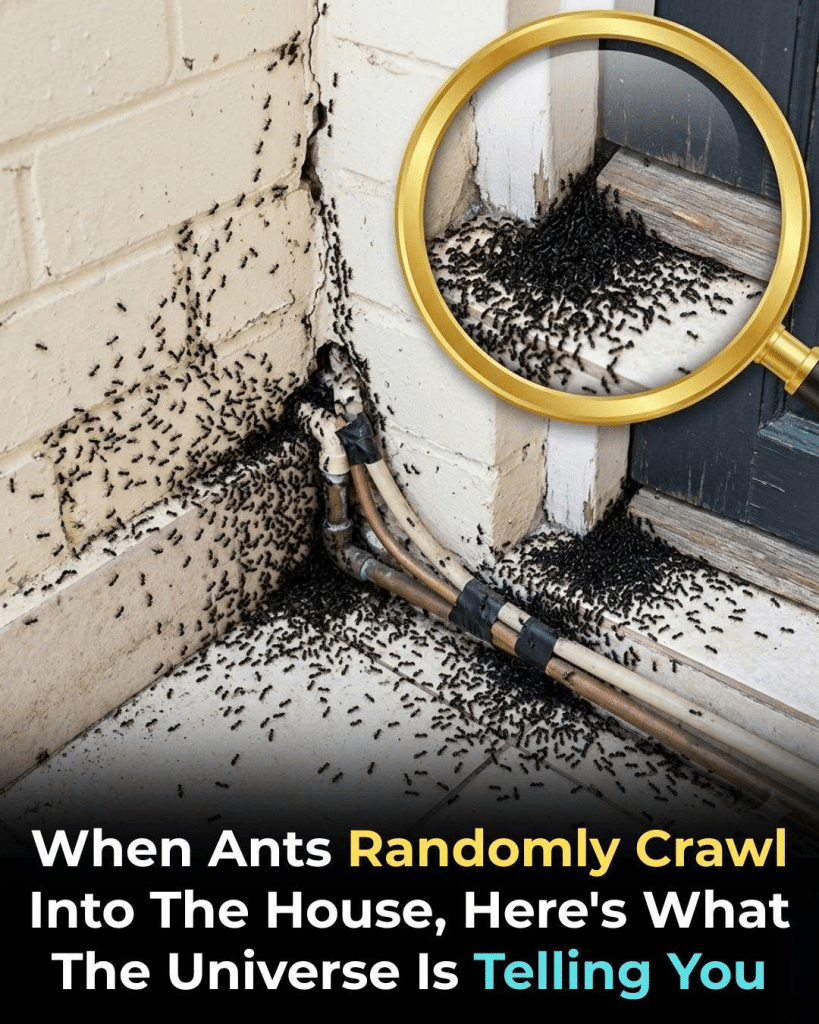
Ants do not need an uncovered bowl of sugar to find a reason to enter the kitchen. A few crumbs beneath an appliance, a drop of syrup on a bottle, grease near the stove, pet food on the floor, or residue inside a recycling container may be enough.
Scout ants continually search for resources. When one finds food, it can leave a chemical trail that other ants follow to the same location. This is why a single insect may turn into a long, organized line within a relatively short time. Pavement ants and several other household species use these trails while searching for sweets and other foods.
The trail may continue even after the obvious food has been removed. Clean the entire route with soap and water, paying attention to cabinet edges, floor gaps, baseboards, and the areas beneath kitchen appliances.
Store sugar, cereal, flour, snacks, and pet food in tightly closed containers. Wipe sticky bottles before placing them back in a cabinet, and do not leave dirty dishes or open trash overnight.
Repeated Ants Near a Sink May Indicate Moisture
Food is not the only attraction. Ants also need water.
Ants repeatedly appearing near a sink, dishwasher, bathtub, toilet, water heater, or laundry area may be responding to moisture. Check for dripping faucets, plumbing leaks, wet sponges, condensation, damaged grout, and water collecting beneath cabinets.
Odorous house ants, for example, may establish indoor nests near moisture and warmth, including inside structural voids or damaged wood.
A slow leak may remain unnoticed until insects begin visiting it. Look for swollen cabinet material, peeling paint, soft drywall, discoloration, musty odors, or damp wood. Repairing the moisture problem can make the area less attractive to ants while also reducing the risk of mold and expensive home repairs.
The Environmental Protection Agency’s integrated pest-management guidance recommends denying pests access to food, water, and shelter, including repairing water leaks and sealing openings.
Large Ants Could Point to Damp or Damaged Wood
Not every large black ant is necessarily a carpenter ant, so identification matters. However, repeated sightings of large ants—particularly near wood, windows, roofing, or moisture-damaged areas—may justify a closer inspection.
Carpenter ants do not consume wood as food. They remove it to create tunnels and nesting galleries. They commonly begin in moist, softened, or decaying wood, which means their presence can reveal a leak or deterioration that already exists.
Warning signs may include coarse sawdust-like material beneath a small opening, faint rustling noises inside a wall, large ants appearing after dark, or winged ants emerging indoors. Winged carpenter ants found inside may indicate an indoor nest rather than workers that simply wandered in from outdoors.
Possible moisture sources include a leaking roof, clogged gutter, damaged window frame, poorly sealed chimney flashing, plumbing problem, or wood touching damp soil. Correcting the water issue and replacing damaged wood may be as important as controlling the ants themselves.
Ignoring those signs may allow repair costs to grow, turning a small pest-control concern into a larger home-maintenance and personal finance problem.
Cracks and Gaps May Be Giving Them a Clear Entrance
Ants can enter through remarkably small spaces around pipes, windows, doors, cables, foundations, and baseboards.
Follow the trail rather than immediately wiping it away. Watch where the ants enter and where they are traveling. Once the entry point has been identified and the immediate activity is under control, suitable cracks can be sealed with caulk or another material appropriate for the surface.
The EPA advises sealing openings around baseboards, sinks, pipes, and windows as part of reducing indoor pest activity. Penn State Extension similarly recommends repairing cracks and closing routes through walls and around utilities.
Also inspect torn screens, poorly fitted weather stripping, gaps beneath exterior doors, and branches touching the roof or siding. These can act as bridges into the building.
Weather May Be Driving the Colony Indoors
A sudden increase in ants does not always mean the home has become dirtier.
Heavy rain can flood outdoor nesting areas, while hot and dry conditions may send ants searching for water. Seasonal colony growth can also increase the number of workers foraging around buildings.
During these periods, homes provide stable temperatures, moisture, and dependable food. The activity may be temporary, but recurring trails still show that the insects have discovered an accessible route or resource.
Removing those conditions is more effective than repeatedly killing only the ants that are visible.
What Ants Symbolize in Folklore
For generations, people have interpreted ants as symbols of hard work, cooperation, patience, preparation, and survival.
Because an ant colony appears highly organized, its arrival may inspire people to reflect on their own routines. A recurring trail can become a metaphor for neglected chores, accumulating expenses, unresolved conflict, or small habits that are beginning to create larger consequences.
That symbolism may be personally meaningful, but it should remain separate from pest science. Ants do not detect financial trouble, predict visitors, announce good luck, or respond to the emotional atmosphere of a home.
There may be an indirect connection between stress and pest activity. A household going through an exhausting period may postpone repairs, leave dishes longer, overlook spills, or allow clutter to accumulate. Those physical changes—not emotions themselves—can make food, water, and hiding places more accessible.
Why Spraying the Visible Trail May Not Solve the Problem
A household spray may kill worker ants on contact, but the colony and queen may remain hidden. In some situations, repellent products can disrupt a trail without resolving the source of the infestation.
Properly selected ant baits can be more effective because foraging ants carry the material toward the colony. However, the correct bait depends on the ant species and its current food preferences. Colorado State University recommends removing competing food, correcting moisture problems, placing bait where ants are active, and avoiding sprays that may discourage them from approaching it.
Use only products labeled for the intended location and pest. Follow all instructions, and keep baits and pesticides away from children, pets, exposed food, and food-preparation surfaces.
Do not mix pesticides with homemade ingredients or apply outdoor products inside the home.
When It Is Time to Call a Professional
Professional identification may be worthwhile when the ants return despite cleaning and sealing, appear in several rooms, emerge from electrical outlets or walls, or seem to be nesting inside the structure.
Help is also appropriate when there are possible carpenter ants, winged ants indoors, unexplained sawdust, damaged wood, or a nest that cannot be located.
A licensed pest-management professional can determine the species, identify likely nesting areas, and choose a targeted treatment. This is usually more effective than repeatedly purchasing random sprays and home remedies.
What the Ants Are Really Telling You
Ants repeatedly entering a home are not necessarily a sign of poor housekeeping. They are skilled foragers taking advantage of a resource or opening that may be extremely small.
Their appearance may indicate:
- Accessible food or sticky residue
- A plumbing leak or another moisture source
- Cracks around doors, windows, or pipes
- Seasonal pressure from rain, heat, or drought
- A nest near or inside the building
- Damp, deteriorating wood that needs inspection
The most effective response is to observe before reacting. Follow the trail, remove food sources, repair leaks, clean surfaces, seal entry points, and identify the species when the problem continues.
Cultural beliefs may turn ants into symbols of persistence or reminders not to ignore small problems. In that limited sense, the symbolism contains a useful lesson.
A few ants may seem insignificant, but repeated activity deserves attention. Addressing the underlying cause early can protect your food, reduce pesticide use, and prevent a minor household irritation from becoming a costly infestation.


