Noticing blue or green veins across your hands, arms, chest, or legs can raise questions about your health. Some people assume visible veins are proof of excellent fitness, while others worry that they automatically signal poor circulation or heart disease.
In reality, visible veins can mean many different things—and they are often completely normal.
Veins return blood toward the heart. Some are located close enough to the skin’s surface to be seen, especially when the skin is thin or there is less tissue covering them. Their appearance can change temporarily with exercise, temperature, body composition, and age.
However, veins that become swollen, twisted, painful, or accompanied by other symptoms may deserve medical attention. The appearance, location, and associated symptoms matter more than visibility alone.
Low Body Fat Can Make Veins Easier to See
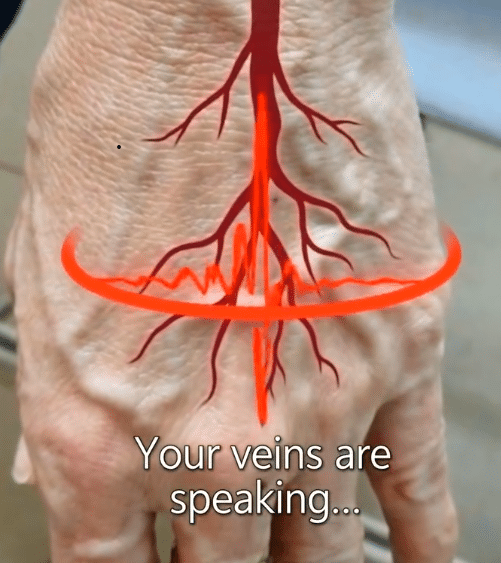
One common reason veins become noticeable is having less subcutaneous fat—the layer of tissue between the skin and muscles.
When this layer is thinner, the blood vessels underneath have less covering and may appear more clearly. This is often seen in naturally lean people, runners, bodybuilders, and other athletes.
Visible arm veins are not proof that someone is healthy or physically fit, but a combination of greater muscle mass and lower body fat can make them more prominent. Resistance training may also temporarily increase their visibility because working muscles expand and push superficial veins closer to the skin.
A person does not need to be an athlete to have naturally visible veins. Body structure varies widely, and some people simply have veins positioned closer to the skin.
Exercise Can Create a Temporary “Vascular” Look
During exercise, the muscles need more oxygen and nutrients. Blood flow increases, and veins may look fuller or more noticeable, particularly in the hands and arms.
Weightlifting can create a temporary effect commonly called a muscle “pump.” The muscles swell, and superficial veins become easier to see. This appearance usually fades as the body recovers and circulation returns to its resting state.
If veins appear mainly during a workout and return to normal afterward without pain, swelling, or discoloration, the change is usually not concerning.
However, exercise does not cure established varicose veins. Physical activity may support circulation and reduce some symptoms, but enlarged or damaged veins do not necessarily disappear through exercise alone.
Warm Temperatures Can Make Veins Stand Out
Veins may become more visible during hot weather, after a warm shower, or in a sauna. Heat causes blood vessels to widen, or dilate, as part of the body’s temperature-regulation process. Increased blood flow near the skin helps release heat.
This is why someone may notice more prominent veins during summer than during winter. Once the body cools, the vessels often become less noticeable.
A temporary change related to temperature is different from a vein that remains enlarged, rope-like, painful, or swollen throughout the day.
Aging Can Change the Appearance of Veins
Veins often become easier to see with age. The skin gradually becomes thinner and loses some of the tissue that once concealed the structures beneath it. This is especially noticeable on the hands and forearms.
Age is also a recognized risk factor for varicose veins. Over time, the one-way valves inside leg veins may become less effective. When those valves do not close properly, blood can flow backward and collect inside the vein, causing it to enlarge or twist.
Prominent hand veins caused by thin skin are not the same as symptomatic varicose veins in the legs. Location and symptoms help distinguish an ordinary age-related change from a possible circulation issue.
Genetics Play an Important Role
Some families naturally have more visible veins than others. Inherited traits can affect skin thickness, body-fat distribution, and the likelihood of developing spider or varicose veins.
A family history of vein problems is a recognized risk factor for varicose veins. Pregnancy, older age, obesity, limited physical activity, and prolonged sitting or standing may also increase the risk.
Genetics do not guarantee that someone will develop a medical problem. They simply influence susceptibility.
Visible Veins Are Not Automatically Varicose Veins
A normal superficial vein may look blue or green but remain flat, soft, and painless. Varicose veins are usually enlarged and may appear twisted, raised, knotted, or rope-like beneath the skin. They are most common in the legs, feet, and ankles.
Spider veins are smaller red, blue, or purple lines that form branching or web-like patterns near the skin’s surface. They are generally harmless and more often represent a cosmetic concern than a serious health problem.
Varicose veins, however, can sometimes produce symptoms such as:
- Aching, burning, or throbbing in the legs
- A heavy or tired feeling
- Itching around the veins
- Swollen feet or ankles
- Muscle cramps
- Pain that worsens after prolonged standing
These symptoms may indicate increased pressure in the leg veins and should be discussed with a healthcare professional if they persist.
When Visible Veins May Point to Venous Insufficiency
Chronic venous insufficiency occurs when the leg veins have difficulty returning blood efficiently toward the heart. Damaged valves can allow blood to pool, particularly when a person stands for long periods.
In addition to enlarged veins, possible signs include leg swelling, heaviness, cramping, itching, and skin changes around the ankles. Over time, the skin may become darker, hardened, dry, or irritated. In more advanced cases, wounds called venous ulcers can develop and heal slowly.
A leg sore that does not heal, persistent swelling, or significant skin discoloration should not be treated as merely cosmetic.
Warning Signs That Need Prompt Medical Attention
Visible veins alone are rarely an emergency. A sudden change accompanied by pain or swelling is different.
A deep vein thrombosis, or DVT, is a blood clot that usually forms in a deep vein of the leg. Symptoms may include swelling—often on one side—along with pain, tenderness, warmth, and red or darkened skin.
A superficial vein that becomes red, hot, tender, or hard like a cord may indicate inflammation or a clot in a vein close to the skin and should also be medically assessed.
Seek emergency medical help for sudden shortness of breath, chest pain—especially pain that worsens when breathing—coughing up blood, fainting, or a rapid heartbeat. These can be symptoms of a pulmonary embolism, which occurs when a clot travels to the lungs and can be life-threatening.
Can Lifestyle Habits Help?
Regular movement supports circulation, particularly in the legs. Walking, swimming, cycling, ankle raises, and calf exercises activate the muscles that help move blood upward.
Avoiding very long periods of sitting or standing may also help. When work requires remaining in one position, brief movement breaks can reduce prolonged pressure in the lower legs.
Elevating the legs may relieve swelling or heaviness for some people with venous symptoms. Maintaining a weight appropriate for your health can also reduce pressure on the leg veins.
Compression stockings are helpful in some situations, but the correct type and pressure matter. People with circulation disorders should ask a healthcare professional before purchasing strong medical compression garments.
Treatment and Insurance Considerations
Vein treatment depends on the cause and severity of the symptoms. Options may include self-care, compression therapy, injections, laser-based procedures, or minimally invasive treatments that close a damaged vein.
Many procedures are performed without an overnight hospital stay. However, health insurance coverage may depend on whether treatment is considered medically necessary or purely cosmetic. Procedures performed only to improve appearance are less likely to be covered, while treatment for pain, swelling, ulcers, or impaired blood flow may qualify under some plans.
Before arranging treatment, patients should request a clear diagnosis, ask about alternatives, and confirm coverage, deductibles, and out-of-pocket costs with their insurer.
The Bottom Line
Visible veins do not reveal one single fact about your health.
They may reflect natural anatomy, low body fat, exercise, warm temperatures, aging, or genetics. In many people, they are simply a normal physical feature.
What matters is whether the veins are new, painful, swollen, twisted, hot, hard, or associated with skin changes. Persistent leg heaviness, ankle swelling, nonhealing sores, or sudden one-sided symptoms should be evaluated.
So, if you can see the veins in your hands or arms, there is usually no reason to panic. Look at the complete picture rather than relying on appearance alone.
Your body may simply be showing its natural circulation—or it may be giving you a reason to schedule a medical checkup.


