Waking up with itchy, irritated eyes is common. Many people immediately blame dry air, poor sleep, seasonal allergies, or spending too much time looking at screens. Those are all possible explanations, but there is another cause that is less obvious: microscopic mites living around the eyelashes.
They are called Demodex mites.
Before that idea causes unnecessary alarm, it is important to understand that Demodex mites are common and often harmless. Their presence does not automatically mean someone has poor hygiene or an eye disease. Problems generally develop only when the mites become unusually numerous or contribute to inflammation along the eyelid margins.
When that inflammation occurs, it is known as Demodex blepharitis. It can cause itching, redness, crusting, burning, tearing, dryness, and the feeling that dust or another foreign object is trapped in the eye. Symptoms may be particularly noticeable at night or early in the morning.
What Are Demodex Mites?
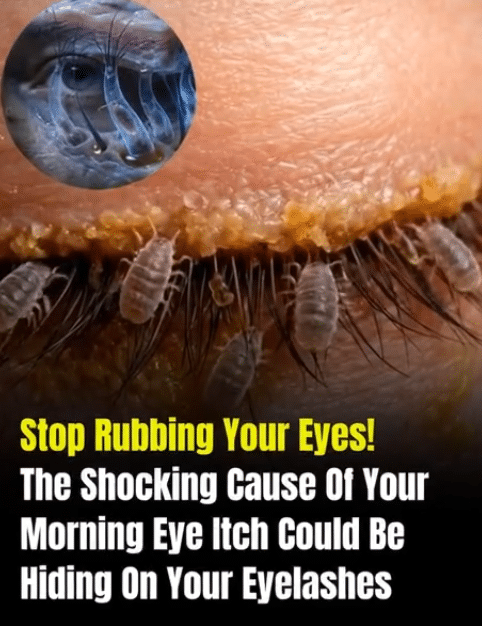
Demodex are tiny organisms that live in or near human hair follicles and oil glands. Two types are commonly associated with people: Demodex folliculorum, which tends to live around hair follicles, and Demodex brevis, which is found deeper in oil-producing glands. They are frequently present on the face, including around the eyebrows and eyelashes.
Most people never know they are there. In small numbers, the mites may exist without causing noticeable symptoms. Trouble can begin when their population increases or when a person develops inflammation in response to them. Increasing age, rosacea, diabetes, and certain immune-related factors have been associated with a greater likelihood of Demodex-related eyelid disease.
The mites are not usually visible without magnification. An eye doctor may instead look for a characteristic sign known as collarettes—waxy, cylindrical debris wrapped around the base of the eyelashes. These deposits are strongly associated with Demodex blepharitis and can be identified during an eyelid examination.
Why the Itching May Feel Worse in the Morning
Blepharitis of any kind can produce crusty eyelashes and eyelid irritation that is most noticeable upon waking. The National Eye Institute lists itchy, swollen, burning, watery, or crusty eyelids among the common symptoms of blepharitis.
In Demodex-related cases, patients frequently report itching at night or early in the morning. Researchers and eye-care specialists have connected that pattern to the mites’ activity around the eyelash follicles. However, morning itching by itself cannot confirm Demodex. Allergies, ordinary dry eye, bacterial eyelid inflammation, makeup irritation, and other conditions can produce similar symptoms.
That distinction matters. An alarming social-media video may suggest that every itchy eye is caused by mites, but the reality is more complicated. Demodex is only one possible explanation, and proper diagnosis usually requires an eye examination.
Signs That May Point to Eyelid Inflammation
Morning itching deserves more attention when it repeatedly appears with crusting around the eyelashes, red or swollen eyelid edges, burning, excessive tearing, dryness, or a gritty sensation.
Some people also notice eyelashes falling out or growing in unusual directions. More severe blepharitis may contribute to blurred vision or irritation of the cornea, the clear surface at the front of the eye.
Recurring styes or chronic eyelid irritation may also justify an examination, although these problems have several possible causes. An optometrist or ophthalmologist can inspect the lashes and eyelid margins with magnification and determine whether Demodex, blocked oil glands, bacteria, allergies, or another condition is more likely.
Why Rubbing Is Not the Answer
Rubbing itchy eyes may provide a few seconds of relief, but repeated rubbing can worsen irritation and swelling. Excessive rubbing has even been associated with chemosis, a condition in which the tissue covering the white of the eye becomes noticeably swollen.
Rather than rubbing, gently close the eyes and use a clean compress appropriate for the suspected cause. Avoid scratching the eyelid margins with fingernails or applying concentrated essential oils, alcohol, or unapproved skin products close to the eyes.
Contact-lens wearers should be particularly cautious. A red, painful eye with light sensitivity, discharge, or sudden blurred vision may indicate a corneal infection rather than simple itching. The CDC advises removing contact lenses and contacting an eye doctor immediately when those symptoms occur.
Can Better Eyelid Hygiene Help?
Regular eyelid care is an important part of managing many forms of blepharitis. The National Eye Institute recommends keeping the eyelids clean and free of crusts, often with warm compresses and gentle cleaning around the lash line. The precise routine should be based on an eye-care professional’s advice, especially when symptoms are persistent or severe.
Removing eye makeup before bed may also reduce irritation and prevent cosmetics from accumulating near the oil glands. Avoid sharing mascara, eyeliner, or other eye products, and replace products that are old, contaminated, or causing discomfort.
Those habits support eyelid health, but they may not eliminate a confirmed Demodex infestation. A person can follow excellent hygiene practices and still develop blepharitis.
Be Careful With Tea Tree Oil Remedies
Online posts frequently recommend tea tree oil for eyelash mites. This advice deserves caution.
A systematic review found uncertainty about how effective tea tree oil is for short-term Demodex blepharitis treatment and noted that lower concentrations may be preferable because of the risk of eye irritation. Undiluted tea tree oil should not be placed in or near the eyes.
Products intended for facial skin are not automatically safe for the eyelid margin or eye surface. Do not experiment with homemade mixtures, essential oils, veterinary mite products, or another person’s prescription drops.
Medical Treatment Is Available
People with confirmed Demodex blepharitis may be offered professionally directed treatment. The FDA has approved lotilaner ophthalmic solution 0.25%, sold under the brand name Xdemvy, specifically for Demodex blepharitis. The approved regimen is one drop in each affected eye twice daily for six weeks.
That does not mean everyone with itchy eyes needs prescription medication. Treatment depends on the diagnosis, symptom severity, medical history, and findings during the eye examination.
An examination may also help prevent unnecessary spending on ineffective cleansers or supplements. Depending on a person’s health insurance, routine eye-care benefits and medical eye examinations may be covered differently, so checking the policy before scheduling can help with healthcare budgeting.
When to Seek Prompt Medical Care
Routine itching without pain or vision changes can usually be discussed during a standard appointment. More urgent evaluation is needed when symptoms include moderate or severe pain, intense redness, unusual sensitivity to light, significant discharge, or blurred vision.
A red, painful eye accompanied by sudden blurred vision can be a medical emergency. Do not assume it is caused by Demodex, allergies, or lack of sleep.
Contact-lens users, people with weakened immune systems, and anyone who recently had an eye injury or procedure should be especially careful about new symptoms.
The Bottom Line
Microscopic eyelash mites may sound disturbing, but Demodex organisms are a common part of human skin. Their presence alone is not a reason to panic.
The concern arises when they contribute to blepharitis, producing persistent morning itching, lash-line debris, redness, burning, dryness, or crusting. Because several other eye conditions can look similar, an examination is more reliable than attempting to diagnose the problem from symptoms or social-media photographs.
So the next time your eyes itch in the morning, resist the urge to rub them aggressively. Look for additional symptoms, keep the eyelids gently clean, and seek professional advice if the irritation continues.
The cause may be as simple as dry air or allergies—or it may be an eyelid condition that can be treated once it is properly identified.


