Cleaning the oven is one household chore many people postpone until grease, burned food, and lingering odors become impossible to ignore. The job can require awkward scrubbing, strong-smelling products, and more time than most homeowners want to spend on kitchen maintenance.
That is why a simple cleaning method often called “Nana’s trick” has attracted so much attention online. The popular version involves placing water and a dishwasher pod in a heatproof casserole dish, warming it inside the oven, and allowing the resulting steam to soften baked-on residue.
The idea sounds convenient: let heat and moisture do the difficult work, then wipe the oven clean with minimal scrubbing.
However, there is an important safety detail many social media posts leave out. Dishwasher tablets are formulated and labeled for use inside dishwashers. Finish, for example, instructs consumers to place its tablets only in the dishwasher’s detergent compartment. It does not recommend heating them in an oven or using them as general-purpose oven cleaners.
Fortunately, homeowners can still benefit from the basic idea behind the hack. Steam can help soften light grease and food residue — but the safest approach is to use plain water and follow the oven manufacturer’s instructions.
Why Steam Can Make Oven Cleaning Easier
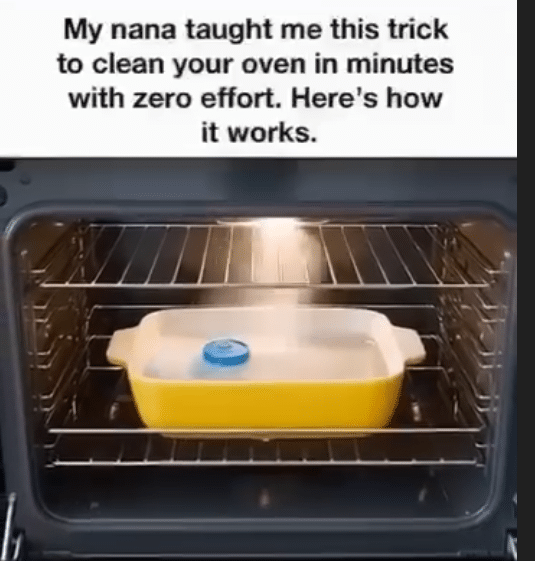
Baked-on spills become difficult to remove because repeated heat dries and hardens the residue. Introducing moisture can soften some of that buildup, allowing it to release more easily when wiped with a damp cloth.
Several appliance manufacturers offer ovens with a dedicated steam-cleaning function. GE’s instructions for compatible models call for adding one cup of water to a cool oven, running the designated Steam Clean cycle, and wiping away the remaining moisture and loosened soil afterward.
Whirlpool provides similar guidance for certain models, although the required amount of water and cycle duration can vary. Its instructions emphasize consulting the specific appliance manual because not every oven is designed or operated in the same way.
This is the useful principle behind the viral method: warm moisture can reduce the amount of physical scrubbing required.
The dishwasher pod is not necessary.
In fact, Whirlpool’s instructions for some AquaLift cleaning systems specifically state that users should not add chemicals or other cleaning products to the water.
A Safer Water-Only Steam-Cleaning Method
Before cleaning anything, check the owner’s manual for your particular oven. Some models have a Steam Clean button, some use a high-temperature self-cleaning cycle, and others require manual cleaning.
Do not assume that instructions for one appliance are appropriate for another.
Begin only when the oven is completely cool. Remove pans, foil, temperature probes, and any other objects stored inside. Take out the racks unless the manufacturer says they can remain during the approved cleaning cycle.
Use a damp cloth or a vacuum hose attachment to remove loose crumbs and dry debris. Wipe up pools of grease before adding water, since steam is best suited to light spills rather than large amounts of oil or heavily carbonized buildup.
For an oven with a built-in steam-cleaning feature, add only the amount of water specified in the manual. Depending on the model, the water may be poured onto the oven floor or placed in an approved container.
Close the door, select the Steam Clean setting, and let the full cycle finish. Avoid opening the door during the process because the water and interior surfaces may be extremely hot.
After the cycle ends, allow the oven to cool until it can be touched safely. Use a soft cloth or nonabrasive sponge to wipe away the moisture and loosened food residue.
GE recommends soap and water, a wet cloth, or a nonscratch sponge for manual oven cleaning. Abrasive tools can damage the interior finish.
What to Do If Your Oven Does Not Have Steam Clean
Do not improvise with a dishwasher pod or automatically place a steaming dish inside the appliance. Refer to the manufacturer’s manual before heating water in an oven that was not designed with a steam-cleaning program.
A straightforward manual cleaning may be the better option.
Once the appliance is cool, remove loose debris and wipe the interior with warm water and a small amount of mild dish soap. Use a soft sponge or cloth rather than steel wool or another abrasive scrubber.
GE says a self-cleaning oven can be manually cleaned with dish soap and water, but it warns against using commercial oven cleaner in or around its self-cleaning oven liners because repeated chemical exposure can damage the surface.
For stubborn residue, place a damp cloth over the spot for several minutes before wiping again. The additional contact time can soften the buildup without requiring aggressive scrubbing.
Some manufacturers also suggest baking soda, vinegar, or lemon juice for certain manual-cleaning situations, but these options should only be used when permitted by the appliance manual.
Clean the Oven Racks Separately
Oven racks often collect grease around the corners and along the rails. Unless the manual specifically says otherwise, remove them before running a cleaning cycle.
Place the racks in a sink or another suitable washing area and soak them in warm, soapy water. Once the residue has softened, wipe them with a nonscratch sponge and dry them thoroughly before returning them to the oven.
Avoid placing racks in a self-cleaning cycle unless the manufacturer confirms they are designed for it. Extreme heat can discolor some racks or damage their finish and sliding performance.
Cleaning the racks separately may require a little more hands-on work, but it reduces the risk of damaging parts that were not intended for high-temperature cleaning.
Why You Should Skip the Dishwasher Pod
The original viral method is appealing because dishwasher pods contain concentrated ingredients designed to break down food and grease. But a dishwasher is a controlled system that uses water, spray arms, rinsing stages, and a detergent dispenser.
An oven does not operate in the same way.
Heating a tablet in an open dish may leave detergent residue on interior surfaces where food is later cooked. It also uses the product outside the manufacturer’s directions.
Household cleaning products should not be combined casually. Poison Control warns that mixing cleaning products can create dangerous fumes and advises consumers to use products only as directed.
For that reason, the more responsible version of “Nana’s trick” is simple: use plain water if your oven is designed for steam cleaning, and use an approved mild cleaner for manual wiping.
Small Habits Prevent Major Buildup
The easiest oven to clean is one that never develops a thick layer of burned residue.
Once the oven has cooled after cooking, wipe up fresh spills before they are reheated repeatedly. Place food in appropriately sized baking dishes and use a sheet pan beneath recipes likely to bubble over, provided the pan does not block airflow or violate the appliance instructions.
Never line the oven floor with foil unless the manufacturer expressly allows it. GE cautions that foil and silicone liners can cause damage when left inside during cleaning cycles.
Frequent light cleaning can also reduce odors and help homeowners avoid long, high-temperature cleaning sessions. It protects the appliance’s interior and may delay the need for repairs or replacement — an important consideration for household budgeting and long-term home maintenance.
A Simple Trick With One Important Correction
The viral oven-cleaning method is based on a useful idea: moisture can soften grime and make wiping easier.
But the dishwasher tablet should stay in the dishwasher.
For a low-effort alternative, use the oven’s approved steam-clean function with plain water, or clean the cooled interior manually with mild soap and a nonscratch cloth. Always follow the appliance manual, use heat-resistant gloves when necessary, keep children and pets away from the area, and allow the oven to cool before touching any interior surface.
With the right approach, cleaning the oven does not need to become an exhausting weekend project.
A little water, the correct setting, and regular maintenance may be all it takes to make the job safer, simpler, and much less stressful.


