What happened that day at the Cincinnati Zoo wasn’t just a shocking moment—it became one of the most emotional and controversial events involving wildlife in modern history.
On May 28, 2016, a normal day at the zoo turned into chaos within seconds.
A three-year-old child managed to slip past a protective barrier and fell into the gorilla enclosure—coming face-to-face with Harambe, a 17-year-old, 440-pound western lowland gorilla.
Witnesses described the moment as terrifying.
Gasps turned into screams as visitors realized what had happened. Inside the enclosure, Harambe approached the child. What followed lasted only minutes—but would be debated for years.
What Really Happened Inside the Enclosure
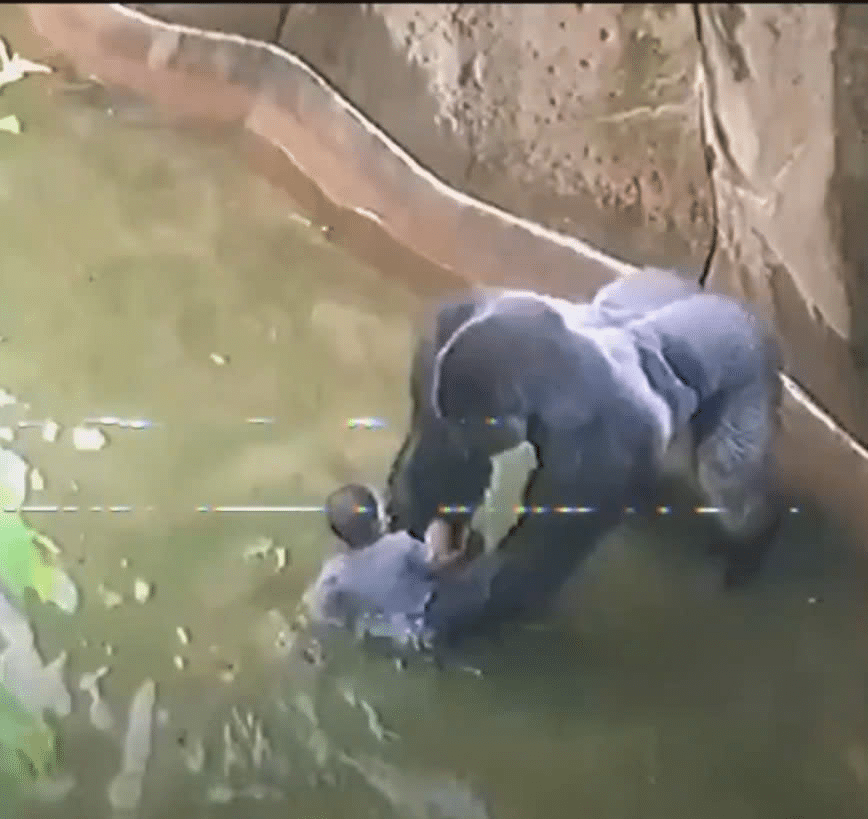
Videos captured Harambe interacting with the child in ways that left experts—and the public—deeply divided.
At times, he appeared calm. At others, he dragged the child through the water, raising immediate concern. Some observers believed Harambe was trying to protect the boy, pointing to moments where he stood over him as if shielding him.
Others saw something far more dangerous.
Wildlife specialists emphasized a critical reality: regardless of intent, a gorilla of Harambe’s size and strength could unintentionally cause fatal harm in an instant.
Zoo officials were forced into a decision no one ever wants to make.
The Decision That Changed Everything
With the child’s life at immediate risk, staff at the zoo made the call to use lethal force.
They shot Harambe.
The child survived. Harambe did not.
Zoo authorities later explained that tranquilizers were not a viable option. Sedatives take time to work—and in a high-risk situation like this, even seconds could mean the difference between life and death.
The decision, while aimed at saving the child, sparked global outrage.
A Global Reaction Like No Other
Almost instantly, the story spread across the world.
Millions watched the footage. Social media erupted. The name “Harambe” became a symbol—of grief, anger, and ethical conflict.
Some people supported the zoo’s decision, arguing that human life must always come first.
Others believed Harambe was a victim of human error—that the situation should never have happened, and that the gorilla paid the ultimate price for it.
The Ethical Debate That Still Continues
Even years later, Harambe’s story raises difficult questions:
- Should animals in captivity bear the consequences of human mistakes?
- Was lethal force truly the only option?
- Do zoos adequately balance safety and animal welfare?
Animal rights advocates argue that highly intelligent creatures like gorillas—who share about 98% of human DNA—should not be confined in environments where such incidents are even possible.
Meanwhile, supporters of modern zoos point to their role in conservation, education, and protecting endangered species.
The truth lies in a complex gray area.
Changes That Followed the Tragedy
In the aftermath, zoos around the world began reassessing safety measures:
- Barriers were reinforced
- Viewing areas redesigned
- Emergency protocols improved
The Cincinnati Zoo itself made significant upgrades to prevent similar incidents.
Staff members, many of whom had cared for Harambe daily, expressed deep sorrow. For them, it wasn’t just a public controversy—it was a personal loss.
A Legacy That Still Resonates
Nearly a decade later, Harambe’s name still carries weight.
What began as a tragic accident evolved into a global conversation about responsibility, ethics, and how humans interact with wildlife. It also revealed how quickly a single moment can spread across the digital world—transforming into debate, symbolism, and cultural memory.
Harambe became more than a gorilla.
He became a reminder.
A reminder that human curiosity and control can sometimes collide with nature in irreversible ways. A reminder that protecting life—both human and animal—is rarely simple.
And perhaps most importantly, a reminder that every decision made in those critical moments carries consequences far beyond what we can see.