Some performers belong to one unforgettable decade. Others seem to carry the history of American entertainment within them.
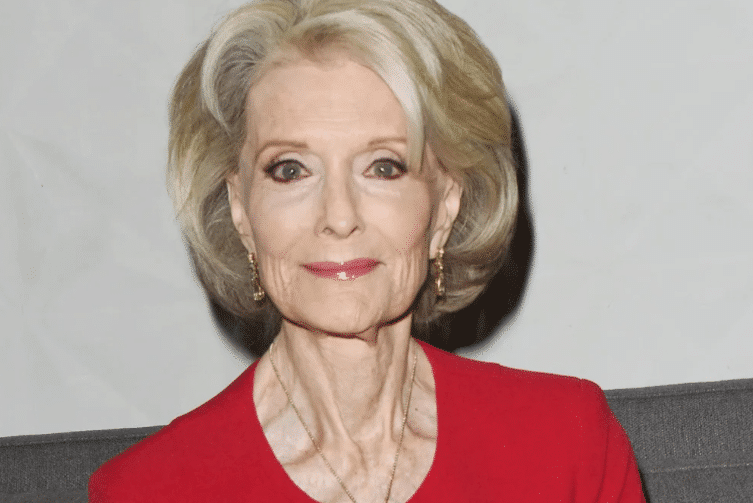
The subject of these recently circulated photographs began acting when Hollywood’s great studios still controlled much of the movie business. She appeared opposite John Wayne and William Holden, worked with two of cinema’s boldest directors, starred alongside Yul Brynner on Broadway, and later became one of daytime television’s most memorable villains.
Her graceful appearance may bring back different memories for different generations.
Classic-film fans may picture her riding through Civil War country in a John Ford Western. Theater lovers may remember her singing “Shall We Dance?” beneath the lights of a Broadway stage. Soap-opera viewers know the unmistakable voice and icy confidence of Helena Cassadine.
The actress is Constance Towers, whose remarkable career has moved through film, musical theater, prime-time television, and daytime drama.
The original headline described her as 92. That was accurate when the page appeared in February 2026. Born on May 20, 1933, Towers celebrated her 93rd birthday in May 2026.
Her story is not simply about longevity. It is about adapting to a changing entertainment industry without losing the poise, discipline, and commanding presence that made audiences notice her in the first place.
A Childhood Voice Discovered Far From Hollywood
Constance Mary Towers was born in Whitefish, Montana, during the difficult years of the Great Depression.
Her path toward performance began unusually early. Talent scouts searching for young radio performers noticed her while she was still a child, and she began appearing in radio productions after her family moved to the Pacific Northwest.
Radio acting required imagination and precision.
There were no costumes or facial expressions to help tell the story. A performer had to communicate fear, affection, humor, and suspense through the voice alone. That early training may help explain why Towers later became so effective in roles built around authority and carefully controlled emotion.
After her family moved east, she studied music at the Juilliard School in New York and continued developing her voice and dramatic skills. Her preparation reflected an older tradition in which performers were expected to sing, act, speak clearly, and adapt to different kinds of stages.
For older Americans, her beginnings may recall the golden years of radio, when families gathered around a single set in the living room.
Before television became an everyday presence, voices created entire worlds.
A creaking door could suggest danger.
A few musical notes could transport listeners into romance or adventure.
And a talented young performer could enter homes across the country without ever being seen.
Hollywood Opened Its Doors
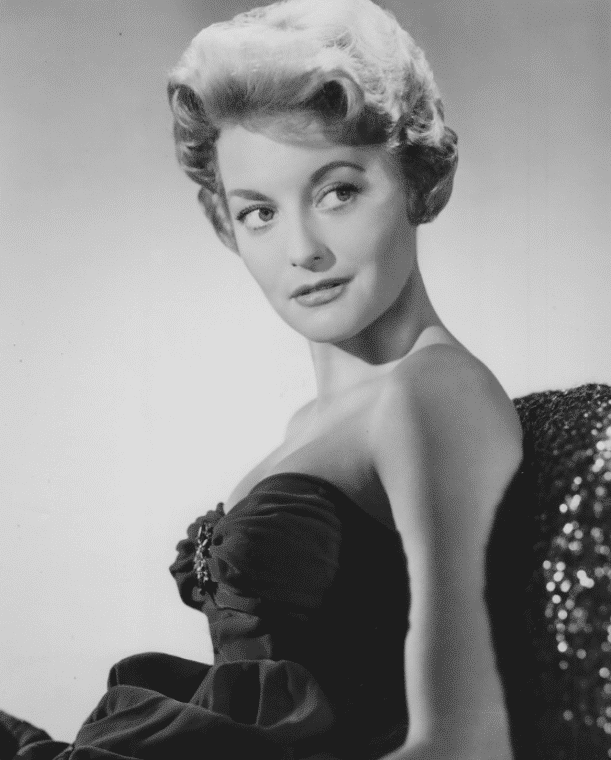
Towers eventually attracted the attention of a talent agent and entered the motion-picture business during the 1950s.
Her early screen work included Bring Your Smile Along in 1955 and the crime drama Over-Exposed the following year. These appearances introduced her during a period when studio publicity photographs, theater marquees, and newspaper advertisements still played a major role in creating stars.
She possessed the polished beauty associated with the era, but her strongest roles required much more than appearance.
Towers could project intelligence, moral determination, and emotional restraint. She looked believable in period costumes, but she never seemed like a decorative figure placed quietly beside a male leading actor.
That strength soon brought her into the orbit of one of America’s most celebrated filmmakers.
Holding Her Own Beside John Wayne and William Holden
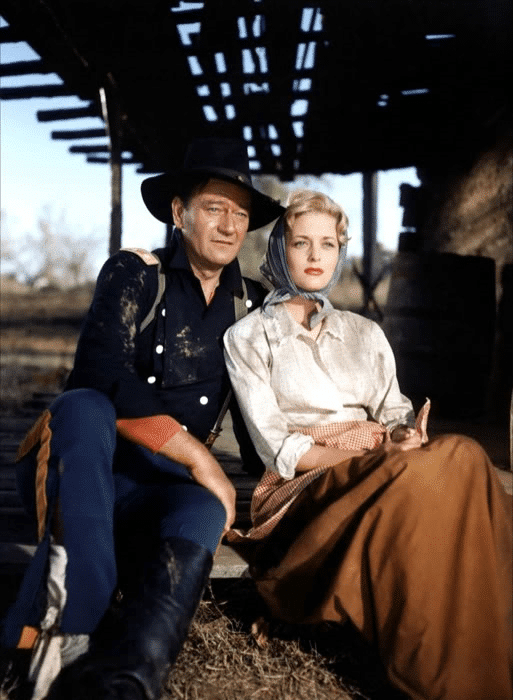
In 1959, Towers appeared in John Ford’s The Horse Soldiers, starring John Wayne and William Holden.
Set during the Civil War, the movie followed a Union cavalry mission through Confederate territory. Towers played Hannah Hunter, a Southern woman whose home is occupied by the soldiers.
Hannah could easily have become a conventional romantic character.
Instead, she observes, challenges, resists, and attempts to protect her world. Towers gave her the dignity of someone who understood that the men around her possessed physical power but did not automatically possess moral authority.
Appearing beside Wayne and Holden was no small assignment.
Both men were established stars with strong screen personalities. Ford was known for creating expansive landscapes and characters shaped by courage, duty, and private regret.
Towers did not disappear beside them.
Her performance gave the story a perspective that might otherwise have been lost amid military strategy and masculine conflict. The film remains one of the classic credits most closely associated with her career.
The following year, Ford cast her again in Sergeant Rutledge.
The Western courtroom drama dealt with an African American cavalry sergeant accused of serious crimes. Towers played Mary Beecher, a woman whose testimony becomes important to the case.
The movie addressed racism and military honor during an era when major Hollywood productions often avoided confronting such subjects directly.
Working with Ford twice placed Towers inside the final chapter of the classic Western tradition. The genre was beginning to examine its own legends more critically, allowing old stories about heroism and frontier justice to become more morally complicated.
Taking a Bold Turn With Samuel Fuller
Towers’ next major film chapter took her far from the sweeping landscapes of John Ford.
She worked with writer-director Samuel Fuller on Shock Corridor in 1963 and The Naked Kiss in 1964.
Fuller’s films were raw, unconventional, and frequently uncomfortable. He was less interested in protecting audiences than in forcing them to confront subjects polite society preferred to ignore.
In Shock Corridor, Towers played Cathy, whose boyfriend deliberately enters a psychiatric hospital while investigating a murder. The film used its sensational story to examine obsession, racism, fear, and the fragile boundary between determination and self-destruction.
In The Naked Kiss, she received one of the most demanding leading roles of her career.
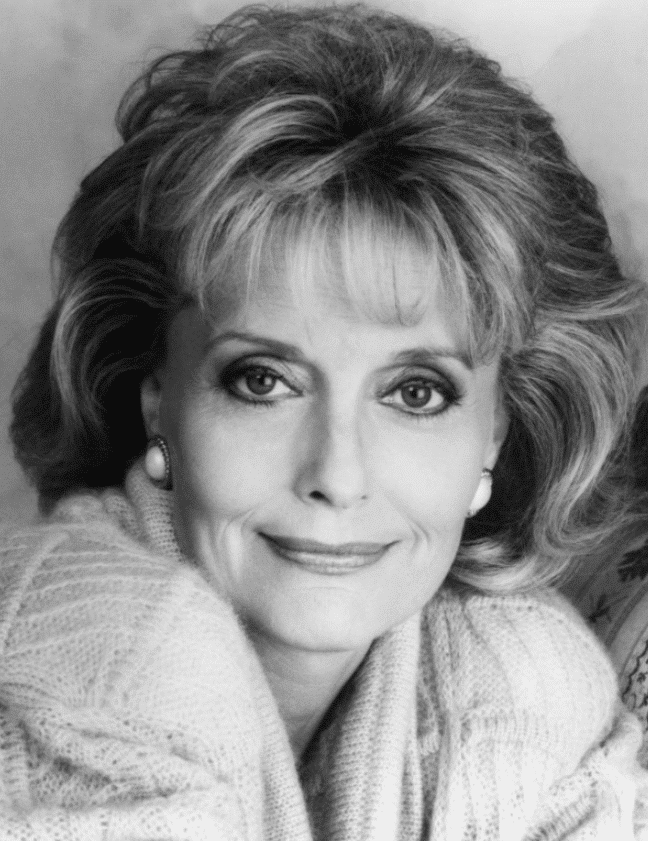
Towers portrayed Kelly, a woman attempting to build a respectable life in a seemingly peaceful community. The town’s polished surface gradually gives way to something much darker.
Criterion describes her work in the film as a forceful central performance within one of Fuller’s boldest productions. The company’s restored edition also includes an extensive interview with Towers about making the movie.
The role showed a side of Towers that viewers of traditional studio films may not have expected.
She could be glamorous, but she could also appear frightened, angry, wounded, and fiercely determined. Her character refused to accept the quiet corruption surrounding her, even when exposing it carried an enormous personal cost.
These films later found devoted audiences among critics, filmmakers, and classic-cinema collectors.
They also proved that Towers was willing to take risks rather than protect a carefully manufactured image.
Broadway Offered a New Kind of Challenge
After establishing herself in film, Towers increasingly turned toward the theater.
The transition made sense. Her musical training, disciplined voice, and ability to command a room were perfectly suited to the stage.
She made her Broadway debut in the title role of Anya in 1965. The production was inspired by the Anastasia legend and featured music adapted from themes by Sergei Rachmaninoff. Towers performed opposite the legendary Lillian Gish.
Although the musical had a brief run, it opened important doors.
Towers later performed in productions of Show Boat, Carousel, and The Sound of Music. Her stage career reached a particularly memorable point when she played Anna Leonowens opposite Yul Brynner in a major revival of The King and I.
The Broadway production opened in 1977 and continued through the end of 1978, with Towers appearing as Anna during its celebrated run.
Live theater demanded something movies could not. There were no retakes. Every song had to be delivered in the moment.
Every emotional change had to reach the back of the theater without appearing exaggerated to the people in the front rows.
Night after night, Towers had to match the powerful stage presence of Brynner, whose performance as the King of Siam had already become one of musical theater’s most iconic portrayals.
She brought elegance and resolve to Anna, a teacher attempting to maintain her principles within an unfamiliar royal court.
Older theatergoers may remember when Broadway cast albums were treasured household possessions. Listeners followed the story through songs, studied the photographs inside the record sleeve, and imagined the production even when a trip to New York was impossible.
Towers belonged to that tradition—a performer whose voice could carry both intelligence and romantic longing.
A New Home in Daytime Television
By the 1980s, American television had changed dramatically.
The three major networks still dominated family rooms, and daytime dramas created some of television’s most loyal audiences. Viewers did not merely watch the characters for a few weeks. They followed them through marriages, betrayals, illnesses, business rivalries, and family revelations across many years.
Towers joined the CBS soap opera Capitol as Clarissa McCandless, the elegant matriarch of a politically connected Washington family.
The role introduced her to audiences who may never have seen her Westerns or Broadway performances.
Clarissa required the same qualities Towers had brought to earlier work: poise, strength, and the ability to suggest that a character knew far more than she was willing to reveal.
Daytime television also required extraordinary discipline.
Episodes were produced quickly, scripts could be lengthy, and actors often had limited rehearsal time. A performer needed to memorize dialogue, make precise emotional choices, and remain dependable under constant production pressure.
Towers’ classical training served her well.
Becoming Helena Cassadine
In 1997, Towers took on the television role that would introduce her to another generation.
She joined General Hospital as Helena Cassadine, the wealthy and calculating matriarch of the Cassadine family.
Helena had originally been played by Elizabeth Taylor during the famous Luke and Laura wedding storyline in 1981. When Towers assumed the role years later, she faced the challenge of honoring an established character while making Helena unmistakably her own.
She succeeded by finding elegance inside the villainy.
Helena did not need to shout to frighten people. Towers could deliver a threat with a calm smile, a raised eyebrow, or a carefully placed pause.
The character orchestrated schemes involving family power, revenge, hidden identities, medical manipulation, and the long-running conflict between the Cassadines and the Spencers.
These plots were often deliberately extravagant. That was part of the pleasure.
Daytime drama offered viewers an escape into a world where family arguments could involve private islands, inherited fortunes, royal titles, and enemies who had an unusual ability to return from the dead.
Towers understood the tone perfectly.
She played Helena seriously enough for the danger to feel real, but with enough theatrical confidence to embrace the larger-than-life storytelling.
In an interview reflecting on the character, Towers recalled that fans frequently told her they loved to hate Helena. She believed the character’s affection for her grandson Nikolas gave the formidable villain a trace of vulnerability and humanity.
That emotional detail mattered.
The best villains rarely believe they are villains. They believe they are protecting a family, correcting an injustice, or claiming what should always have belonged to them.
Towers allowed Helena to possess that conviction.
A Living Bridge Between Entertainment Eras
Few performers can connect so many chapters of American entertainment.
Constance Towers began with radio.
She entered films during the age of John Ford and the great Hollywood Western.
She embraced the daring independent vision of Samuel Fuller.
She sang Rodgers and Hammerstein on Broadway.
She became a daytime television matriarch and then one of the most memorable villains in soap-opera history.
Her career moved forward because she never depended entirely on one image.
When movie opportunities changed, she returned to the stage.
When theater gave way to television, she adapted again.
When daytime drama offered a character far removed from the dignified heroines of her early years, she accepted the challenge and made the villain unforgettable.
The Real Meaning Behind the Photograph
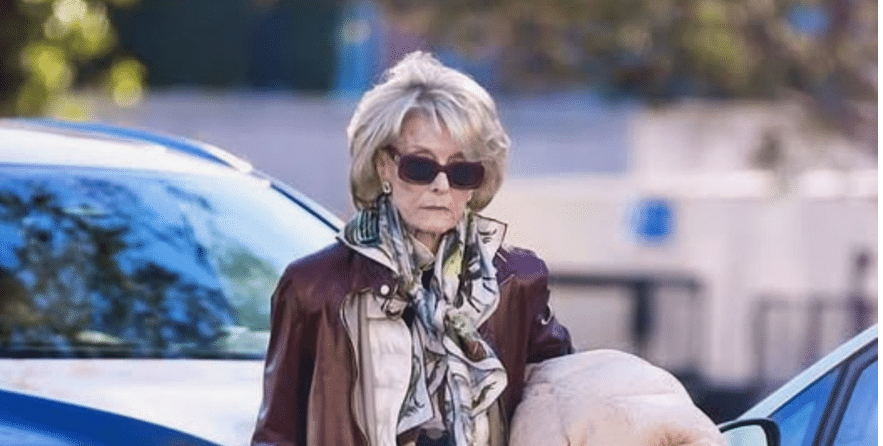
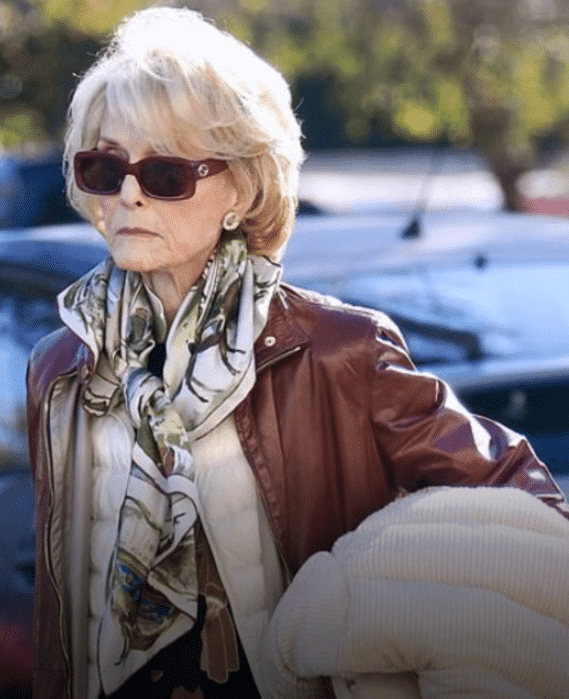
The most interesting thing about the resurfaced images is not that Constance Towers looks different from her early publicity portraits.
Of course she does.
The photographs are separated by decades of life.
The remarkable story is that one person could remain connected to audiences across so many generations.
A grandfather may remember her beside John Wayne.
His daughter may remember the Broadway revival of The King and I.
A granddaughter may know her as Helena Cassadine.
Each audience encountered a different version of the same accomplished performer.
At 93, Constance Towers represents more than Hollywood glamour.
She represents preparation, adaptability, and the old-fashioned professionalism required to keep working when every part of the industry changes around you.
The face in the photograph belongs to a woman who has played heroines, singers, teachers, mothers, socialites, and villains.
Behind them all is the same steady presence—graceful, disciplined, and impossible to forget.