Some movie stars become forever connected to a single image.
For Christopher Atkins, it is the image of a curly-haired young man surrounded by blue water, white sand, and the untouched beauty of a distant island. More than four decades have passed since that unforgettable screen debut, yet many viewers still recognize him the moment an old photograph appears.
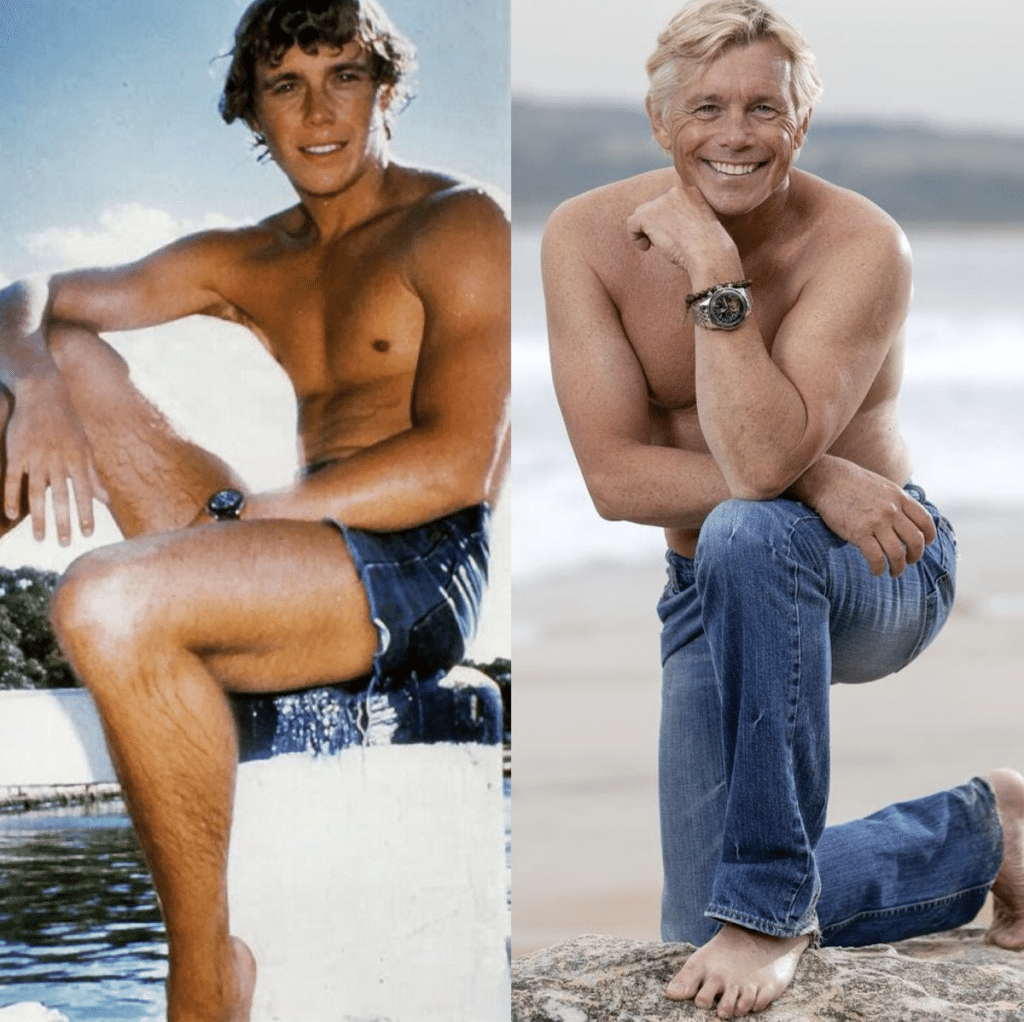
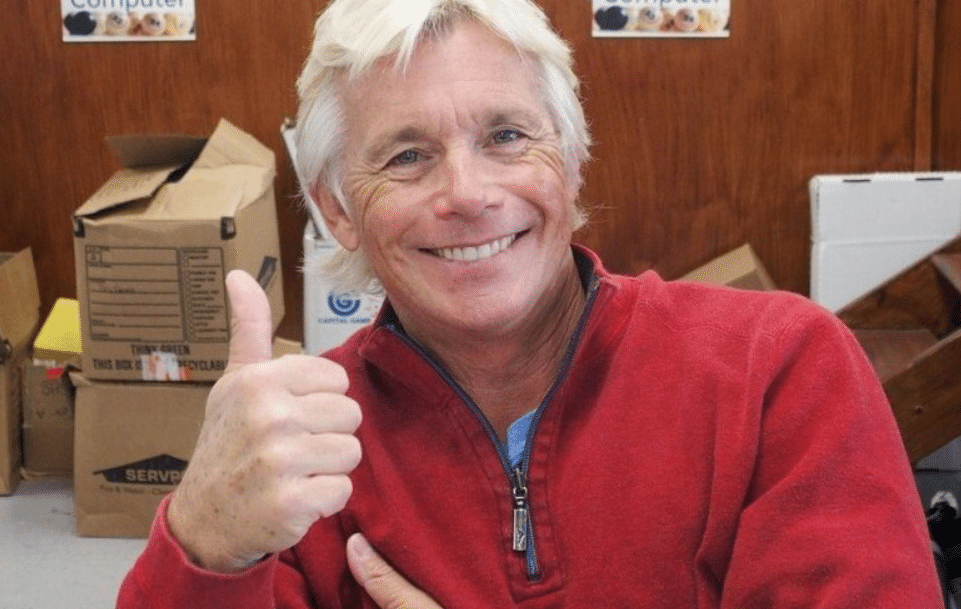
A recent then-and-now image brought those memories rushing back.
The youthful features have naturally matured, and the famous blond curls have changed with time. Still, the friendly expression remains familiar to anyone who followed Hollywood during the early 1980s.
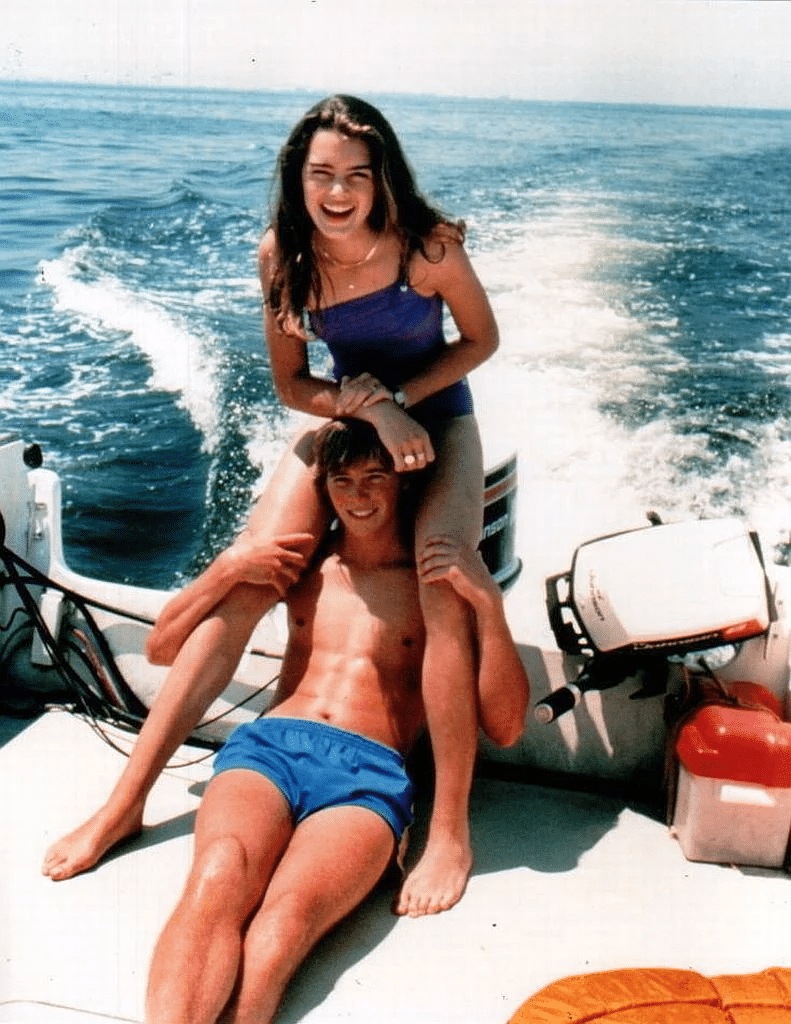
The man in the photograph is Christopher Atkins, the actor who became an international sensation after starring opposite Brooke Shields in the 1980 romantic survival drama The Blue Lagoon.
Born on February 21, 1961, in Rye, New York, Atkins celebrated his 65th birthday in 2026. His life since that first extraordinary success has included movies, prime-time television, music, family, outdoor businesses, personal challenges, and an enduring connection with the fans who remember when his face seemed to be everywhere.
When Hollywood Fame Could Arrive Overnight
Video: Blue Lagoon. Brooke Shields and Christopher Atkins
Christopher Atkins did not spend his childhood preparing to become a movie star.
He enjoyed sports and the water, and accounts of his early life describe him as a young sailing instructor or lifeguard rather than a trained actor. A friend encouraged him to attend an audition for a new film being directed by Randal Kleiser, who had recently achieved enormous success with Grease.
Thousands of young men were reportedly considered.
Atkins, who had no professional acting experience, was selected to play Richard Lestrange in The Blue Lagoon. He was only 18 when he began working on the production.
It was the kind of discovery story that belonged to an earlier Hollywood tradition.
Before social media, talent shows, and online casting notices, an unknown teenager could walk into an audition and emerge months later as a face recognized around the world. There were no personal websites or carefully managed digital identities. Audiences first encountered new performers through movie posters, magazine covers, newspaper interviews, and television commercials.
For Atkins, that transformation happened with remarkable speed.
The Tropical Film Everyone Was Talking Abou
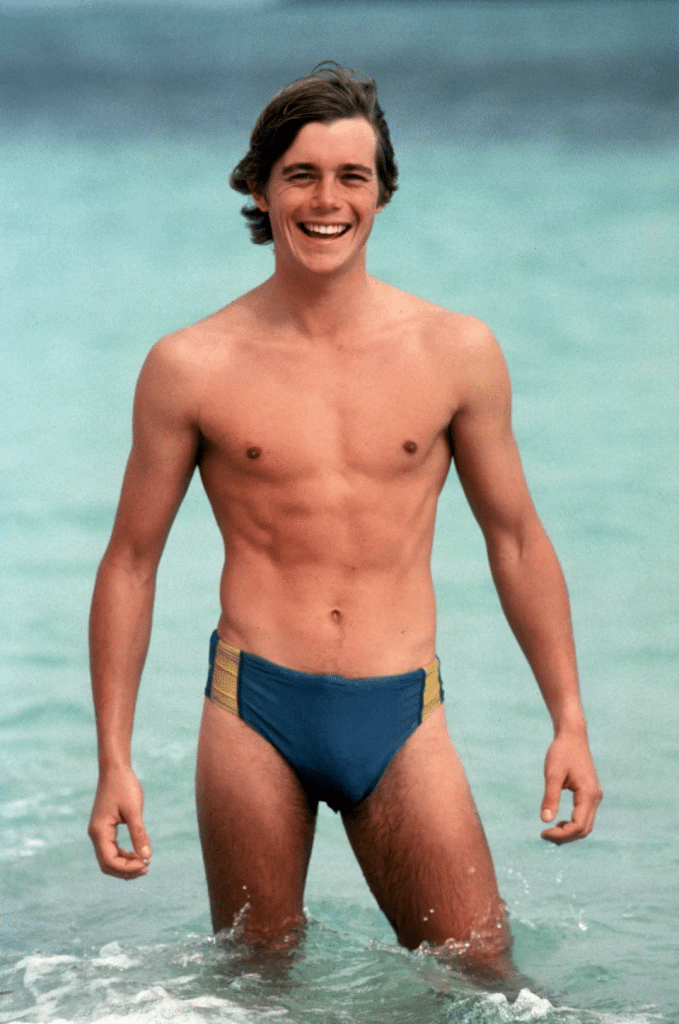
Released in 1980, The Blue Lagoon followed two young castaways growing up in isolation on a tropical island.
The film was photographed against spectacular natural scenery, giving audiences images of clear water, green forests, and distant beaches that felt like an escape from ordinary life. Its story and treatment of its young characters also generated considerable debate, both at the time of release and in later years.
Whatever viewers thought of the film, few could ignore it.
Atkins and Shields became two of the most discussed young performers in Hollywood. Their faces appeared in entertainment magazines and promotional photographs, while the island setting became permanently associated with the movie.
Atkins received a 1981 Golden Globe nomination in the category of New Star of the Year—Actor.
The recognition was extraordinary for someone who had never acted professionally before receiving the role.
For older moviegoers, remembering The Blue Lagoon may also mean remembering how films once became cultural events.
People learned about new releases from newspaper advertisements. They stood in line outside theaters, bought popcorn from crowded concession stands, and later discussed what they had seen with friends or coworkers.
A controversial movie could remain part of the national conversation for weeks.
There was no endless stream of new entertainment waiting the next morning. A single film had time to settle into the public imagination.
Learning to Live With Sudden Celebrity
Instant fame can appear exciting from a distance.
For the person experiencing it, the reality can be disorienting.
Atkins went from relative anonymity to being treated as one of the defining young heartthrobs of the decade. Admirers approached him in public, entertainment reporters wanted interviews, and producers expected him to build immediately upon his first success.
That kind of attention can be difficult for even an experienced performer. Atkins was still learning how movie sets worked while the public had already formed a strong image of who he was supposed to be.
The island role opened doors, but it also created a challenge that followed him for years.
Hollywood often wants a successful young actor to repeat the same image. If audiences respond to a romantic lead, studios may offer another romantic lead. If someone becomes famous for a particular appearance, publicity departments frequently attempt to preserve it.
Atkins needed to prove that there was more to him than the sunlit character who introduced him to the world.
A Musical Adventure With Kristy McNichol
Video: Christopher Atkins in Dallas
In 1982, Atkins appeared opposite Kristy McNichol in The Pirate Movie.
The colorful musical comedy offered a playful variation on The Pirates of Penzance, combining romance, fantasy, comedy, and early-1980s pop music. It was deliberately exaggerated, filled with elaborate costumes, theatrical humor, sword fights, and songs.
The movie did not receive the same kind of attention as The Blue Lagoon, but it developed a devoted following among viewers who appreciated its cheerful energy.
Atkins also performed “How Can I Live Without Her,” a song from the film that reached the Billboard Hot 100.
For people who remember the entertainment landscape of 1982, the film is a perfect time capsule.
Movie musicals, colorful fantasy adventures, vinyl soundtracks, and young stars appeared side by side in a culture that was embracing cable television and the growing influence of music videos.
The production also linked Atkins with another beloved young performer of the era.
In June 2026, he announced plans to reunite publicly with McNichol, giving longtime admirers an opportunity to celebrate a film partnership that began more than four decades earlier.
For fans, such reunions are rarely about pretending that time has stood still.
Their appeal comes from seeing two people who shared an important cultural moment acknowledge the audience that never forgot them.
Trading an Island for the Drama of Southfork
Atkins soon entered one of the most famous households in television history.
During the 1983–1984 season of Dallas, he played Peter Richards, a camp counselor and swimming instructor who became involved in a complicated storyline with Sue Ellen Ewing, portrayed by Linda Gray.
The role brought Atkins into the world of Southfork Ranch, Ewing Oil, family betrayals, romantic secrets, and Friday-night cliffhangers.
The Television Academy’s historical record lists Atkins as Peter Richards during the 1983–1984 period.
To understand the importance of joining Dallas, younger viewers must imagine television before on-demand streaming.
At its peak, Dallas was not merely a popular program. It was a weekly American ritual.
Families arranged their evenings around the broadcast. Coworkers discussed each new betrayal the following morning. The question “Who shot J.R.?” escaped television entirely and became part of everyday conversation around the world.
There were no complete seasons available to watch over a weekend. Viewers waited through summer breaks to learn how a cliffhanger would be resolved.
That waiting created a shared experience modern entertainment rarely reproduces.
Atkins entered the series when its cast members were among the most recognizable performers on television. His storyline with Gray placed him directly inside the show’s glamorous and frequently turbulent emotional world.
The tropical openness of The Blue Lagoon was replaced by expensive Texas interiors, polished automobiles, formal gatherings, and carefully guarded secrets.
The transition demonstrated that Atkins could adapt his relaxed screen presence to the heightened rhythms of prime-time drama.
Memories From a More Playful Television Set

Although Dallas was famous for serious conflict, the atmosphere behind the scenes could be far lighter.
Years later, Atkins and Linda Gray recalled the practical jokes that sometimes accompanied their work. Gray described participating in a prank involving numbing cream before one of their scenes, leaving her younger costar briefly confused when his lips began to lose sensation.
The story became part of the affectionate history surrounding the cast.
It also offered a glimpse of the camaraderie required to produce a demanding weekly drama. Long shooting schedules could become exhausting, and humor helped performers manage scenes that might otherwise feel uncomfortable or overly serious.
Recent photographs and interviews connecting Atkins with his former Dallas colleagues have carried special meaning for longtime viewers.
Larry Hagman died in 2012, and several other members of the show’s classic ensemble have also passed away. Every reunion now serves as a reminder that the people who created those Friday-night memories shared a bond that continued after Southfork’s cameras stopped rolling.
A Career Beyond One Famous Decade
Atkins continued acting after his early period of intense fame.
His credits expanded across feature films, television movies, action productions, comedies, thrillers, and independent projects. Not every release attracted national attention, but steady work allowed him to develop a career far longer than the brief celebrity cycle often associated with young heartthrobs.
He appeared in projects including A Night in Heaven, Listen to Me, Shakma, Wet and Wild Summer!, and a variety of later television and film productions.
That persistence deserves recognition.

Hollywood careers rarely follow a smooth upward line. A performer may experience an enormous success, quieter years, unexpected opportunities, and long periods when personal priorities become more important than publicity.
Atkins once stepped back from the intensity of celebrity life to focus more closely on fatherhood. He has two children and has spoken warmly about the satisfaction he found in being present for his family.
For many older readers, that choice may feel more meaningful than another magazine cover.
Careers matter, but so do the years spent attending school events, sharing meals, watching children grow, and building a life that does not depend on applause.
Turning a Love of Water Into a Business
The water remained part of Atkins’ identity long after his first movie.
His interest in fishing and outdoor recreation eventually led him into business. He became associated with Rocky River Outdoor Products and helped introduce fishing equipment, including the Strike Jacket lure accessory.
A 2003 industry announcement identified Atkins as the product’s inventor and described his efforts to apply practical experience to fishing design.
The venture represented a different kind of creativity.
A film is created by actors, directors, technicians, writers, and editors before being released to an audience. An outdoor product begins with a practical problem and succeeds only when it works reliably in real conditions.
For Atkins, the business allowed his lifelong connection to boating, fishing, and water to become something tangible.
There is a satisfying symmetry in that journey.
The ocean helped introduce him to the world.
Decades later, it continued to shape his interests away from Hollywood.
Facing Life’s Difficult Chapters Honestly
Atkins has also spoken candidly about personal mistakes and the pressures that followed his sudden rise.
Like many young performers who become famous before they have learned how to manage that attention, he experienced difficult periods. In later years, he discussed choosing sobriety and developing a clearer understanding of what truly mattered to him.
By 2026, he had been sober for nearly four decades.
His willingness to address that history without romanticizing it adds an important dimension to his story. Recovery is not a dramatic Hollywood ending achieved in a single scene. It is a long series of choices made quietly, often one day at a time.
Atkins has expressed gratitude for his family, his career, and the opportunity to keep pursuing creative goals rather than remaining trapped by past regrets.
That perspective may resonate strongly with readers who have also learned that a meaningful life is not defined by avoiding every mistake.
It is defined by what a person chooses to do afterward.
Still Looking Toward the Next Project
Atkins has never completely abandoned acting.
In recent interviews, he has discussed his desire to continue performing and to become more involved in producing or directing projects of his own. He appeared as Detective John Grant in the 2025 action thriller Out for Vengeance, demonstrating that his screen career remains active more than 45 years after his debut.
He also began 2026 recovering from another physical challenge after undergoing surgery connected to years of sports and outdoor activity. His public update was characteristically upbeat, joking about the additional metal in his body and the complications it might create at airport security.
The lighthearted response reflected the personality longtime admirers remember.
Atkins may no longer be the inexperienced teenager standing on an island set, but the willingness to keep moving forward remains.
Why His Photographs Bring Back So Many Memories
A current photograph of Christopher Atkins does more than show how one actor has changed.
It reminds viewers how much their own lives have changed since 1980.
Someone who first saw The Blue Lagoon on a teenage date may now have grandchildren.
A viewer who watched Atkins enter the world of Dallas may remember the living room where the family television once stood.
Others may recall movie posters on bedroom walls, records stacked beside a stereo, or entertainment magazines saved long after their pages began to yellow.
That is the real power of celebrity nostalgia.
We are not simply recognizing a performer.
We are recognizing the person we were when we first saw him.
A Heartthrob Who Became Something More
Christopher Atkins will always be associated with the film that made him famous.
There is nothing wrong with that.
A single unforgettable performance is more than most actors ever receive. Yet his life did not end when the tropical cameras stopped rolling.
He entered the extravagant world of Dallas.
He continued acting across several decades.
He became a father and grandfather.
He turned his interest in outdoor life into business ideas.
He faced personal difficulties, embraced sobriety, and kept searching for new creative possibilities.
At 65, he represents more than an image from an old poster.
He represents the unpredictable journey that follows early fame—and the quiet strength required to build a full life after the world has already decided how it wants to remember you.
The famous curls may belong to another time, but the warmth behind the familiar smile remains.
For the audiences who discovered Christopher Atkins when the 1980s were just beginning, that is more than enough to bring an entire era back into view.