For decades, the name “Little Albert” has appeared in psychology textbooks around the world. The experiment is often cited as a key example of how human emotions—especially fear—can be learned through conditioning.
But behind the academic discussions and historical significance lies a deeply emotional and troubling reality.
Little Albert wasn’t just a case study.
He was a real child.
How It All Began: The Rise of Behaviorism
The story traces back to the early foundations of behavioral psychology, influenced by the work of Ivan Pavlov. Pavlov’s famous experiments showed that dogs could learn to associate a neutral stimulus, like a bell, with food—eventually reacting automatically.
Inspired by this, American psychologist John B. Watson wanted to prove that similar conditioning could shape human emotions.
In 1920, alongside his assistant Rosalie Rayner, Watson began an experiment that would later become one of the most controversial in history.
Their subject: a 9-month-old infant.
An Innocent Beginning
At first, the study appeared harmless.
The baby—calm, curious, and emotionally stable—was introduced to various objects:
- A white rat
- A rabbit
- A dog
- Soft materials like fur
Albert showed no fear. He reached out, touched the animals, and explored them with interest. He even seemed to enjoy the experience.
Everything about his reactions suggested a happy, healthy child.
When the Experiment Took a Dark Turn
Then came the turning point.
Each time Albert reached for the white rat, researchers created a loud, sudden noise by striking a steel bar behind him. The sound startled him, causing him to cry.
This pairing—rat plus loud noise—was repeated several times.
Eventually, the conditioning took effect.
Albert began to fear the rat—even when no noise was present.
But it didn’t stop there.
The fear spread.
Soon, the baby cried at the sight of:
- A rabbit
- A dog
- A fur coat
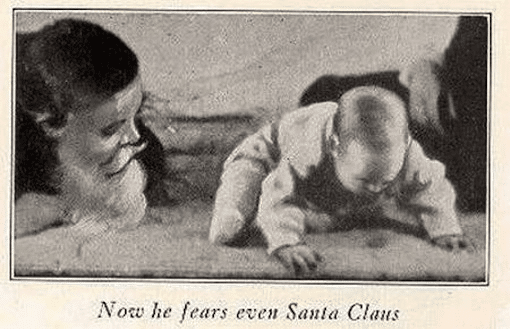
- Even a Santa Claus mask with a white beard
A once calm and curious infant had been conditioned to fear the world around him.
The Ethical Questions That Still Linger
Today, this experiment is widely criticized—not just for its methods, but for its lack of basic ethical standards.
Key concerns include:
- The child was too young to give consent
- His mother was likely not fully informed
- The distress caused was intentional
- No effort was made to reverse the fear afterward
In modern research, such an experiment would be strictly prohibited.
At the time, however, ethical guidelines were far less developed.
The Mystery of Little Albert’s Identity
For nearly 90 years, no one knew who Little Albert really was.
His identity remained hidden—just another anonymous figure in scientific history.
Then, in 2009, researchers revisited the case.
After analyzing old records, photos, and footage, they concluded that the child was most likely Douglas Merritte, the son of a nurse who worked at the hospital where the experiment took place.
A Life Marked by Tragedy
The discovery made the story even more heartbreaking.
Douglas Merritte died at just six years old from hydrocephalus, a condition involving fluid buildup in the brain.
Even more troubling, some evidence suggests he may have already had neurological issues during the experiment.
Later analysis of the footage revealed:
- Limited social responsiveness
- Lack of typical emotional reactions
- Possible developmental challenges
This raised a difficult question:
Was the child fully healthy to begin with—or was he especially vulnerable?
A Legacy That Changed Psychology Forever
Despite its flaws, the Little Albert experiment left a lasting impact on psychology.
It helped shape early theories about how emotions are learned.
But more importantly, it became a powerful example of why ethical standards matter.
Today, research involving human subjects must follow strict guidelines to ensure:
- Informed consent
- Protection from harm
- The right to withdraw
- Respect for dignity
These protections exist, in part, because of cases like this.
More Than an Experiment — A Child Remembered
It’s easy to view Little Albert as just a name in a textbook.
But he was more than that.
He was a child who experienced fear, confusion, and distress—without understanding why.
His story reminds us that behind every scientific breakthrough, there are human lives involved.
And those lives should always come first.


