Long before social media turned private vacations into instant public broadcasts, famous lives unfolded through weekly magazines.
Readers discovered engagements, family milestones, elegant parties and unexpected separations at the grocery-store newsstand. In Spain, this world was known as the prensa del corazón—the “press of the heart.”
Few personalities belonged to that world as completely as Carmina Ordóñez.
Born into one of Spain’s best-known bullfighting families, she became far more than the daughter or wife of a celebrated man. With her unmistakable style, emotional candor and refusal to live quietly, Carmina developed an identity entirely her own.
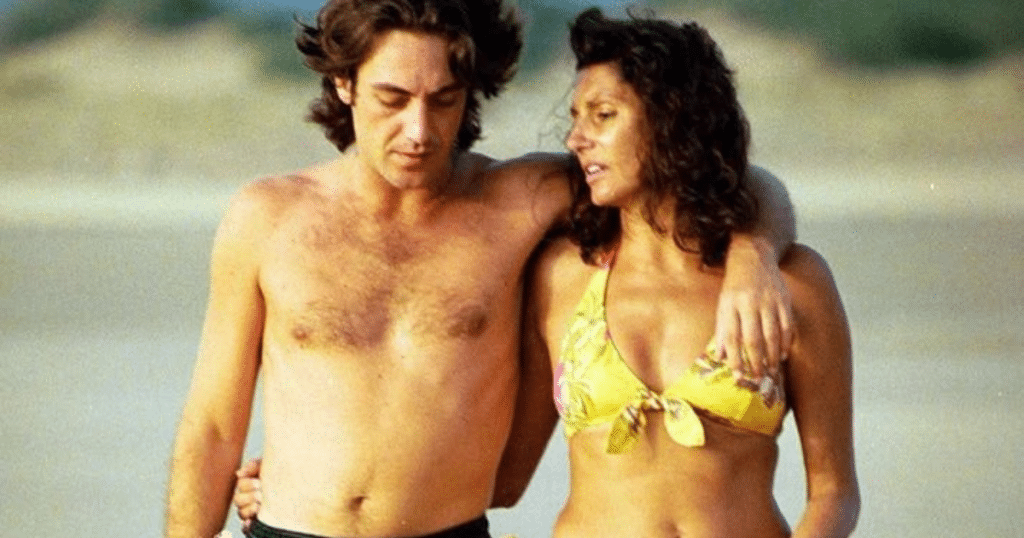
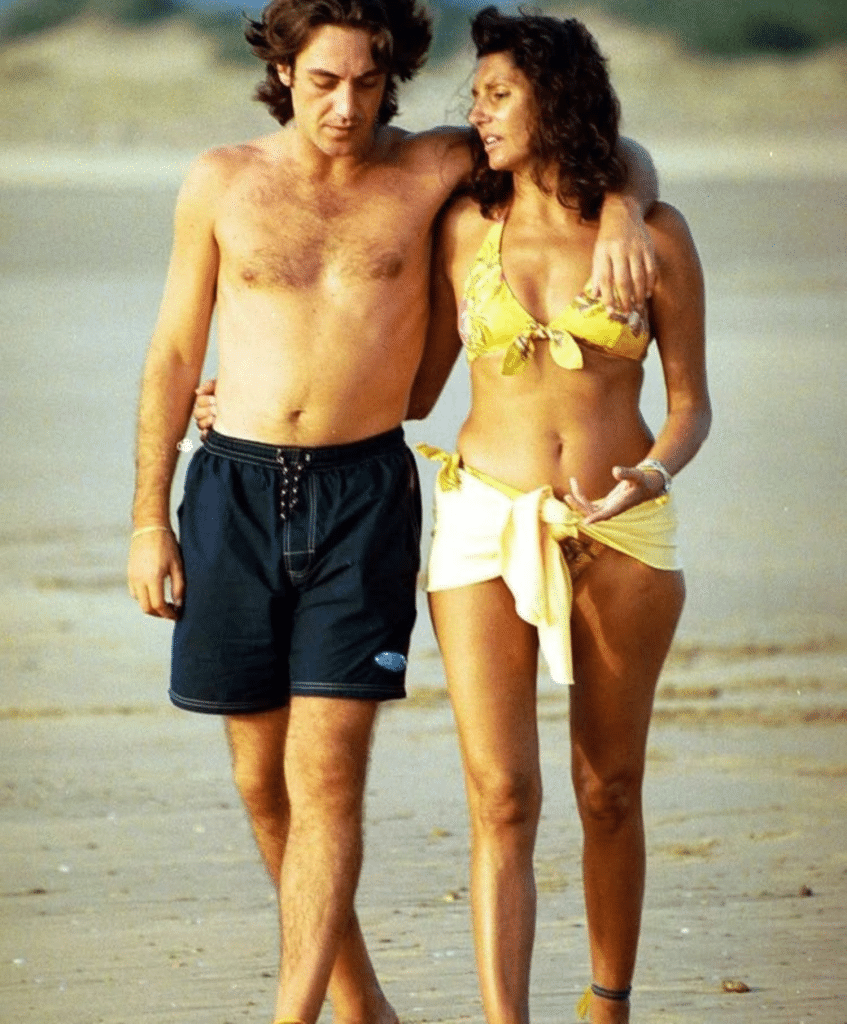
The beach photographs preserved here show a more relaxed version of the woman the Spanish public often called “La Divina.”
There is no formal event, television studio or carefully prepared society portrait.
She appears beneath the sun in a bright yellow swimsuit, walking beside a companion with the comfortable ease of someone briefly removed from the noise surrounding her public life.
Today, the image feels less like celebrity gossip and more like a fragment from another era.
Born Into a Celebrated Spanish Dynasty
Carmina was born María del Carmen Cayetana Ordóñez González in Madrid on May 2, 1955.
Her father, Antonio Ordóñez, was one of Spain’s most celebrated bullfighters. Her mother, Carmen González Lucas—widely known as Carmina Dominguín—also came from a prominent bullfighting family.
From childhood, Carmina lived in a world where tradition, fame and public expectation were closely connected.
Video: From 90s Muse to a Hell of Excess and a Tragic *ND! Carmina Ordóñ
Family gatherings could include artists, performers and nationally recognized figures. Photographers were never far away, and the Ordóñez name carried a cultural importance that would be difficult to explain through ordinary celebrity terms.
She inherited access to a privileged social world, but she also inherited its pressures.
The public expected elegance, loyalty to tradition and careful behavior. Carmina would become famous partly because she repeatedly refused to remain inside those narrow expectations.
The Wedding That Became a National Event
At only 17, Carmina married bullfighter Francisco Rivera Pérez, better known as Paquirri.
Their 1973 wedding took place at Madrid’s Basilica of San Francisco el Grande before an enormous gathering of relatives, society figures and members of the press. Contemporary retrospectives describe it as one of the great social events of its era.
To Spanish magazine readers, the marriage appeared almost inevitable.
She was the daughter of Antonio Ordóñez. Paquirri was a rising star of the bullring. Together, they seemed to represent the continuation of an old national tradition.
The couple welcomed two sons, Francisco and Cayetano Rivera Ordóñez.
Yet life inside the marriage did not remain as perfect as the wedding photographs suggested. Carmina and Paquirri separated after six years, ending a union that had been watched closely from its beginning.
For mature readers, that contrast may feel familiar.
A beautiful ceremony can express genuine hope, but it cannot predict the daily reality that follows. Public admiration does not protect a relationship from changing expectations, incompatible personalities or the simple discovery that two people want different lives.
Refusing the Role Others Had Written for Her
Spanish society was changing rapidly during Carmina’s early adulthood.
The country was moving away from decades of strict conservatism, and women were beginning to claim more control over their careers, relationships and public identities.
Carmina became an unusually visible symbol of that transition.
She did not disappear after her first marriage ended. She traveled, attended public events, formed new relationships and spoke openly with journalists. Her choices were frequently criticized, but criticism rarely persuaded her to retreat.
When reporters asked how she was doing, she became associated with the cheerful response, “¡Divinamente!”—“Divinely!”
The expression helped inspire her enduring nickname, “La Divina.”
It captured the personality audiences believed they knew: dramatic, elegant, humorous and determined to appear standing even after life had become difficult.
A Second Marriage and a Quieter Chapter
In 1984, Carmina married singer and composer Julián Contreras.
The civil ceremony was held in Miami, far from the enormous spectacle surrounding her first wedding. Four years later, they celebrated a religious ceremony in Madrid.
Their son, Julián Contreras Ordóñez, became Carmina’s third child.
Retrospective accounts often describe this relationship as one of the more stable periods of her life. The family spent significant time in Morocco, a country Carmina came to love deeply.
That chapter offered a different kind of existence.
It was still connected with music, travel and public interest, but it provided some distance from the competitive atmosphere of Madrid’s celebrity press.
The couple eventually separated in 1994, although Carmina later spoke warmly about the importance Julián Contreras had held in her life.
A Style That Never Asked Permission
Carmina’s influence did not come from a traditional profession.
She was not primarily an actress, recording artist or political figure. Her public identity was built through family history, society events, television appearances and the remarkable ability to remain interesting to readers across several decades.
Fashion played an important role in that identity.
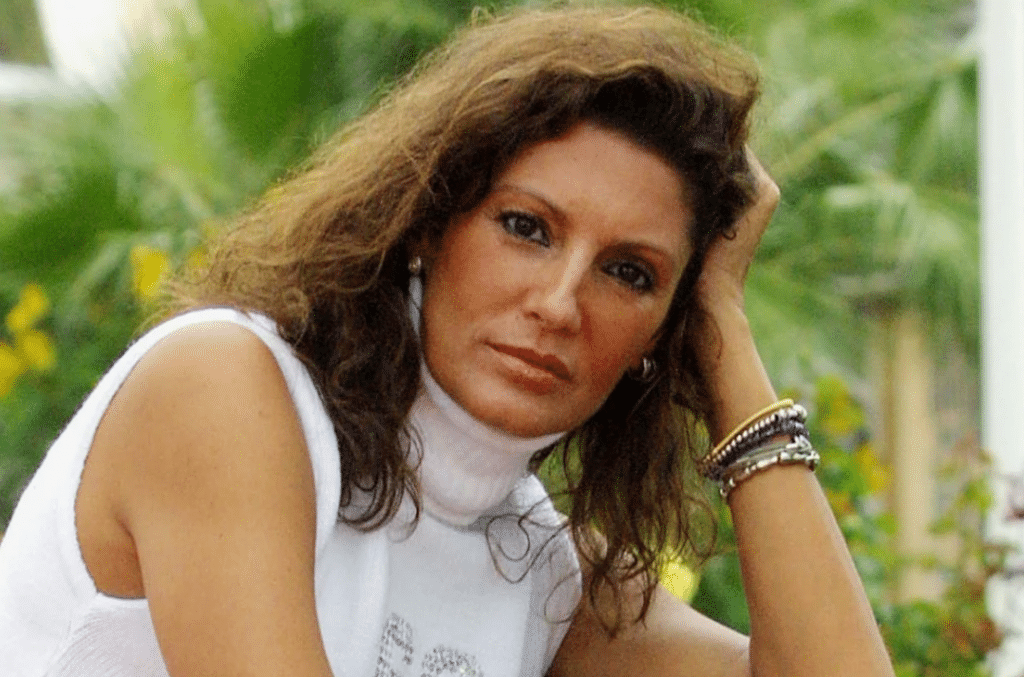
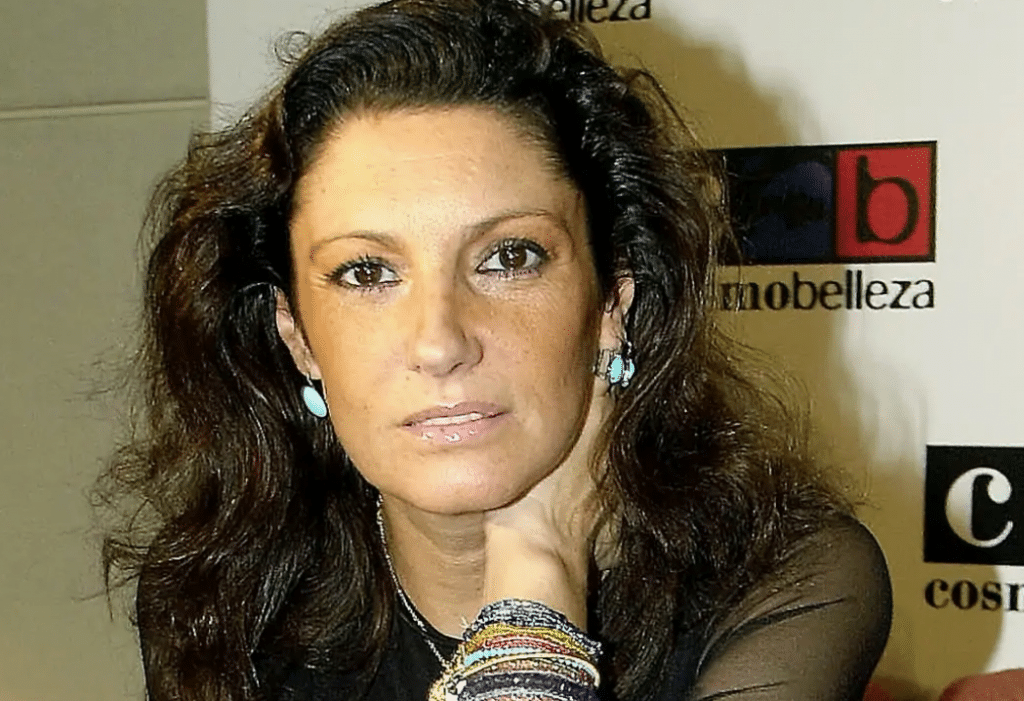
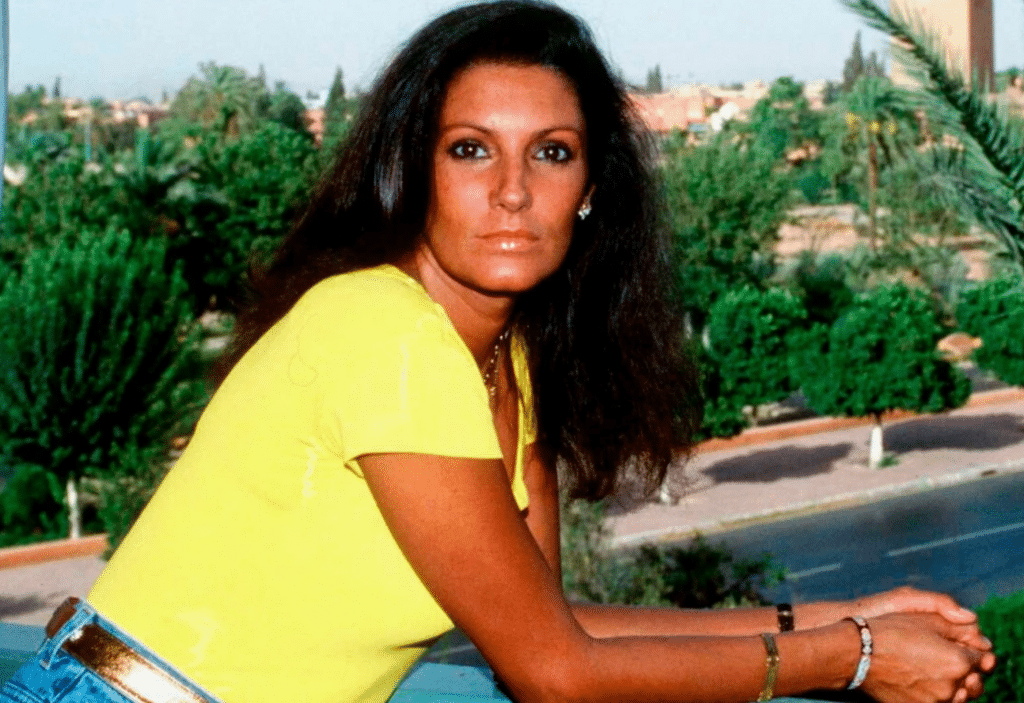
She favored bold jewelry, deep tans, dramatic eye makeup, colorful clothing and the relaxed glamour associated with Marbella, Seville and Morocco.
Her wardrobe could be elegant one evening and unmistakably bohemian the next.
She mixed formal Spanish society style with flowing fabrics, stacked bracelets and strong colors that reflected her travels. Contemporary fashion retrospectives still revisit her wedding dresses, vacation clothing and distinctive accessories decades after her death.
For older American readers, her appeal may recall women such as Elizabeth Taylor or Jacqueline de Ribes—not because their lives were identical, but because clothing became inseparable from their public presence.
Carmina did not merely wear fashion.
She used it to announce that she had entered the room.
The Beach Image and the Freedom It Suggests
The seaside photograph is especially memorable because it removes many of the usual symbols surrounding her.
There is no ornate jewelry, society backdrop or television microphone.
Carmina wears a yellow patterned bikini with a light wrap tied casually around her waist. Her hair is loose, and her attention appears directed toward the person beside her rather than the photographer.
The original page does not reliably identify the man, date the photograph or establish the location. It therefore deserves to be presented simply as an archival candid image rather than attached to an unsupported romantic story.
What the photograph does communicate is familiarity.
For a woman whose life was so often presented through formal weddings, televised arguments and magazine covers, the image offers a brief pause.
She is not performing the role of society bride, famous daughter or controversial television guest.
She is simply walking beside the water.
When Private Struggles Became Public Programming
Carmina’s later years were more difficult.
Her relationships, financial concerns and personal struggles became regular subjects of Spanish television. Programs competed for exclusive interviews, while commentators debated events from her private life as if they were episodes of a continuing drama.
Some of the coverage reflected her own decision to speak publicly.
But participation did not always create control.
Once a personal crisis entered the entertainment cycle, it could be repeated, shortened and reshaped until the person involved became almost secondary to the story being sold.
That pattern remains familiar today.
Social media has changed the technology, but not the basic temptation. Vulnerability attracts attention, and attention can be converted into ratings, clicks and advertising revenue.
A respectful remembrance should therefore resist repeating every painful detail.
Carmina’s difficult periods were part of her life, but they were not the whole of it.
A Mother at the Center of a Famous Family
Behind the headlines were three sons who experienced their mother as something more personal than a national celebrity.
Francisco and Cayetano Rivera followed the family’s bullfighting tradition. Julián Contreras Jr. developed his own public and professional path.
Carmina appeared proudly beside her children at important family occasions. Photographs show her at weddings, ceremonies and quieter gatherings, often displaying the affectionate physical closeness for which she was known.
After her death, her sons became the guardians of different parts of her memory.
They did not always agree publicly, and their own lives continued to attract press attention. Yet tributes over the years have repeatedly emphasized her love, generosity and fierce loyalty as a mother.
The public knew “La Divina.”
Her sons knew the woman who called, worried, celebrated and remained emotionally present even while managing battles of her own.
The News That Stopped Spain
Carmina Ordóñez died in Madrid on July 23, 2004.
She was only 49.
Her death became such a major national story that RTVE later recalled how Spain’s principal television news broadcast led with the announcement, despite Carmina not being a political leader or figure normally associated with serious daily news.
That response demonstrated the unusual place she occupied in Spanish culture.
Millions of people had watched her grow from a teenage bride into a mother, divorcee, society personality and outspoken television presence.
They may not have approved of every choice.
Some may have followed her with admiration, others with curiosity, and still others through the complicated mixture of affection and judgment often directed toward famous women.
But she had become familiar.
Her death felt personal because her life had been unfolding in public for more than 30 years.
Why Her Story Still Resonates
Carmina belonged to a generation of celebrity that existed before personal websites, carefully managed social accounts and direct communication with fans.
Journalists controlled the frame.
Editors selected the photograph.
Television producers decided which moments would be replayed.
Yet she repeatedly found ways to push back against that control.
She spoke when silence would have been more socially acceptable. She rebuilt her life after relationships ended. She dressed according to her own instincts and resisted the expectation that a woman from a traditional family should behave quietly.
Her openness sometimes carried a personal cost.
Still, it helped explain why so many people felt connected to her.
She did not present a flawless life from behind palace walls. She allowed the public to see contradiction: privilege and pain, confidence and vulnerability, elegance and disorder.
That complexity made her human.
More Than a Woman in an Old Photograph
It would be easy to look at the beach image and see only a glamorous Spanish socialite from another time.
But Carmina Ordóñez represented something larger.
She was born into tradition yet repeatedly challenged it.
She entered adulthood as the young bride in a nationally celebrated marriage, then spent the rest of her life refusing to remain frozen inside that image.
She became a mother of three, a style reference, a television personality and one of the defining figures of Spain’s celebrity press.
Most importantly, she lived visibly at a time when women were often expected to hide the parts of life that did not fit a respectable public story.
Her legacy is not one of perfection.
It is one of presence.
The cameras may have followed Carmina to weddings, restaurants, television studios and beaches, but they never entirely explained her.
Perhaps that is why the archival photographs still invite attention.
Behind the bright swimsuit and Mediterranean sunlight was a woman determined to experience life fully—even when the world insisted on watching.