Long before every vacation became a stream of carefully edited videos, celebrity photographs arrived in a very different way.
They appeared in glossy magazines at the grocery-store checkout, on entertainment programs after the evening news, or on websites that readers visited from desktop computers. A few candid pictures could keep the public talking for days.
These sunny images of Kim Kardashian and Kris Humphries belong unmistakably to that era.
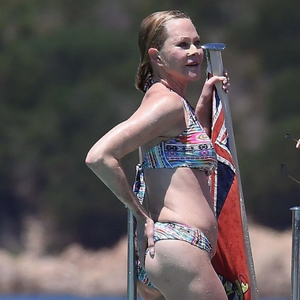
Taken during a Mexican getaway in 2011, they show the couple walking beside the water, holding hands and sharing an affectionate moment beneath the warm coastal sun.
At the time, the pictures seemed to capture the promising beginning of a glamorous new romance.
Looking back now, they have become something more complicated: a time capsule from one of the most closely watched celebrity relationships of the early 2010s.
A Vacation Before Everything Changed
Kardashian and Humphries traveled to Punta Mita with members of her family during a trip connected with Kourtney Kardashian’s 32nd birthday.
The photographs show them enjoying the shoreline far from basketball arenas, television studios and the formal events where they were usually seen. Kardashian wore a colorful patterned swimsuit, while Humphries appeared in a white T-shirt and casual khaki shorts.
Video: Hollywood Couple Breakup: Kim Kardashian & Kris Humphries
Nothing in the images reveals how quickly their lives were about to change.
They were still boyfriend and girlfriend when the vacation took place. Later that month, their engagement became public. By August, they would be standing before hundreds of wedding guests at a private estate in Montecito, California.
The beach pictures therefore preserve a narrow window between an ordinary romance and an extraordinary media event.
When Reality Television Still Felt New
To understand why the relationship attracted so much attention, it helps to remember the media landscape of 2011.
Reality television had already become popular, but it had not yet merged completely with social media, online shopping and the continuous celebrity coverage familiar today.
Keeping Up with the Kardashians allowed audiences to watch family conversations, business decisions, arguments and personal milestones from week to week. Viewers did not merely recognize Kim Kardashian from photographs. Many felt that they had followed her life through years of television.
Humphries came from a different world.
Raised in Minnesota, he built his identity around competitive sports. Before concentrating on basketball, he had been an outstanding young swimmer. He later reached the NBA and developed into a hardworking rebounder who remained in the league for 13 seasons.
The contrast made the couple especially interesting.
She belonged to a highly visible Los Angeles family whose private life had become entertainment. He was a professional athlete who had spent years focused on practices, games and the demanding routines of a basketball season.
For a while, their differences appeared charming rather than difficult.
The Wedding America Watched

Kim Kardashian and Kris Humphries married on August 20, 2011, at a private estate in Montecito.
The ceremony included hundreds of guests, a black-and-white dress code and several elaborate bridal gowns. It was later presented in the two-part television special Kim’s Fairytale Wedding: A Kardashian Event.
The program became a major ratings success for E!.
The first installment attracted an average audience of approximately 4.4 million viewers, while the second drew about four million. The Los Angeles Times described the figures as some of the strongest ratings in the network’s history.
For older viewers, the event may recall the days when large television audiences still watched the same programs at the same time.
There was no waiting for an entire season to appear online. Viewers tuned in on a scheduled evening, then discussed what they had seen the next day.
The wedding had the scale of an old-fashioned network television spectacle, even though its style was unmistakably modern.
There were famous guests, designer clothing, flowers, cameras and endless commentary. The couple’s private promise became a public production watched by millions.
A Marriage That Ended Almost as Soon as It Began
On October 31, 2011, Kardashian filed for divorce, citing irreconcilable differences.
Only 72 days had passed since the wedding.
The announcement created immediate cultural shock.
The number “72” became permanently attached to the relationship. It appeared in television jokes, newspaper headlines and conversations about the pressures of celebrity marriage.
Speculation also followed.
Some observers questioned whether the wedding had been created primarily for publicity. Humphries later rejected that interpretation, writing that although much of reality television could feel artificial, the relationship itself had been genuine to him.
That distinction matters.
A marriage can be heavily photographed, televised and surrounded by commercial attention while still involving real emotions. The fact that a relationship ends quickly does not prove that every affectionate moment before it was false.
The beach pictures may have been valuable to photographers, but the people inside them were still trying to understand one another.
Two Very Different Visions of Daily Life

The breakdown of the relationship was later explored through reality television and years of public discussion.
At the center of the story appeared to be a fundamental difference in how the couple imagined married life.
Humphries remained strongly connected to Minnesota, basketball and a more private routine. Kardashian’s career depended on Los Angeles, family businesses, filming obligations and a level of visibility few people could fully understand.
Neither lifestyle was inherently wrong.
The difficulty was finding a version of marriage that could hold both of them.
This is one reason the story may feel more understandable to mature readers today than it did in 2011. Many people have learned that affection alone does not resolve every disagreement about home, family, work or the future.
Compatibility is often found in ordinary questions.
Where will a couple live?
How much time will work consume?
What does privacy mean to each person?
How should major decisions be made?
Those questions rarely look glamorous on television, but they often determine whether a relationship can endure.
The Personal Cost of Becoming a Punchline
Humphries later described the aftermath as far more painful than the public understood.
In a 2019 first-person essay announcing his retirement from the NBA, he wrote that he had never expected to become famous because of his private life. He recalled being loudly booed during basketball games and feeling that the public no longer saw him as a genuine person or athlete.
He also said the attention contributed to anxiety and a period when he avoided leaving home. Basketball and support from his family helped him continue.
His reflections offer a valuable reminder about celebrity culture.
A widely repeated joke may seem harmless to the audience, yet the person at its center must continue living after everyone else has moved on to the next headline.
Kardashian also revisited the marriage years later.
During a 2021 reunion program, she acknowledged that she had handled the separation poorly and said she felt she owed Humphries an apology.
Time did not change the outcome, but it allowed both people to describe the experience with greater distance.
A Divorce That Took Longer Than the Marriage

Although the marriage lasted only 72 days before the filing, the legal process continued much longer.
Humphries initially sought an annulment rather than the divorce requested by Kardashian. A settlement was finally reached in April 2013 after a prolonged and highly public dispute.
The extended proceedings kept the former couple connected in headlines long after their shared life had ended.
This contrast became another unusual part of the story: the legal conclusion lasted far longer than the marriage itself.
By then, public attention had already moved into new chapters. Yet old photographs and television scenes continued to preserve the couple exactly as they had been in 2011—hopeful, affectionate and surrounded by expectations.
Looking Beyond the Famous Number
It is easy to reduce the entire relationship to “72 days.”
The phrase is brief, memorable and useful for headlines.
It is also incomplete.
Before those 72 days came months of dating, family introductions, travel, an engagement and the belief—however temporary—that marriage was the right decision.
Afterward came embarrassment, legal conflict, reflection and the slow work of rebuilding separate lives.
That fuller perspective makes the vacation photographs feel less like evidence in an old celebrity debate and more like a record of two people before they understood what was ahead.
They were not yet a television wedding.
They were not yet a famous divorce.
They were simply a couple standing beside the ocean.
A Portrait of Kim Kardashian Years Later
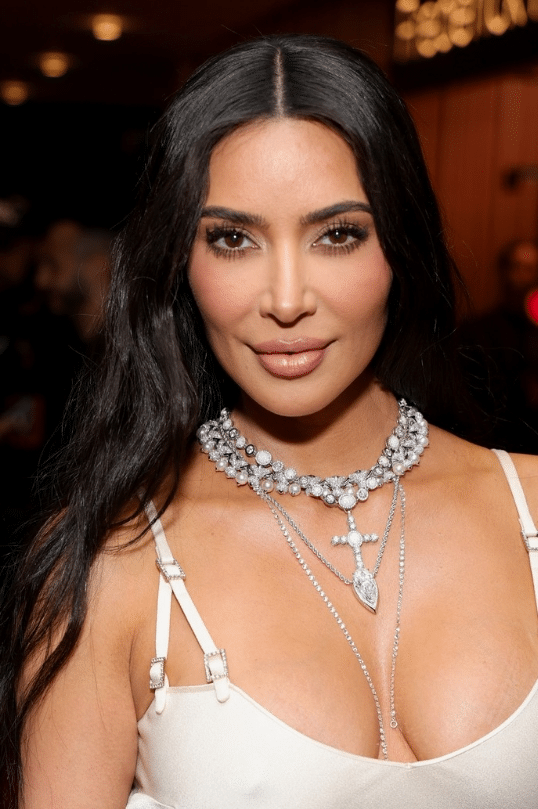
The final photograph shows Kardashian in a much later period of her public life.
Her appearance, career and place in American culture have changed considerably since the Mexican vacation. Yet the earlier beach images remain connected to the period when reality television was reshaping the meaning of fame.
In 2011, audiences still debated whether reality stars were truly celebrities. Today, the boundary between entertainment, business, fashion and personal branding has nearly disappeared.
Kardashian’s rise helped define that transformation.
Humphries, meanwhile, eventually retired from basketball in 2019 after 13 NBA seasons. In his retirement essay, he emphasized that he wanted to be remembered as a hardworking athlete rather than simply as the man from a short television marriage.
Both moved forward, though the old story continued to follow them.
Why These Photographs Still Resonate
Nostalgia is not always a longing for happier times.
Sometimes it is simply the recognition of how much the world has changed.
These pictures recall BlackBerry phones, scheduled television, glossy weekly magazines and an era when celebrity news did not yet arrive every second of the day.
They also recall a time when audiences were more willing to accept a televised romance as a modern fairy tale.
Today, viewers may approach such stories with greater caution. They understand that polished photographs show only a fraction of a relationship and that a grand wedding cannot guarantee an enduring marriage.
That knowledge does not make the earlier images meaningless.
It makes them more human.
Kim Kardashian and Kris Humphries did not find the lasting future that many viewers expected. Their marriage became brief, public and difficult.
Yet for one sunny afternoon in Mexico, none of that had happened.
The cameras captured optimism rather than regret—a couple holding hands at the edge of the water, still believing that the most important part of their story was waiting ahead.