For anyone who remembers American television and movies during the 1990s, her face may bring back an entire collection of memories.
She appeared on television when families still gathered for weekly dramas.
She became one of the defining young actresses of the late 1990s, starring in emotional family stories, romantic comedies, and suspense films that filled neighborhood theaters.
Her expressive eyes, warm smile, and unmistakable screen presence made her seem both glamorous and familiar—the kind of celebrity viewers felt they had grown up alongside.
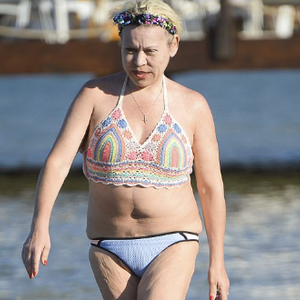
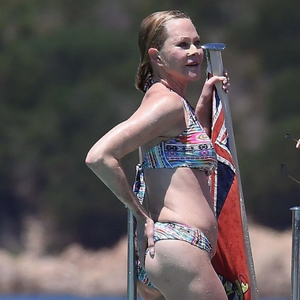
Yet in these candid photographs, there is no movie premiere or carefully arranged publicity session.
Her hair is wet from the ocean.
She wears a simple black swimsuit and appears to be laughing as the waves move around her.
The woman in the photographs is Jennifer Love Hewitt.
The Real Story Behind the Beach Photographs
Although the images were republished online in 2026, they are not recent photographs of Hewitt with her husband, Brian Hallisay, and their children.
They date to late 2007, when the 28-year-old actress was vacationing in Hawaii with her then-fiancé, Scottish actor Ross McCall. The couple became engaged during that trip, reportedly with an antique ring that had been part of McCall’s family for generations.
That timeline is important because old celebrity photographs are often separated from their original context when they reappear online.A picture taken nearly two decades ago may suddenly be presented as a new sighting. Relationships, ages, and circumstances can be unintentionally mixed together, creating a story that no longer matches the moment preserved by the camera.

What these photographs actually show is much simpler.
They capture a young actress enjoying the ocean during a Hawaiian vacation at the height of her television fame.
She seems happy.
She is smiling broadly, moving through the water, and apparently unaware that the pictures would soon become part of a national conversation about women’s bodies.
When the Headlines Became the Story
After the photographs appeared in 2007, several entertainment outlets published insulting commentary about Hewitt’s appearance.
The coverage did not focus on her engagement, her happiness, or the successful television career she had built.
Instead, strangers analyzed the shape of her body.
Hewitt responded publicly, explaining that she was speaking not only for herself but for girls and women struggling with body image. She rejected the suggestion that a particular clothing size determined whether a woman was attractive or worthy of respect.
Her response became one of the most widely discussed celebrity body-image statements of that period.
It arrived before social media had become the constant presence it is today, but online entertainment culture was already changing.
Photographs traveled faster than they had during the magazine era
Websites competed for attention with increasingly provocative headlines.
A harsh sentence could be published within minutes and repeated across countless other pages before the person being discussed had time to respond.
For women in the public eye, the result could be exhausting.
They were expected to appear glamorous but effortless. Thin but healthy. Youthful but natural. Confident but never too aware of their own attractiveness.
The rules changed constantly, ensuring that almost no one could satisfy them.
The Lasting Effect of a Single Magazine Cover

Many years later, Hewitt revealed that the 2007 coverage affected her more deeply than the public understood at the time.
In a 2025 interview, she recalled having considerable confidence before the incident. The photographs and the resulting headline introduced a kind of insecurity she had not previously carried, leaving her to wonder whether future versions of herself would be considered acceptable.
She said she was unsure whether she had ever entirely recovered from that experience.
That admission changes the way the old pictures should be viewed.
They are not evidence of a celebrity failing to look perfect.
They are evidence of a media culture that could take a woman’s carefree afternoon and turn it into a lasting emotional wound.
It is easy to dismiss celebrity criticism as an unavoidable part of fame.
But recognition does not make someone less human.
A person may have access to beautiful clothing, professional makeup, and celebrated photographers while still being hurt by ridicule.
Fame can increase the number of people offering opinions.
It does not create protection from those opinions.
The Girl America Watched Grow Up
Jennifer Love Hewitt had spent much of her life in front of cameras long before the Hawaiian vacation.
Born in Waco, Texas, she began performing as a child and appeared on the Disney Channel musical program Kids Incorporated. She later had a role in Sister Act 2: Back in the Habit before finding the television part that introduced her to millions of viewers.
In 1995, Hewitt joined the cast of Party of Five as Sarah Reeves.
The series followed the Salinger siblings as they tried to remain together after losing their parents. It combined the emotions of a family drama with the questions facing young people entering adulthood.
Sarah became closely connected to Bailey Salinger, played by Scott Wolf.

Hewitt brought an openhearted quality to the character. Sarah could appear gentle and vulnerable, but she was not weak. She wanted stability, honesty, and a clear sense of belonging.
For viewers who watched the show each week, she became part of the family.
Her role later led to the spin-off series Time of Your Life, which followed Sarah as she moved to New York in search of answers about her biological parents.
The program was brief, but the character’s journey reflected something Hewitt’s audience already recognized in her: a mixture of optimism and emotional determination.
The Summer That Turned Her Into a Movie Star
Hewitt’s film breakthrough arrived with the 1997 suspense movie I Know What You Did Last Summer.
She played Julie James, one of four young friends haunted by a secret after a graduation-night accident.
The cast also included Sarah Michelle Gellar, Freddie Prinze Jr., and Ryan Phillippe. Sony’s official description identifies Hewitt as one of the central stars of the original film, which became closely associated with the late-1990s revival of youth-oriented thrillers.
For moviegoers of the time, the film captured a very specific era.
There were no smartphones to track anyone’s location.
Secrets could survive because communication was slower.
Characters received handwritten messages rather than anonymous notifications.
The coastal town, dark roads, and approaching storm created an atmosphere that audiences could recognize within seconds.
Hewitt’s Julie became the emotional center of the story.
She was frightened but determined, carrying the weight of guilt while trying to understand who was threatening the group.
Her famous cry of frustration on an empty street became one of the most recognizable moments in 1990s suspense cinema.
Hewitt returned the following year for I Still Know What You Did Last Summer, continuing Julie’s story alongside Freddie Prinze Jr., Brandy, and Mekhi Phifer.
Stepping Away to Build a Family
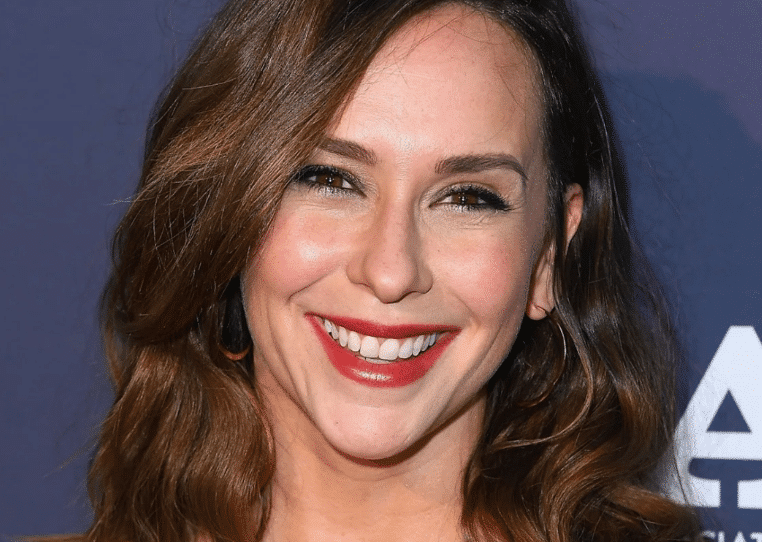
Hewitt later met actor Brian Hallisay while working on the television series Love Bites. They reconnected as co-stars on The Client List, where they portrayed a married couple experiencing serious difficulties.
Their real relationship developed away from the fictional conflict.
Hewitt and Hallisay became engaged in 2013 and married that November. They welcomed daughter Autumn shortly afterward, followed by sons Atticus and Aidan. As of their 12th wedding anniversary in November 2025, they remained married and were raising their three children together.
This is the family described by the original 2026 article, but it is not the family pictured in the 2007 beach images.
The distinction does not diminish the later chapter.
It simply places each moment where it belongs.
The photographs show Hewitt before motherhood.
Her present family life reflects the years that came afterward.
Between those two points are nearly two decades of work, change, private experience, and personal growth.
A Marriage That Became a Creative Partnership
Hewitt and Hallisay have occasionally worked together since their marriage.
Hallisay appeared on 9-1-1 as Doug Kendall, Maddie’s abusive former husband—a dark fictional relationship very different from the couple’s real family life.
He later returned to the series in a hallucinatory sequence, discussing how unusual but creatively interesting it was to revisit the character while working in the same production as his wife.
The couple also collaborated on the 2024 television movie The Holiday Junkie, which Hewitt directed.
Working with a spouse can be complicated.
The familiar person from home must suddenly become a scene partner, colleague, or director. Family schedules and production schedules overlap.
Yet shared creative work can also reveal new respect.
A husband sees the preparation behind his wife’s performance.
A wife witnesses the discipline her partner brings to a difficult role.
The public usually sees only the completed scene.
The couple remembers the conversations, rehearsals, childcare arrangements, and long days required to create it.
A Return to the Role That Defined a Generation
In 2025, Hewitt returned as Julie James in a new I Know What You Did Last Summer film, appearing alongside fellow original cast member Freddie Prinze Jr. Sony listed both performers among the returning stars.
The return carried emotional significance.
Julie was no longer the frightened young woman audiences remembered from 1997.
She had lived with the consequences of the original story for decades.
Hewitt was similarly returning with years of experience that the younger actress could not have possessed.
That is what makes later chapters valuable.
The performer does not recreate the past exactly.
She brings the past forward and allows it to meet the person she has become.
For viewers who saw the original film in theaters, the experience also created an unexpected mirror.
They were not the same people they had been in 1997.
They had changed jobs, raised families, lost loved ones, moved homes, and watched one century become another.
Seeing Julie again meant recognizing their own passage through time.