Some songs describe heartbreak with anger.
Some describe it with tears.
But Skeeter Davis’ “The End of the World” does something even more powerful: it captures the stunned quiet that comes after loss, when the world keeps moving and you cannot understand why.
Released in late 1962, the song became one of the most unforgettable heartbreak ballads of the era. Its beauty lies not in drama, but in restraint. Skeeter does not sound like she is performing for an audience. She sounds like someone sitting alone, asking the questions that grief leaves behind.
Why does the sun still shine?
Why do birds keep singing?
Why does life continue when one person’s world has fallen apart?
That emotional honesty helped turn “The End of the World” into a timeless classic—one that still resonates with anyone who has ever felt broken while the rest of the world carried on as usual.
A Song That Crossed Musical Boundaries
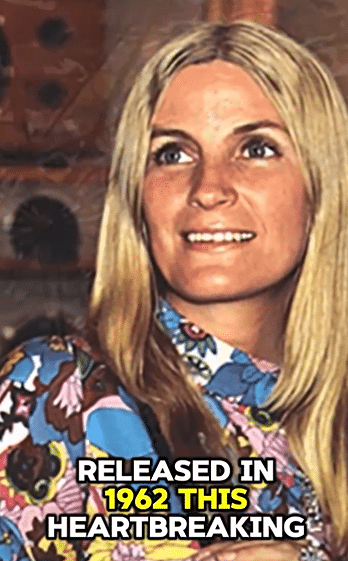
When “The End of the World” was released, country and pop were often treated as separate worlds. Yet Skeeter Davis’ recording moved effortlessly between them.
The song climbed into the Top 5 on multiple Billboard charts, including Country, Pop, Adult Contemporary, and R&B. That rare crossover success proved that heartbreak did not belong to one genre. The feeling was universal.
Part of the song’s magic came from how naturally it blended styles. It had the emotional storytelling of country music, the polished arrangement of early 1960s pop, and the soft elegance of a Nashville studio production.
It was simple enough to feel personal, but graceful enough to reach millions.
For listeners in 1962, it did not sound like just another country record. It sounded like a private confession wrapped in melody.
The Voice Behind the Heartbreak
Skeeter Davis was born Mary Frances Penick in Kentucky. Before becoming a solo star, she performed as part of The Davis Sisters with Betty Jack Davis.
Their future seemed bright until tragedy struck.
In 1953, Betty Jack was killed in a car accident that also seriously injured Skeeter. The loss changed her life and career forever. After recovering, Skeeter eventually continued performing on her own, carrying with her a depth of feeling that became central to her sound.
That history matters when listening to “The End of the World.”
Skeeter understood loss.
She understood what it meant to keep singing after life had shattered something important. Her voice carried that experience—not in a dramatic way, but in the fragile honesty of someone who knew grief from the inside.
When she sang the song, she did not need to force the emotion.
It was already there.
The Story Behind the Lyrics
“The End of the World” was written by Arthur Kent and Sylvia Dee.
Sylvia Dee’s lyrics were inspired by grief after the death of her father. That origin gives the song a deeper emotional meaning. Although many people hear it as a romantic heartbreak song, its core feeling is broader than lost romance.
It is about personal devastation.
It is about waking up after loss and being shocked that the world has not stopped with you.
That is why the song feels so universal. It can speak to the end of a relationship, the death of a loved one, a painful goodbye, or any moment when someone’s inner world collapses while life outside continues unchanged.
The lyrics do not describe complicated details. They ask simple questions.
That simplicity is the point.
When grief is fresh, the mind often circles around questions that have no answer. The song captures that feeling with remarkable tenderness.
Chet Atkins’ Gentle Production
The recording was produced by legendary Nashville figure Chet Atkins, whose influence helped shape what became known as the Nashville Sound.
Instead of surrounding Skeeter with heavy instrumentation, Atkins kept the arrangement delicate and controlled. The production leaves space for her voice to carry the emotional weight.
Floyd Cramer’s soft piano adds a gentle ache. The strings move carefully in the background. The rhythm never overwhelms the vocal. Everything is measured, as if the musicians understand that the song needs room to breathe.
That restraint is one reason the record still feels powerful.
A louder arrangement might have made the song feel theatrical. A more dramatic vocal might have pushed it toward melodrama. Instead, every element supports the quiet disbelief at the center of the lyrics.
The result feels intimate.
Almost painfully so.
Why Skeeter’s Vocal Still Hurts
Skeeter Davis’ performance is the heart of the recording.
Her voice is clear, delicate, and emotionally exposed. She does not sound angry. She does not sound bitter. She sounds stunned.
That is what makes the song so devastating.
Heartbreak is not always loud. Sometimes it is the soft voice of someone asking why the world still looks normal when everything inside has changed.
Skeeter’s delivery captures that moment perfectly.
She lets the lyrics sit in the air. She gives each phrase enough space to land. Her voice trembles not from weakness, but from truth.
When she reaches the final spoken section, the song becomes even more intimate. It feels less like a performance and more like a private thought accidentally heard by the listener.
Few recordings make vulnerability sound so honest.
The Meaning of “The End of the World”
The title may sound dramatic, but the song itself is not exaggerated.
For someone in grief, it can genuinely feel as if the world has ended. Not physically, but emotionally. The streets are still there. The sky still changes. People still go to work, eat dinner, laugh, and make plans.
But for the person suffering, everything feels different.
That contrast is the emotional center of the song.
The world continues.
The heart does not understand why.
This is why “The End of the World” remains so deeply relatable. It gives language to a feeling many people experience but struggle to explain. It captures the loneliness of private pain in a public world.
A Classic That Never Lost Its Power
More than six decades after its release, “The End of the World” still feels fresh because its emotion has not aged.
Styles change. Recording technology changes. Charts change. But heartbreak remains familiar.
The song continues to appear in films, television, oldies playlists, country retrospectives, and collections celebrating the greatest songs of the early 1960s. New generations discover it and immediately understand the feeling behind it.
That is the mark of a true classic.
It does not require the listener to know the full history of country music or the Nashville Sound. It simply asks them to feel.
And they do.
Why the Song Still Connects Today
Modern life often encourages people to move on quickly. There is pressure to stay productive, stay positive, and keep going even when something painful happens.
“The End of the World” quietly refuses that pressure.
It allows grief to be confused.
It allows sadness to ask impossible questions.
It allows heartbreak to feel enormous without apology.
That is why the song still matters. It does not offer easy comfort. It does not say everything will be fine right away. Instead, it sits with the listener in that fragile moment when nothing makes sense.
Sometimes that is exactly what a song needs to do.
Skeeter Davis’ Lasting Legacy
Skeeter Davis recorded many songs throughout her career, but “The End of the World” remains her signature.
It showed how country music could reach beyond its traditional audience without losing emotional sincerity. It proved that a quiet vocal could be more powerful than a dramatic one. And it gave Skeeter a permanent place in the history of heartbreak songs.
Her performance continues to influence singers who understand that restraint can be just as moving as power.
She did not need to shout.
She only needed to sound honest.
A Song for Anyone Who Has Lost Something
“The End of the World” endures because it speaks to more than one kind of heartbreak.
It belongs to anyone who has watched life continue after losing someone.
Anyone who has smiled in public while falling apart inside.
Anyone who has wondered why ordinary things still happen after an extraordinary pain.
The song turns those feelings into something beautiful, not because it makes heartbreak easier, but because it makes it feel understood.
That is the quiet miracle of Skeeter Davis’ recording.
It takes the loneliest question grief can ask and sets it to a melody gentle enough to hold it.
More than sixty years later, “The End of the World” still sounds like a heart trying to understand why the sun keeps shining.
And that is why it remains one of the most perfect heartbreak songs ever recorded.


