You take sliced ham out of the refrigerator, open the package, and notice something unusual.
The surface of the meat seems to shimmer with rainbow colors. Depending on the light, it may look green, blue, purple, gold, or pearly. At first glance, it can look alarming — almost like an oil slick or a chemical coating.
So the natural question is:
Is rainbow-colored ham safe to eat?
In most cases, the answer is yes.
A rainbow or iridescent sheen on sliced ham is usually a normal optical effect caused by the way light reflects off the meat’s surface. It does not automatically mean the ham is spoiled, contaminated, or unsafe.
However, the rainbow effect should not be the only thing you check. When deciding whether ham is still good, smell, texture, storage time, and overall color matter too.
Why ham can look rainbow-colored
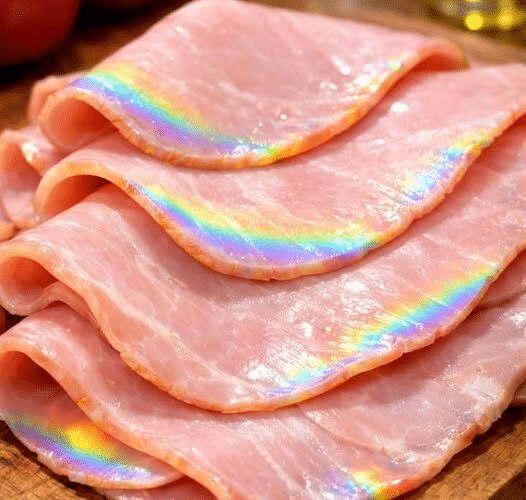
The rainbow shine on ham is usually caused by a light effect called diffraction.
Ham is made of muscle fibers. When the meat is sliced very thinly, especially with a sharp blade or slicing machine, the cut surface exposes those fibers in a very even pattern.
When light hits that surface, it can bend and scatter into different colors.
This is similar to what happens when light hits a soap bubble, a CD, or a thin layer of oil on water. The surface reflects light in a way that separates visible colors, creating a rainbow-like appearance.
It may look strange, but it is not unusual.
This effect is especially common in cured meats such as ham, roast beef, corned beef, turkey slices, and some deli meats.
Why it happens more often with sliced deli meat
The rainbow effect is easier to see on thin, smooth slices.
That is because machine slicing creates a clean, flat surface where the muscle fibers reflect light more strongly. Moisture on the surface can also make the effect more noticeable.
Cured meats may show it more clearly because salt, curing agents, and processing can affect the structure and moisture of the meat. These changes can make light reflection more visible.
This does not mean the ham contains something dangerous.
It is simply a result of the meat’s structure, the slicing process, and the way light hits the surface.
In other words, it is physics — not necessarily spoilage.
When rainbow ham is usually safe
If the ham has been stored properly in the refrigerator and still smells fresh, the rainbow sheen alone is usually not a problem.
You can generally treat it as normal if:
The ham smells normal.
The texture is moist but not sticky or slimy.
The color is otherwise natural.
The package is within its use-by date.
The meat has been kept cold.
The packaging is not swollen, leaking, or damaged.
If all of those signs look fine, the iridescent shine is likely harmless.
Many people throw away perfectly good ham because the rainbow color surprises them. While food safety is important, the shine by itself is not usually a reason to panic.
When you should throw ham away
A rainbow sheen is usually normal, but spoiled ham has other warning signs.
The first thing to check is smell.
If the ham smells sour, rotten, ammonia-like, fermented, or simply “off,” do not eat it. Fresh ham should smell mild and meaty, not sharp or unpleasant.
Next, check the texture.
If the slices feel very slimy, sticky, or tacky in a way that seems different from normal moisture, that may indicate bacterial growth. Deli meats can naturally feel slightly damp, but a thick slippery coating is not a good sign.
Also look at the color.
A shiny rainbow effect is different from meat that has turned dull gray, muddy brown, greenish, or patchy in an unhealthy way. If the meat looks faded, discolored, or moldy, it should be discarded.
Finally, check storage time.
Even if it looks okay, sliced ham should not be kept indefinitely after opening. Once opened, deli meats should be used within a safe time frame according to the package instructions and local food safety guidance.
Storage matters
Proper storage is one of the most important parts of keeping ham safe.
Keep sliced ham refrigerated and sealed tightly when not in use. Do not leave it sitting out on the counter for long periods, especially in warm weather.
After opening the package, use clean hands or utensils when removing slices. Avoid touching the whole stack repeatedly, as this can introduce bacteria.
If you buy ham from a deli counter, ask how long it should be stored after purchase. Deli-sliced meats may have a shorter shelf life than sealed packaged meats.
For families managing groceries, meal planning, household budgets, and personal finance, preventing food waste is helpful — but safety still comes first. When ham shows true signs of spoilage, it is better to throw it away than risk getting sick.
Why people mistake the shine for chemicals
The rainbow look can be unsettling because it does not seem natural.
Many people associate rainbow colors on food with oil, chemicals, or contamination. But natural foods can create optical effects too.
Meat fibers, moisture, fat, and cutting angle can all change how light reflects.
The same piece of ham may look normal from one direction and rainbow-colored from another. If you tilt the slice or move it under different lighting, the colors may shift or disappear.
That shifting shine is a clue that you are seeing reflected light rather than actual discoloration.
Spoiled meat usually does not change color depending on the viewing angle in the same way. It tends to look, smell, or feel wrong consistently.
What to do before eating it
If you notice a rainbow sheen on ham, do a quick safety check.
Look at the package date.
Smell the meat.
Touch the surface carefully.
Check for slime, mold, dull discoloration, or sour odor.
Think about how long it has been opened.
If everything else seems normal, the rainbow sheen is most likely harmless.
If anything seems off, discard it.
Food safety is not about one sign alone. It is about the full picture.
Final thoughts
A rainbow or pearly sheen on sliced ham may look strange, but it is usually a normal light-reflection effect caused by the structure of the meat fibers and the slicing process.
It is common in cured and deli meats and does not automatically mean the ham is spoiled or unsafe.
The real warning signs are sour odor, slimy texture, mold, damaged packaging, major discoloration, or improper storage.
So if your ham smells fresh, feels normal, has been kept refrigerated, and is still within its safe storage period, the rainbow shine is likely nothing to worry about.
Sometimes the most suspicious-looking detail in the fridge is just a little science catching the light.


