Ants are a normal part of the outdoor environment.
In many ways, they are useful insects. They help break down organic matter, move soil, and play a role in the natural garden ecosystem. But when ants begin spreading across patios, nesting under paving stones, climbing into flower beds, or appearing near outdoor dining areas, they can quickly become frustrating.
Many homeowners immediately think of chemical ant killers.
But not every ant problem requires harsh products. Sometimes a simple kitchen ingredient can help disrupt ant trails and encourage them to move away from areas where they are not wanted.
That is why the so-called “teaspoon trick” has become popular among gardeners.
The idea is simple: use a small amount of a strong-smelling natural ingredient, such as cinnamon or dried coffee grounds, to interfere with the scent trails ants use to navigate.
It is affordable, easy, and can be done with items many people already have at home.
Why ants keep returning to the same places
Ants rely heavily on scent trails.
When one ant finds food or a good nesting area, it leaves behind chemical signals called pheromones. Other ants follow those trails, which is why you often see them moving in long, organized lines.
This is also why simply sweeping ants away rarely solves the problem.
The trail remains.
More ants follow it.
And soon the same path is active again.
To reduce ants naturally, the goal is to interrupt those scent trails and make the area less attractive. Strong odors can confuse their navigation and encourage them to relocate.
That is where cinnamon, coffee grounds, and vinegar water can help.
The teaspoon trick: cinnamon for ants
Cinnamon is one of the most popular natural ant deterrents.
Its strong scent can interfere with ant trails and make treated areas unpleasant for them to cross. Many gardeners use it around patios, garden edges, doorways, raised beds, and cracks where ants are active.
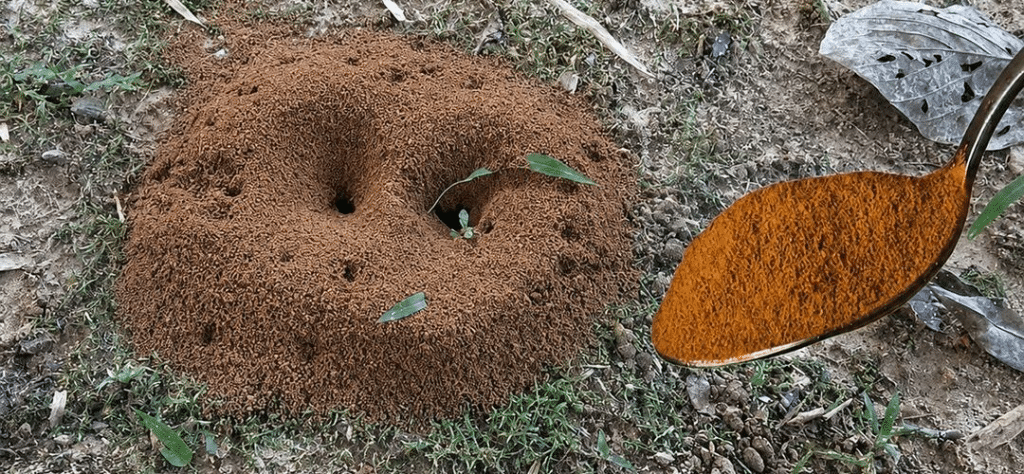
To try it, take about one teaspoon of ground cinnamon and sprinkle it directly near the ant trail, around the entrance to the nest, or along cracks in the patio.
You do not need a large amount at first.
A small line of cinnamon can be enough to disrupt the path ants are using. If the area is large or heavily active, repeat the process in several spots.
This method is best for repelling ants rather than killing them. It encourages them to move elsewhere without poisoning the soil.
Using dried coffee grounds
Coffee grounds are another simple option.
After making coffee, allow the used grounds to dry completely. Wet grounds can become messy or moldy, so drying them first is important.
Once dry, sprinkle about one teaspoon near ant trails, patio cracks, garden bed edges, or around areas where ants seem to gather.
The strong smell may discourage ants from traveling through the area. The texture may also make the path less comfortable for them.
Coffee grounds can also add organic matter to the soil in small amounts, which is why many gardeners like using them around plants. However, avoid piling too much coffee in one place. Large amounts can affect soil texture and may not be ideal for every plant.
Used carefully, coffee grounds are a practical, low-cost way to make outdoor spaces less inviting to ants.
Baking soda and sugar as a stronger method
Some people use baking soda mixed with powdered sugar when simple repellents are not enough.
The sugar attracts ants, while the baking soda is intended to harm them after ingestion. This is a more aggressive method than cinnamon or coffee grounds because it is designed to kill rather than simply repel.
To make the mixture, combine one teaspoon of baking soda with one teaspoon of powdered sugar. Sprinkle a small amount near active ant areas, but keep it away from children, pets, and food preparation spaces.
Although baking soda is a common kitchen ingredient, any pest-control mixture should still be used carefully. Do not scatter it heavily across the garden, and avoid placing it where beneficial insects may be affected.
For gardeners who prefer a non-lethal approach, cinnamon or coffee grounds are better first steps.
Clean the trail after ants leave
Once ant activity decreases, it helps to clean the area where they were traveling.
On patios, paths, and outdoor tiles, wipe the surface with diluted vinegar water. This can help remove leftover scent trails so ants are less likely to return to the same route.
A simple mixture of water and white vinegar can be used on hard outdoor surfaces. Avoid pouring strong vinegar directly into garden beds or around sensitive plants, as vinegar can damage vegetation.
For patios, steps, and non-planted areas, vinegar water is useful for cleaning and disrupting old trails.
This final step can make natural ant control more effective.
Why ants may be nesting under patio stones
If ants are appearing between patio stones, cracks, or paving blocks, they may be nesting underneath.
Ants like protected spaces with access to soil and warmth. Patio gaps can provide perfect shelter. Over time, ant activity may loosen sand or soil beneath the stones, creating uneven areas.
If this happens repeatedly, repelling ants may only provide temporary relief.
You may need to refill gaps with jointing sand, repair cracks, improve drainage, or remove food sources nearby. Keeping patios swept and free from crumbs, spilled drinks, pet food, and sticky residue can reduce ant interest.
Outdoor dining areas should be cleaned after meals, especially during warm months.
Small habits can prevent bigger pest problems later.
Keep ants away from garden beds naturally
In flower beds and vegetable gardens, ants are not always harmful.
Sometimes they are simply passing through. However, large colonies can disturb young plants, protect aphids, or make gardening uncomfortable.
To reduce ant activity near plants, avoid leaving fallen fruit, sugary spills, or food scraps nearby. Check plants for aphids, because ants are often attracted to the sweet honeydew aphids produce.
If aphids are present, manage them first.
You can also place cinnamon or coffee grounds around the edges of beds rather than directly on delicate seedlings. This creates a mild barrier without overwhelming the soil.
As with any natural remedy, moderation is important.
Benefits of natural ant control
Natural ant control methods are popular because they are affordable and easy to try.
They also reduce reliance on harsh chemical sprays, which may not be ideal around children, pets, edible plants, patios, or outdoor dining areas.
For homeowners managing household budgets, gardening costs, home maintenance, insurance, and other personal finance responsibilities, simple low-cost solutions can be especially appealing.
A teaspoon of cinnamon or dried coffee grounds costs almost nothing and may help redirect ant activity before the problem becomes serious.
Natural methods are not always perfect, but they are often a smart first step.
When to consider stronger help
If ants keep returning in large numbers, appear inside the home, damage patio structures, or nest near electrical equipment, it may be time to seek professional pest advice.
Some ant species are more difficult to control than others. Carpenter ants, for example, can be a bigger concern near wooden structures. Fire ants can pose safety risks in some regions.
In those cases, correct identification matters.
A professional can determine whether the ants are simply a nuisance or whether they represent a more serious issue.
For ordinary garden and patio ants, however, natural deterrents may be enough to reduce activity.
Final thoughts
A teaspoon of cinnamon, dried coffee grounds, or a carefully used baking soda mixture can be a simple way to deal with ants in the garden or on the terrace.
Cinnamon and coffee grounds work mainly by disrupting scent trails and encouraging ants to move away. Baking soda mixed with powdered sugar is a stronger method and should be used more cautiously.
For best results, combine these tricks with good outdoor cleaning habits.
Remove food scraps.
Clean patio surfaces.
Seal cracks where possible.
Manage aphids on plants.
Wipe away old scent trails with diluted vinegar water on hard surfaces.
Ant control does not always require expensive products or harsh chemicals. Sometimes the easiest solution starts with one te


