From the outside, our home looked like a dream.
Every room was polished, arranged, and styled with the kind of care people usually only see in design magazines. The lilies in the entryway were always fresh. The dining table gleamed beneath soft lighting. The air smelled faintly of vanilla and cedar. Even the garden seemed too perfect, with trimmed hedges, clean stone paths, and a lawn that looked untouched by real life.
To our neighbors in the quiet suburbs outside Chicago, Richard and I looked like a successful couple.
He was the charming executive with expensive suits, a warm smile, and powerful connections.
I was Helen, the supportive wife.
And my fourteen-year-old daughter, Sarah, was supposed to be the final piece of our beautiful family picture.
But perfect houses can hide ugly truths.
That morning, while Richard prepared to host an important business brunch, my daughter slipped me a crumpled piece of paper that made my blood run cold.
It said:
“Pretend you’re sick and leave.”
Sarah’s warning changed everything
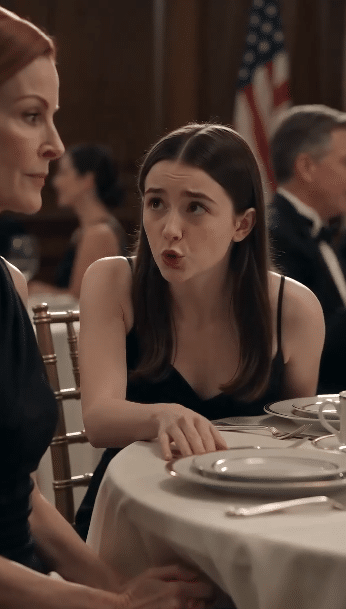
At first, I stared at the note without understanding.
The kitchen was bright with morning sunlight, and outside I could hear cars arriving for Richard’s event. The first guests were pulling into the driveway. Classical music floated through the house. Crystal glasses waited on the table. Everything looked elegant, controlled, and expensive.
But Sarah’s face told a different story.
She stood near the kitchen doorway, pale and trembling, her eyes darting toward the hall as if she expected Richard to appear at any second.
For two years, I had thought her distance was normal teenage resentment. I believed she was struggling to adjust after I remarried. I told myself she needed time.
But in that moment, I saw the truth.
My daughter had not been moody.
She had been afraid.
Richard entered the kitchen moments later, adjusting his cufflinks and wearing the polished smile he used for boardrooms, investors, and dinner guests. He reminded me that everything needed to be flawless. The food, the seating, the wine, the timing — all of it mattered because his reputation depended on the success of the brunch.
His voice was smooth, but underneath it was control.
I folded Sarah’s note into my palm and forced myself to breathe.
The migraine that saved us
I knew I needed to get Sarah out of the house.
But I could not panic.
Richard was too observant. He noticed details other people missed. If I grabbed my daughter and ran, he would know something was wrong. If I confronted him, I had no idea what he might do.
So I used the only excuse I could think of.
I told him I had a migraine.
A severe one.
I pressed my hand to my forehead and said the room was spinning. I said I needed air. I said I could not host brunch feeling like I might collapse.
For one brief second, Richard’s mask slipped.
His smile tightened. His eyes flashed with irritation. He was not worried about me. He was annoyed that I had disrupted his perfect event.
But his business partners were already arriving, and Richard could not risk looking cruel in front of them. His entire life was built on image.
So he let me leave.
Sarah and I walked out carefully, trying not to move too fast. The moment we reached the car, my hands were shaking so badly I could barely start the engine.
As we pulled away from the driveway, I finally looked at my daughter.
“Sarah,” I whispered. “Tell me what’s happening.”
She burst into silent tears.
Then she said the words no mother is ever prepared to hear.
“He’s going to hurt you, Mom.”
The truth spilled out in the car
Sarah told me she had overheard Richard speaking on the phone.
At first, she thought it was another business call. Richard was always discussing money, contracts, loans, banking issues, and expansion plans behind closed doors. But this call had been different.
His voice had been low.
Careful.
Cold.
Sarah heard enough to understand that he was planning something during the brunch. She said he mentioned my tea. She said he had done something to it before. She said he believed no one would suspect him because he was charming, respected, and careful.
The road blurred in front of me.
My daughter kept talking, her words tumbling out between sobs.
She had taken photos of documents she found in Richard’s office: debt notices, financial statements, overdue payments, business losses, and insurance paperwork. The life Richard presented to the world was not real.
He was drowning financially.
And I had a life insurance policy he had insisted I update after our wedding.
Suddenly, everything I had ignored came rushing back.
The tea he always prepared for me.
The strange exhaustion I had felt some mornings.
The way he controlled what I ate before events.
The sudden interest he had taken in my medical history.
The pressure to sign documents I barely understood.
The charming husband I thought I knew had been building a trap around me.
Richard’s luxury life was collapsing
Richard had spent years crafting an image of wealth and success.
He drove the right car. Wore the right suits. Hosted the right people. Spoke confidently about investments, real estate, expansion, and future profits. He knew how to make people believe in him.
I had believed in him too.
But Sarah’s photos revealed the reality beneath the polished surface.
His company was in serious trouble. He owed money. His business deals were failing. His accounts were stretched thin. The expensive lifestyle he used to impress investors and clients was supported by debt, pressure, and desperation.
He did not need a wife.
He needed a financial escape.
And somehow, I had become part of that plan.
The thought made me sick.
I had welcomed him into my life. I had trusted him around my daughter. I had believed his tenderness, his concern, his promises.
All while Sarah had been watching more closely than I had.
We went straight to the police
I did not drive aimlessly.
I drove straight to the police station.
Sarah clutched her phone the entire way, terrified that Richard would call, track us, or somehow appear behind us. I kept checking the mirrors, forcing myself to stay calm.
When we arrived, I told the officers everything.
At first, the story sounded impossible even to me. A wealthy husband. A business brunch. A warning note. A daughter afraid for her mother. Financial trouble. Insurance. Tea.
But Sarah had evidence.
Photos.
Messages.
Documents.
Details from the call she overheard.
The officers took us seriously.
They asked questions, separated us gently to confirm details, and contacted investigators. I learned then how important documentation can be when someone is trapped in a dangerous domestic situation. Instinct matters, but evidence can help authorities act.
While we waited, Richard called my phone again and again.
I did not answer.
Every ring made me shake.
The mask finally cracked
Later that day, police went to the house.
The brunch was still happening when they arrived.
Richard was reportedly still playing the perfect host, smiling beneath the chandelier, speaking with his guests, and pouring drinks as though nothing in the world was wrong.
He did not know Sarah had warned me.
He did not know we were safe.
He did not know the evidence was already in police hands.
That was the moment the carefully built image began to collapse.
Investigators collected items from the kitchen and dining room. They reviewed the contents of the drinks prepared for me. They searched Richard’s office and examined his financial records.
The man who had controlled every vase, every glass, every conversation, and every impression could no longer control the truth.
For the first time, he was not standing in a room he owned.
He was standing in a reality he could not polish.
My daughter saved my life
That night, Sarah and I stayed somewhere safe.
She barely slept.
Neither did I.
For hours, I kept replaying everything in my mind. The warning note. The migraine excuse. Richard’s annoyed expression. The goblets on the dining table. The tea I had trusted him to make.
I thought about how close I had come to staying.
How close I had come to smiling through brunch, lifting a cup or glass to my lips, and trusting a man who had already decided I was worth more to him gone than alive.
Then I looked at Sarah.
My brave, observant, terrified daughter.
She had seen what I refused to see. She had risked everything to warn me. She had slipped me that note even though she was scared of what might happen if Richard noticed.
She was fourteen.
And she saved us both.
Why I missed the warning signs
It is easy to ask why someone does not see danger sooner.
I have asked myself that many times.
But people like Richard do not begin with cruelty. They begin with charm. They make you feel chosen. They study your weaknesses and present themselves as the answer.
Richard knew I wanted stability. He knew I wanted partnership. He knew I wanted my daughter to feel safe after years of uncertainty.
So he became the man I wanted to believe in.
He was kind in public.
Generous when watched.
Affectionate when it benefited him.
But behind closed doors, control slowly replaced love.
He made decisions for the household. He pressured me about legal and financial paperwork. He framed his demands as concern. He made me doubt myself when I questioned him.
By the time Sarah handed me that note, I realized his charm had never been proof of goodness.
It had been camouflage.
The truth about safety
A beautiful home does not guarantee safety.
A successful spouse does not guarantee trust.
A polished life does not mean a healthy one.
Sometimes danger lives behind locked gates, expensive furniture, perfect landscaping, and carefully poured drinks.
That is why it is so important to listen when something feels wrong, especially when a child is afraid. Children may not always explain danger perfectly, but fear has its own language.
Sarah had been speaking that language for months.
I just did not understand it until the note was in my hand.
Now I know better.
Final thoughts
One text message, one note, and one brave daughter shattered the illusion of my perfect life.
Richard thought he had built a trap no one would see. He believed his charm, wealth, and reputation would protect him. He thought I would sit at that grand dining table, trust his smile, and drink whatever he placed in front of me.
But he underestimated Sarah.
He underestimated a daughter’s love.
And he underestimated how quickly a perfect image can fall apart when the truth finally comes into the light.
I left that house pretending to have a migraine.
But the real sickness was not in my head.
It was in the life Richard had built around us.
Thanks to my daughter, we escaped before it was too late. And now, no matter how carefully someone arranges the flowers, polishes the silver, or smiles across a dining table, I know one thing for certain:
A beautiful lie is still a lie.


