Some songs belong to a specific time.
Others seem to live outside time completely.
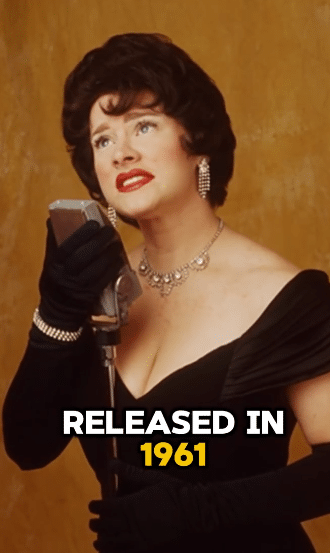
Patsy Cline’s “I Fall to Pieces,” released in 1961, is one of those rare recordings that still feels painfully fresh more than six decades later. It captures a feeling almost everyone understands: seeing someone you once loved and realizing your heart has not healed as much as you thought.
That is the quiet devastation at the center of the song.
It is not angry.
It is not dramatic.
It does not beg, shout, or accuse.
Instead, it describes the ache of trying to appear fine while breaking apart inside. That emotional honesty is exactly why the song became one of Patsy Cline’s most unforgettable performances and one of the greatest heartbreak ballads in country music history.
Patsy Cline’s voice made pain sound beautiful
By the early 1960s, Patsy Cline was already respected in country music, but “I Fall to Pieces” changed everything.
Her voice had a rare ability to sound strong and vulnerable at the same time. She could hold a note with power, then soften the next phrase until it felt like a confession. That balance made her uniquely suited for a song built on emotional restraint.
In “I Fall to Pieces,” Cline does not overperform the heartbreak.
She lets it breathe.
Every line feels carefully measured, as though the singer is trying to keep control while admitting that control is slipping away. That makes the performance feel deeply human.
The listener does not simply hear someone singing about heartbreak.
They hear someone trying to survive it with dignity.
That is what makes Patsy Cline’s version impossible to replace.
A song about pretending to move on
The story inside “I Fall to Pieces” is simple but devastating.
The narrator sees a former love and falls apart emotionally. She may try to act composed. She may tell herself she is over it. But the moment that person appears, all the old feelings return.
Anyone who has ever run into someone they never fully got over understands that feeling.
It can happen years later.
A glance.
A voice.
A familiar place.
A memory you thought had faded suddenly becomes sharp again.
The song captures that exact moment — the painful realization that healing is not always a straight line. Sometimes the heart keeps holding on long after the mind has tried to let go.
That is why the lyrics remain so relatable.
They speak to heartbreak without making it complicated.
The Nashville Sound gave the song elegance
“I Fall to Pieces” was produced by Owen Bradley, one of the key figures behind the polished Nashville Sound.
At the time, country music was expanding beyond its traditional audience. Producers were blending country storytelling with smoother arrangements that could appeal to pop listeners as well. This approach helped bring country music into mainstream American homes while preserving its emotional roots.
The arrangement of “I Fall to Pieces” is gentle and refined.
The soft backing vocals, smooth instrumentation, and graceful pacing give the song an almost dreamlike sadness. Nothing overwhelms Patsy Cline’s voice. Instead, every musical element supports it.
That restraint is part of the song’s brilliance.
The production does not compete with the emotion.
It frames it.
The result is a recording that feels elegant, intimate, and timeless.
It became a breakthrough hit
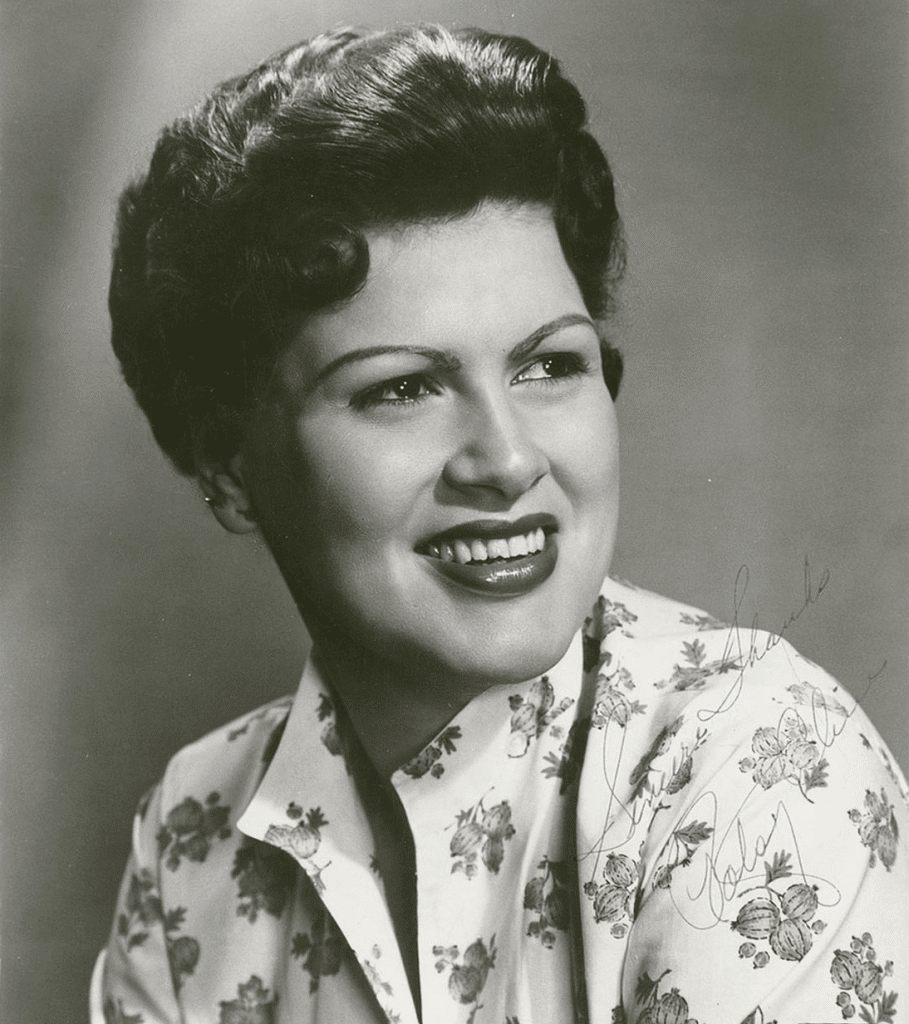
When “I Fall to Pieces” was released, not everyone was convinced it would become a major hit.
Its slow tempo and quiet emotional tone were not the most obvious ingredients for radio success. But Patsy Cline believed in the song, and audiences eventually responded.
The single reached No. 1 on the country chart and crossed over to the pop charts, helping establish Cline as one of the first major country artists to gain widespread mainstream recognition.
That success mattered far beyond one recording.
It helped show that country music could reach listeners outside its usual boundaries without losing its soul. It also proved that emotional honesty could be just as powerful commercially as upbeat hits or flashy performances.
In an industry often shaped by radio play, record sales, publishing rights, touring income, and entertainment business decisions, “I Fall to Pieces” proved that a deeply vulnerable song could still become a lasting success.
Why the song still resonates today
More than sixty years later, “I Fall to Pieces” still connects because heartbreak has not changed.
Technology has changed.
Music production has changed.
The way people discover songs has changed.
But the feeling of seeing someone you once loved and realizing the pain is still there remains painfully familiar.
That is the reason the song continues to move new generations of listeners. Even people who did not grow up with Patsy Cline or early 1960s country music can understand the emotion immediately.
The song does not require context.
It requires a heart.
That universality is what makes it a classic.
Patsy Cline’s restraint made it unforgettable
Many singers can deliver sadness.
Few can do it with the restraint Patsy Cline brought to this recording.
She does not turn the song into a vocal showcase. She does not chase high notes simply to impress. Instead, she uses phrasing, timing, and tone to let the heartbreak unfold naturally.
Small pauses matter.
Gentle shifts in her voice matter.
The way she holds back matters as much as the notes she releases.
That is what makes the performance feel so real. Grief and heartbreak are not always loud. Sometimes they are controlled, quiet, and private. Sometimes the deepest pain is the kind people carry while still standing upright, still smiling politely, still pretending everything is fine.
“I Fall to Pieces” understands that kind of pain.
A defining moment in her legacy
After the success of “I Fall to Pieces,” Patsy Cline continued building one of the most important catalogs in country music.
Songs like “Crazy,” “She’s Got You,” and “Walkin’ After Midnight” helped cement her place as one of the greatest voices in American music. Her influence can still be heard in generations of singers who followed, from traditional country artists to pop and Americana performers.
But for many fans, “I Fall to Pieces” remains one of the purest examples of what made her extraordinary.
It contains everything people love about Patsy Cline: emotional intelligence, vocal control, warmth, heartbreak, and timeless elegance.
The song became more than a hit.
It became part of her identity.
A ballad built on quiet truth
One reason “I Fall to Pieces” continues to feel powerful is that it does not exaggerate.
It tells a small truth with perfect clarity.
The world does not end when the narrator sees her former love.
No dramatic scene unfolds.
No one collapses in public.
But inside, everything breaks.
That contrast between outer composure and inner devastation is what makes the song so honest. It reflects the kind of heartbreak people often carry privately.
A person can look fine.
They can go to work, manage their bills, handle banking, pay insurance, keep appointments, maintain relationships, and appear completely functional.
But one memory can still undo them.
Patsy Cline gave that hidden pain a voice.
Why it remains a timeless treasure
A timeless song does not survive because people are told it is important.
It survives because people keep feeling it.
“I Fall to Pieces” has lasted because every generation finds its own heartbreak inside it. The melody is beautiful. The arrangement is graceful. But the emotional truth is what keeps it alive.
It reminds listeners that healing can be complicated.
It reminds us that love does not always disappear just because a relationship ends.
It reminds us that some people leave our lives but remain in our hearts longer than we want to admit.
That is why the song still hurts.
And that is why people still love it.
Final thoughts
Released in 1961, “I Fall to Pieces” became the song that helped transform Patsy Cline into a true country music legend.
More than six decades later, it remains one of the most moving heartbreak ballads ever recorded. Its power comes not from volume or drama, but from honesty. Patsy Cline sang it with such control and vulnerability that the song still feels personal every time it plays.
It captures the ache of seeing someone you have never truly gotten over.
It captures the quiet collapse behind a brave face.
It captures the truth that some wounds do not announce themselves loudly — they simply reopen with one familiar glance.
That is why “I Fall to Pieces” still breaks hearts.
Because it does not just describe heartbreak.
It understands it.


