Most people peel a banana, break off the little black tip, toss it aside, and never think about it again. Some do it because of habit. Others do it because the dark end looks strange, dry, or unappetizing.
But is that little black part dangerous?
For years, a rumor has circulated online claiming that the dark tip of a banana is poisonous or unsafe to eat. Some versions of the myth even suggest that bugs, toxins, or harmful substances are hidden inside that small end.
The truth is much less scary.
The little black tip of a banana is not poisonous. In normal, healthy bananas, it is safe to eat. It may look different from the rest of the fruit, and its texture may be firmer or less pleasant, but it does not contain a dangerous toxin.
In fact, the part many people cut off without thinking is simply a natural remnant of the banana’s growth process.
What Is the Little Black Tip of a Banana?
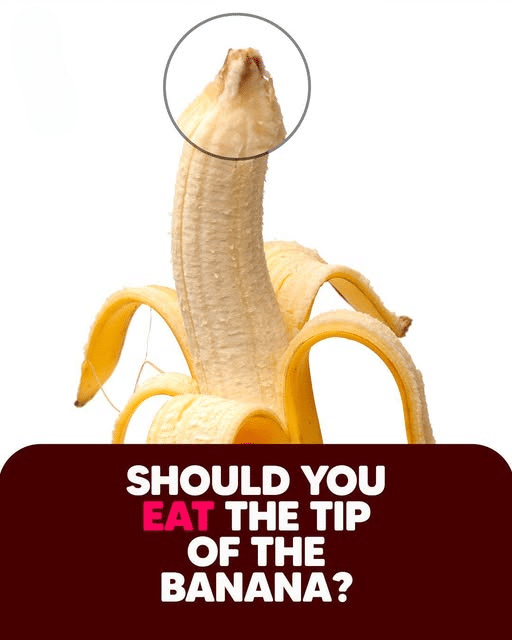
The small dark spot at the bottom of a banana is often called the calyxic apex. It is the dried remnant of the flower end of the banana.
Bananas develop from flowers, and as the fruit grows, this end remains as a tiny leftover part of that natural process. Over time, it can become dark, dry, or slightly tough. That appearance is what causes many people to assume it should not be eaten.
But the color alone does not mean it is harmful.
Just like some fruits have stems, blossom ends, peels, cores, or seeds, bananas have small structural parts connected to how they grow. The black tip is one of those parts.
It is not a worm.
It is not poison.
It is not a hidden disease.
It is simply part of the banana.
Is the Banana Tip Safe to Eat?
Yes, the little black tip is generally safe to eat.
There is no reliable evidence that this part of the banana contains poison or dangerous compounds. If the banana itself is fresh, properly stored, and not rotten, the tip does not pose a special health risk.
That said, many people still remove it because they do not like the texture. The end can be slightly bitter, dry, chewy, or woody compared with the soft banana flesh. In very ripe bananas, it may become softer and blend more easily with the rest of the fruit.
So the choice is mostly about preference.
If you accidentally eat it, there is no reason to panic. If you dislike the taste or texture, cutting it off is fine too.
Why Do People Think It Is Dangerous?
The myth likely survives because the banana tip looks different from the rest of the fruit. People often associate dark spots with spoilage, mold, or contamination, even when the darkening is natural.
Bananas also change quickly as they ripen. The peel gets brown spots, the flesh softens, and the ends may become darker. These changes can make people wonder whether parts of the fruit are still safe.
In most cases, ripe bananas are perfectly safe to eat as long as they do not show signs of mold, a sour smell, leaking liquid, or extreme mushiness from spoilage.
The little black tip by itself is not a warning sign.
What About the Other End of the Banana?
The stem end of the banana — the part where the fruit was attached to the bunch — is also not dangerous. It is usually tougher and not eaten simply because it is fibrous and unpleasant.
Some people peel bananas from the stem side. Others prefer to pinch the opposite end open. Either way, both ends are natural parts of the fruit.
Darkening near either end may happen because of oxidation, ripening, or drying. That does not automatically mean the banana is bad.
When Should You Avoid Eating a Banana?
Although the black tip is not dangerous, there are times when a banana should be avoided.
Do not eat a banana if it has visible mold, an unusual rotten smell, liquid leaking from the peel, or flesh that looks discolored in an abnormal way. A banana that is extremely mushy, fermented-smelling, or slimy should also be discarded.
People with banana allergies or sensitivities should avoid bananas altogether unless advised otherwise by a healthcare professional. Some people with latex-fruit syndrome may also react to bananas, so allergy concerns should be taken seriously.
For everyone else, a normal banana with a dark tip is not a problem.
Are Other Parts of the Banana Edible?
Most people only eat the soft fruit inside the peel, but other parts of the banana plant are edible in different cultures.
Banana peel can be eaten if it is cleaned well, though it is usually cooked, blended, or used in recipes because it is tough and bitter when raw. Some people use banana peel in smoothies, baked goods, or savory dishes.
Banana blossoms, also called banana flowers, are widely used in Southeast Asian and South Asian cooking. They can be stir-fried, boiled, added to curries, or used in salads.
The inner core of the banana plant stem is also eaten in some cuisines. It has a crisp texture and is often used in soups, salads, and cooked dishes.
Most commercial bananas do not contain hard seeds, but wild banana varieties may have seeds that can be roasted or processed.
The banana is more versatile than many people realize.
Should You Cut Off the Black Tip?
You can, but you do not have to.
If the black tip bothers you, remove it. Many people do because it looks unappealing or feels too tough. There is nothing wrong with that.
But if you eat it by accident — or choose not to waste it — there is no evidence that it is harmful.
The bigger concern is the overall condition of the banana. If the fruit smells fresh, looks normal, and has no mold or spoilage, it is generally safe to eat.
The Bottom Line
The little black tip of a banana may look strange, but it is not poisonous. It is a natural leftover from the banana’s flower end and is generally safe to consume.
Most people cut it off because of texture, taste, or habit — not because it is dangerous.
So the next time you peel a banana and see that tiny dark tip, there is no need to worry. Eat around it, cut it off, or eat it with the rest of the fruit.
Either way, the myth that it is toxic can finally be put to rest.


