Social media is full of unusual home hacks, and one recent trend has people placing a ball of aluminum foil inside their toilet tank.
Some videos claim this simple trick can save water, reduce leaks, prevent rust, lower utility bills, and even keep the toilet bowl cleaner. It sounds easy, cheap, and almost too good to be true.
That is exactly why homeowners should take a closer look before trying it.
Why People Believe the Foil Trick Works
Aluminum foil is a common household item with many practical uses. People use it for cooking, cleaning, sharpening scissors, and even improving ironing efficiency.
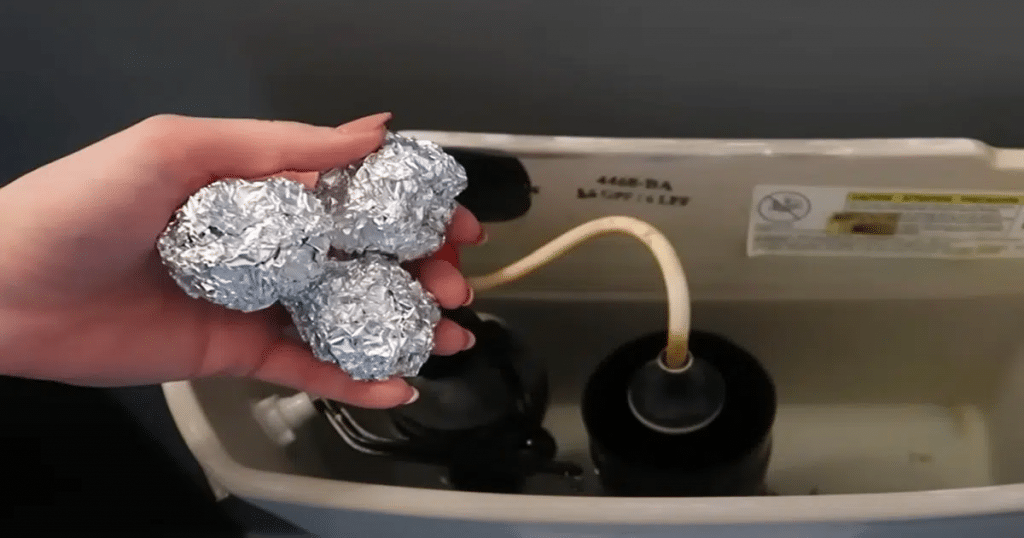
Because foil is flexible, metallic, and inexpensive, many assume it can solve other household problems too. Once a few viral videos suggest it works in a toilet tank, the idea spreads quickly.
But popularity does not equal proof.
Claim 1: Does Aluminum Foil Save Water?
The idea behind this claim is that the foil takes up space in the tank, reducing the amount of water used per flush.
In theory, reducing tank volume can save water. However, aluminum foil is too light and too small to make a meaningful difference. It can float, shift around, or move with the water instead of staying firmly in place.
A proper toilet tank displacement bag or a sealed bottle filled with water is much more effective because it stays stable and actually reduces water volume.
So, while the concept of displacement is real, aluminum foil is not a reliable water-saving solution.
Claim 2: Can It Stop Toilet Leaks?
This is another popular claim, but it does not hold up.
Most toilet leaks happen because the flapper is worn, warped, dirty, or unable to seal properly. The flapper is the rubber part that lifts when you flush and closes afterward to hold water in the tank.
Dropping foil into the tank will not repair damaged rubber, remove mineral buildup, or fix poor alignment.
In fact, loose objects inside the tank can interfere with the flushing mechanism and create more problems.
Claim 3: Does Foil Prevent Rust or Mineral Buildup?
Some online posts suggest aluminum foil can prevent rust or reduce mineral deposits. However, rust and scale are usually caused by water quality, minerals, pH levels, and aging tank parts.
Aluminum foil does not change the chemistry of the water. It cannot remove calcium, stop iron stains, or prevent hard water buildup.
In some cases, foil may even break down over time, especially if it reacts with cleaning chemicals. That can leave small pieces floating inside the tank.
Claim 4: Will It Keep the Toilet Bowl Cleaner?
This claim is also weak.
A clean toilet bowl depends on regular cleaning, water quality, toilet design, and the condition of the ceramic glaze. Aluminum foil does not disinfect water and does not have meaningful antibacterial cleaning power inside a toilet tank.
It will not stop stains, bacteria, slime, or hard water rings from forming.
Could Aluminum Foil Cause Problems?
Yes, it can.
A loose ball of foil may move around the tank and interfere with the flapper, chain, float, or flush valve. Small pieces may break off and create debris. If something gets stuck in the flushing system, it could cause poor flushing, running water, or even clogs.
Another issue is that relying on a viral hack may delay real repairs. A small toilet leak can waste a surprising amount of water over time, increasing your water bill and putting stress on plumbing parts.
Better Ways to Save Water and Maintain Your Toilet
For real water savings, consider a low-flow toilet, a dual-flush model, or a proper tank displacement device.
For leaks, inspect the flapper and replace it if it looks worn or does not seal correctly. This is usually inexpensive and simple.
For mineral buildup, use safe descaling products or consider a water softener if your home has hard water.
For cleanliness, stick with regular cleaning using mild, toilet-safe products.
The Bottom Line
The aluminum foil toilet tank trick may look clever online, but there is little reason to believe it delivers the major benefits people claim.
It does not meaningfully save water, stop leaks, prevent rust, or keep the bowl cleaner. At best, it does almost nothing. At worst, it may interfere with toilet parts and lead to avoidable plumbing problems.
Aluminum foil is useful in many places around the house, but the toilet tank is not one of them.
This viral hack is better left as an internet curiosity than a home maintenance solution.


