Mark Bryan does not dress the way many people expect a married father, engineer, and football coach to dress.
That is exactly the point.
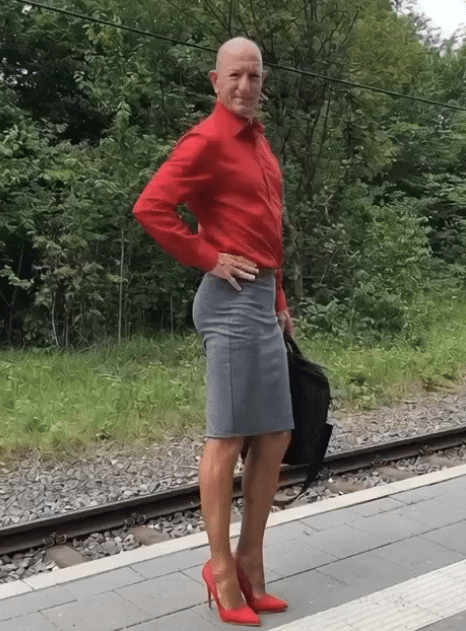
Bryan, an American engineer living in Germany, became widely known online after sharing photos of his daily outfits: button-down shirts, ties, jackets, fitted skirts, and high heels. At first glance, his style surprises people because it blends traditionally masculine office wear above the waist with clothing many still label as feminine below the waist. But for Bryan, the message is simple: clothing should not decide a person’s identity, masculinity, or worth.
A Professional Life With an Unexpected Dress Code
Bryan works in engineering and has continued to describe his fashion presence as something separate from his professional ability. In a 2022 interview, he said he was still working a full-time engineering job while fashion and modeling opportunities remained more of a part-time pursuit.
His look often includes pencil skirts, stilettos, dress shirts, and ties. He has explained that he prefers skirts to dresses because they allow him to mix masculine and feminine elements rather than fully adopting one traditional fashion category. Older reports also noted that his employer had no issue with his outfits, because he remained the same person and professional regardless of what he wore.
That distinction is important. Bryan is not presenting his clothing as a costume or performance. He treats it as personal style.
“Clothes Have No Gender”
A major reason Bryan’s story gained attention is that he challenges a common assumption: that skirts and heels automatically say something about someone’s sexuality or gender identity.
Bryan has publicly described himself as a straight, happily married man, and he has repeatedly emphasized that his clothing choices are about fashion, comfort, confidence, and self-expression—not about changing who he is. Vogue also described him as a cis, straight male engineer with a following built around his love of skirts and high heels.
His broader message is not complicated: if women can wear pants, suits, sneakers, and traditionally masculine styles without constant explanation, men should also be free to wear skirts or heels without being reduced to a stereotype.
How It Started
Bryan has said his first experience with heels happened decades ago while he was in college, after a girlfriend suggested he try them because she was taller when wearing heels. Years later, after seeing how confident someone looked in a pair of high-end pumps, he became interested in wearing them again.
What began as curiosity eventually became part of his everyday wardrobe.
He later started posting outfit photos online, originally as a way to document what he wore. The response grew quickly. In one 2022 interview, Bryan said his Instagram had gone from around 200 followers to about 635,000 in roughly a year and a half.
Older viral posts often mention smaller follower counts, but his audience grew far beyond those early numbers as his images circulated through fashion pages, news articles, and social media discussions.
Family Support Matters
One reason Bryan’s story resonates is that he does not fit the narrow stereotype some people expect.
He is a father, husband, engineer, and football coach. He likes cars. He enjoys structured menswear. He also likes skirts and high heels.
Bryan has said his family understands that clothing does not change who he is. In interviews, he has described himself as the same father, husband, and friend whether he is wearing pants or a skirt.
That support matters because public self-expression can be difficult when strangers feel entitled to judge. For Bryan, the opinions that matter most are those of his family and close friends.
Why His Style Gets Attention
Part of the fascination comes from contrast.
Bryan does not usually style himself in a way that erases masculinity. Instead, he often pairs sharp shirts, ties, jackets, and briefcases with pencil skirts and heels. The result is a hybrid look that makes people question why certain items are considered “for men” or “for women” in the first place.
Fashion history supports that question. Vogue notes that men have worn heels historically, including in earlier military and aristocratic contexts, before heels later became associated mainly with women’s fashion.
In other words, many fashion rules people treat as permanent are actually cultural habits that changed over time.
More Than a Viral Outfit
Bryan’s popularity is not only about shock value.
His photos work because he appears comfortable, polished, and confident. He is not asking permission. He is simply showing that personal style can be broader than the old rules allow.
In a world where many people still feel pressure to dress, act, and present themselves according to strict expectations, Bryan’s wardrobe becomes a quiet challenge. He shows that masculinity does not have to be fragile. A skirt does not erase it. A pair of heels does not cancel it. Confidence, character, responsibility, and kindness matter far more than fabric.
Final Thoughts
Mark Bryan’s story is not really about skirts and heels.
It is about freedom.
He is a married father, engineer, coach, and fashion figure who decided that clothes should be chosen for confidence and personal taste, not fear of judgment. His style may surprise people at first, but that surprise often opens the door to a bigger conversation about identity, masculinity, and self-expression.
For Bryan, the message is clear: he is not trying to become someone else.
He is simply dressing like himself.


