At first glance, it can look shocking.
You are sitting in a Chinese seafood restaurant, looking at the live tanks near the entrance, when you notice something pale, long, and unusual sticking out of a shell. It does not look like a regular clam, oyster, lobster, or crab. In fact, many people who see it for the first time wonder the same thing:
What is that—and is it actually safe to eat?
The answer is usually simple: it is likely a geoduck, also called ốc vòi voi in Vietnamese. Despite its strange appearance, geoduck is a real edible shellfish and a prized delicacy in many seafood restaurants, especially in Chinese cuisine.
What Is a Geoduck?
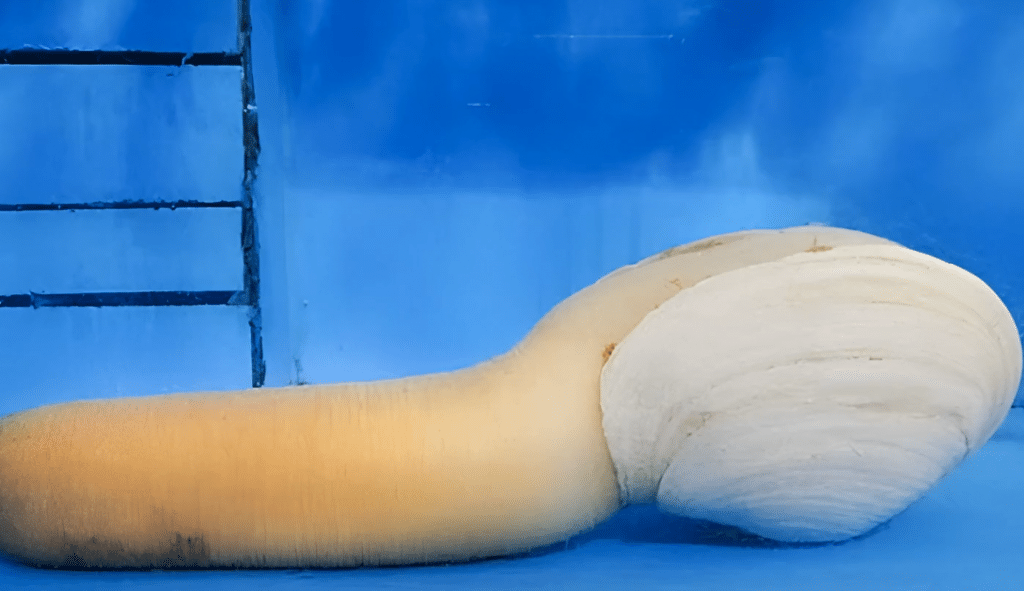
A geoduck is a very large saltwater clam known for its small shell and extremely long siphon, often called its “neck.” NOAA describes geoducks as large filter-feeding clams native to Washington, with a long neck compared with their relatively small shell.
Its unusual shape is the reason many diners stop and stare when they see one in a live tank. The long siphon may look strange, but it is simply part of the clam’s body. In the wild, geoducks live buried deep in sand or mud, using the siphon to pull in and filter seawater.
Geoduck is especially associated with the Pacific Northwest and is considered a high-value seafood product. NOAA notes that state and federal regulations require monitoring of farmed geoducks to help ensure they are safe to eat.
Why Is It Kept Alive in Restaurant Tanks?
In many Chinese seafood restaurants, live tanks are used to show freshness. Customers may choose seafood directly from the tank before it is prepared by the kitchen.
For geoduck, freshness matters because the texture is one of its main selling points. The siphon is often prized for being crisp, slightly sweet, and ocean-like in flavor. Some restaurants serve it sliced thin, lightly cooked, stir-fried, hot pot style, or as sashimi-style raw seafood.
Seeing a live geoduck in a tank can be surprising, but the tank itself is not unusual for restaurants that specialize in live seafood.
Is Geoduck Safe to Eat?
Geoduck can be safe to eat when it comes from a regulated supplier, is handled properly, and is prepared correctly.
However, it is still shellfish, and shellfish safety should be taken seriously. Like clams, oysters, mussels, and scallops, geoducks are filter feeders. That means they can concentrate bacteria, viruses, or marine biotoxins from the water where they grow.
The Washington State Department of Health includes geoduck among molluscan shellfish that require monitoring for safe harvest.
The safest choice is to eat geoduck from reputable restaurants or licensed seafood suppliers—not from unknown, unregulated, or illegally harvested sources.
Raw Geoduck Carries More Risk
Some restaurants serve geoduck raw or barely cooked, especially the siphon. While this is common in some cuisines, raw shellfish is never risk-free.
The CDC warns that raw or undercooked seafood can contain Vibrio bacteria and other germs that may cause illness. Cooking seafood before eating it is the best way to reduce that risk.
Washington health officials also note that most Vibrio cases come from eating raw or undercooked fish or shellfish, and poor refrigeration after harvest can allow bacteria to grow.
People at higher risk—such as older adults, pregnant people, young children, and anyone with liver disease, diabetes, cancer, immune suppression, or serious chronic illness—should be especially cautious with raw shellfish.
What About Shellfish Toxins?
Another concern is marine biotoxins, such as paralytic shellfish poisoning toxins. These are different from ordinary bacteria because cooking does not reliably remove the danger.
Washington wildlife officials warn that shellfish from areas with high PSP levels can be dangerous and that biotoxins cannot be destroyed by cooking, freezing, or cleaning.
Hong Kong’s Centre for Food Safety specifically advises consumers to buy geoducks from reliable sources and remove and discard the internal organs to reduce the risk of PSP toxins from geoducks.
This does not mean every geoduck is dangerous. It means sourcing and inspection matter.
How to Tell If a Restaurant Geoduck Seems Fresh
A live geoduck should look moist and alive. The siphon may move slightly when touched or disturbed. It should not smell rotten, sour, or strongly unpleasant. Fresh shellfish should smell like the ocean, not like ammonia or decay.
Avoid eating geoduck if it appears dead, has a foul odor, sits in dirty tank water, or comes from a restaurant that seems careless about seafood handling.
Also, do not assume that appearance alone proves safety. Harmful bacteria and toxins cannot always be seen, smelled, or tasted.
Cooked Is the Safer Option
For most people, properly cooked geoduck is the safer choice.
Geoduck can be sliced and quickly cooked in hot pot, stir-fried, steamed, or added to soup. Overcooking can make it tough, so many chefs cook it briefly. Still, cooking reduces the risk from many harmful bacteria and germs.
Raw preparations may be popular, but they should be treated as higher risk, especially for vulnerable diners.
Final Answer: Weird, But Real
So, what is the strange thing in the tank?
Most likely, it is a geoduck—an edible giant clam known for its long siphon and unusual appearance.
Is it safe to eat?
It can be, if it comes from a reputable source, is alive and fresh, is handled properly, and is prepared safely. But raw or undercooked geoduck, like other raw shellfish, carries a higher risk of foodborne illness.
The strange look may be harmless.
The real question is not how weird it looks—it is whether it was sourced, stored, and prepared safely.


