Opening a package of thawed chicken and finding purple or reddish blotches under the skin can be unsettling. Poultry is one food most people are careful with, and for good reason. Raw chicken can carry harmful bacteria if it is handled or cooked incorrectly. So when the color looks unusual, the first reaction is often concern.
But purple spots do not automatically mean the chicken is spoiled.
In many cases, purple or reddish discoloration is caused by natural changes in the meat, especially around the bones. The key is knowing how to separate harmless discoloration from real warning signs.
Why Chicken Can Have Purple or Red Spots
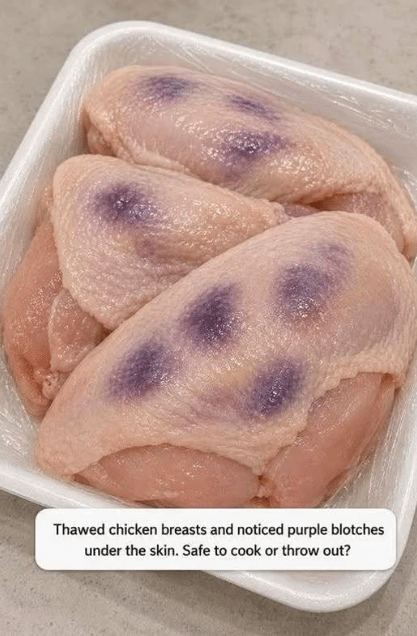
One common reason for purple blotches is bone marrow leakage.
When chicken is frozen, ice crystals can form inside the bones and surrounding tissue. As the chicken thaws, pigments from the bone marrow may seep into nearby meat, leaving reddish, dark pink, or purple stains. This is especially common in younger chickens because their bones are more porous.
Another cause is myoglobin, a natural protein found in muscle tissue. Myoglobin helps store oxygen in the muscles and can affect the color of meat. Darker areas, especially near bones or joints, may look more noticeable after freezing and thawing.
USDA food safety guidance notes that the color of meat and poultry can vary for several reasons, including age, species, diet, and how the meat is stored. Color alone is not a reliable way to determine whether poultry is safe.
When Purple Chicken Is Usually Safe
Chicken with purple blotches may still be safe to cook if it has been stored properly and does not show other signs of spoilage.
Before cooking, check the chicken carefully. Fresh raw chicken should not have a strong sour, rotten, or ammonia-like smell. It should not feel slimy, sticky, or unusually tacky. The package should not be leaking excessively or swollen in a suspicious way. If the chicken has gray, green, or mold-like discoloration, it should be discarded.
Purple staining near the bone, by itself, is often not a reason to throw it away.
However, if the chicken smells bad, feels slimy, or has been left too long at unsafe temperatures, do not take the risk. When in doubt, food safety should come first.
Cooking Temperature Matters More Than Color
Many people judge chicken by appearance, but that can be misleading. Chicken can look white and still be undercooked, or it can remain slightly pink in some areas and still be safe if it has reached the correct internal temperature.
The USDA states that poultry should be cooked to a safe minimum internal temperature of 165°F, measured with a food thermometer. For whole poultry, the temperature should be checked in the thickest part of the breast, the innermost part of the thigh, and the wing. For chicken pieces, check the thickest part of the meat.
This is especially important with chicken that has unusual coloring. Do not rely on guessing, cutting into the meat, or checking whether the juices “run clear.” A thermometer is the safest method.
Do Not Wash Raw Chicken
Some people rinse chicken when it looks strange, but washing raw poultry is not recommended.
Rinsing chicken can spread bacteria around the sink, counters, utensils, and nearby foods through water droplets. USDA research has warned that washing or rinsing raw poultry increases the risk of cross-contamination in the kitchen.
Instead, remove the chicken from the package carefully, place it directly into the pan or preparation area, and wash your hands, utensils, and surfaces thoroughly afterward.
How to Decide Whether to Cook It
Use this simple checklist before deciding:
First, smell it. If the chicken has a sour, rotten, or ammonia-like odor, throw it away.
Second, touch it. If it feels slimy or sticky even after removing it from the package, that is a warning sign.
Third, look at the color overall. Purple spots near the bone may be normal, but gray, green, or moldy areas are not.
Fourth, consider storage. If the chicken was left at room temperature too long, was thawed improperly, or is past a safe storage window, discard it.
Finally, cook it properly. If everything else seems normal, cook the chicken until it reaches 165°F internally.
Why This Happens More Often With Frozen Chicken
Purple blotches are more noticeable in chicken that has been frozen and thawed. Freezing can affect the structure of the meat and bone tissue, making natural pigments more visible. This does not necessarily mean the meat is unsafe.
You may also notice darker areas around joints, wing tips, drumsticks, or near the backbone. These spots can look unpleasant, but they are often cosmetic rather than dangerous.
Still, poultry must always be handled carefully. Keep raw chicken separate from ready-to-eat foods, use a clean cutting board, and sanitize surfaces after preparation.
Final Thoughts
So, would you still cook chicken with purple blotches?
Possibly—if the chicken smells normal, feels normal, has been stored safely, and is cooked to 165°F.
Purple or reddish marks can look alarming, but they are often caused by bone marrow pigments or natural muscle proteins rather than spoilage. The real danger signs are bad odor, slimy texture, green or gray discoloration, unsafe storage, or undercooking.
The safest rule is simple: do not judge chicken by color alone. Check the smell, texture, storage history, and final cooking temperature.
When handled correctly, chicken with harmless purple staining can still become a safe and perfectly normal meal.


