A quiet walk beside the village lake turned into an unexpected mystery when several strange circular marks appeared beneath the shallow water.
At first glance, they looked like tiny craters.
Each one seemed to contain pale, egg-like material, and the pattern looked too organized to be random. The holes were scattered across the lakebed, almost as if something had carefully dug them and placed eggs inside.
For anyone passing by, the sight was enough to raise questions.
Were they frog eggs?
Fish eggs?
Some kind of insect nest?
Or had something unusual happened beneath the water overnight?
The answer is likely far more natural than alarming.
The “Craters” Were Probably Fish Nests
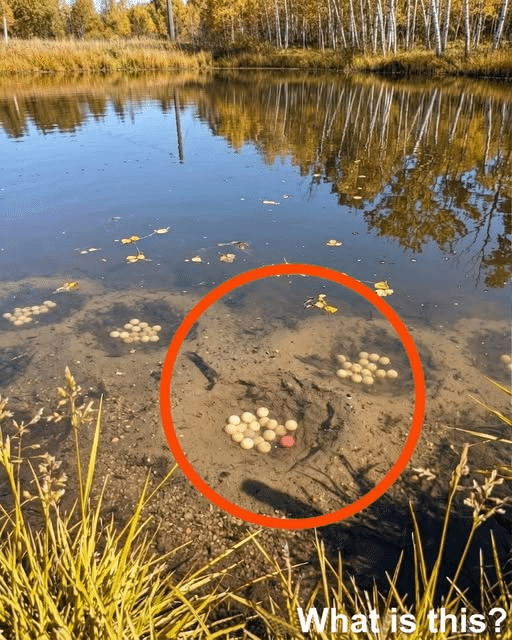
Many freshwater fish create circular nests in shallow water when it is time to spawn.
Sunfish, bluegill, pumpkinseed, and some bass species are known for building saucer-shaped depressions in sandy or gravelly lake bottoms. From above, these nests can look like small underwater craters. During spawning season, the male fish clears the area by fanning the bottom with his fins, creating a clean circular patch where females can lay eggs.
After the eggs are laid and fertilized, the male often remains nearby to guard the nest. He may chase away other fish, insects, or anything that comes too close. This protective behavior is why people sometimes see a fish hovering inside or near the center of one of the circles.
To someone unfamiliar with fish spawning behavior, the scene can look mysterious. But for the fish, it is simply part of the reproductive cycle.
Why They Look So Organized
The most surprising part is often the pattern.
Fish nests may appear in groups, sometimes close together in colonies. Bluegill and other sunfish frequently build many nests in the same shallow area, especially when the lakebed has the right mixture of sand, gravel, warmth, and protection from strong waves.
That is why the holes can look almost intentionally arranged.
They are not sinkholes, bubbles, or signs of pollution. They are carefully prepared spawning beds.
A male fish selects a suitable spot, clears it, attracts a female, fertilizes the eggs, and then guards the nest until the young hatch and begin to move away. Minnesota DNR educational material describes male bluegill as scraping a bowl-shaped depression in shallow sand or gravel and defending that nest before and after spawning.
What About Frog Eggs?
The original description mentions objects that looked like eggs, which is why many people immediately think of frogs or toads.
That is possible only if the objects were not true “holes,” but soft, jelly-like clusters floating in the water or attached to vegetation.
Frog eggs are usually found in gelatinous masses. Depending on the species, a mass may contain hundreds or even thousands of developing embryos. These clusters can look like clear jelly with dark dots inside.
Toad eggs often appear in long strings rather than round clumps, while salamander eggs may be enclosed in firmer jelly-like masses attached to sticks or underwater plants. Cornell’s amphibian egg identification guidance notes that egg structure, jelly layers, and attachment points are key clues when trying to tell frog and salamander eggs apart.
So the distinction is important:
If you saw circular depressions in the bottom, they were probably fish nests.
If you saw floating jelly clusters, they were more likely amphibian eggs.
Artificial Lakes Can Still Support Wildlife
Many people assume an artificial lake is less “natural” than a pond, marsh, or river.
In reality, man-made lakes often become active wildlife habitats over time.
Once plants, insects, fish, frogs, birds, and microorganisms establish themselves, the ecosystem can become surprisingly complex. Shallow edges are especially important because many species use them for feeding, shelter, and reproduction.
A village lake may look simple from the surface, but beneath the water it can support an entire seasonal cycle of life.
Fish may spawn along the edges. Frogs may lay eggs among plants. Dragonfly nymphs may hunt beneath the surface. Birds may search for small aquatic animals near the shoreline.
The mysterious “egg craters” are a reminder that even familiar places can hide processes many people never notice.
Should People Touch Them?
It is best not to disturb them.
Whether the objects are fish nests, frog eggs, or another natural reproductive structure, they should be left alone. Moving eggs, stepping into the nesting area, stirring up mud, or trying to collect samples can damage developing young.
Fish eggs can be smothered by silt. Amphibian eggs can dry out, detach from vegetation, or become more vulnerable to predators.
Even taking a closer look should be done carefully from the shoreline.
The best approach is simple: observe, take photos, and avoid interfering.
When to Be Concerned
Most underwater egg masses or fish nests are harmless and natural.
However, there are some situations where it may be wise to contact local environmental authorities, a lake manager, or a wildlife specialist.
Concerns may be justified if the water has a strong chemical odor, dead fish are present, the objects appear to be plastic or waste, the lake suddenly changes color, or large amounts of foam, oil, or debris appear near the surface.
But circular depressions in shallow water during warmer months are usually not a sign of danger.
They are often a sign that fish are spawning.
A Small Mystery With a Beautiful Explanation
What looked strange at first was probably one of nature’s ordinary but fascinating events.
A male fish may have cleared those circular “craters” to create safe nesting spaces. The pale material inside may have been eggs, gravel, exposed sand, or disturbed sediment reflecting light differently through the water.
The scene may have seemed unusual because people often notice birds, plants, and surface ripples before they notice what fish are doing beneath the water.
But once you understand the process, the mystery becomes even more interesting.
Those circles were not random marks.
They may have been nurseries.
Each one represented the beginning of a new generation of life in the village lake.
The next time you walk past the water and notice strange shapes near the shore, pause before assuming something is wrong. Nature often leaves clues in plain sight.
Sometimes what looks like a mystery is simply life unfolding quietly beneath the surface.


