Moments after d*ath can be deeply emotional—and sometimes, unexpectedly confusing. In rare cases, a body may suddenly move after the heart has stopped, leading some people to believe something extraordinary has happened.
But as explained in the original account , these movements are not signs of life returning.
They are a natural biological response known as post-mortem muscle activity (often referred to as post-mortem jerks or spasms).
What People Often See
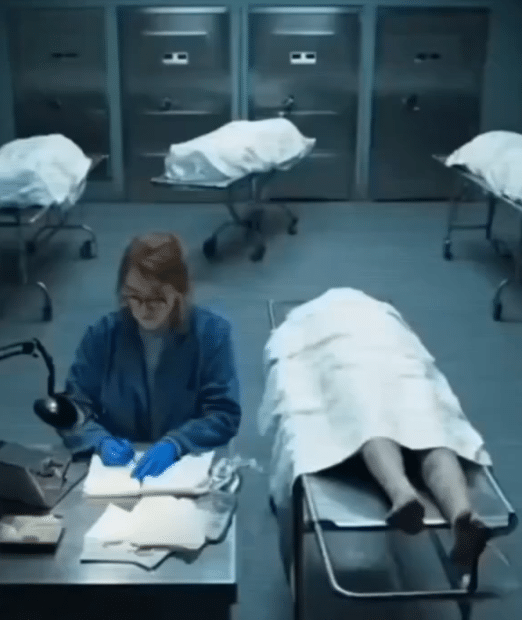
In certain situations, witnesses report movements such as:
- Arms or shoulders jerking suddenly
- Fingers curling or twitching
- The jaw snapping or tightening
- Slight lifting of the upper body
To someone unfamiliar with the process, these motions can feel shocking—even supernatural.
But there is a clear scientific explanation.
The Science Behind It
After d*ath, the body doesn’t shut down instantly. Instead, systems stop at different speeds.
Here’s what happens:
- Residual electrical signals may still exist in nerve cells
- Oxygen levels drop, causing instability in muscle cells
- Chemical imbalances trigger involuntary contractions
These factors can cause muscles to fire unpredictably, creating movements that look intentional—but are actually reflexive.
Importantly:
- The brain is no longer functioning
- There is no awareness, no pain, and no consciousness
- The movements are purely mechanical
Why It Feels So Disturbing
Video: Why Do Bodies Make Sounds or Move After De*th?
Humans naturally associate movement with life. So when a body moves after de*th, it challenges that expectation.
This can lead to:
- Fear or confusion
- Misinterpretation as a “miracle”
- Emotional distress during an already painful moment
Medical professionals are trained to expect this. But for families, witnessing it without explanation can be overwhelming.
The Role of Social Media
In recent years, short clips showing similar events have spread widely online—often without context.
This has led to:
- Misleading claims about people “coming back to life”
- Increased anxiety about d*ath and medical care
- Confusion about how the body actually works
In reality, these videos capture a known physiological process, not a mystery.
A Natural Part of the Body’s Shutdown
Doctors emphasize that post-mortem movements, while rare, are completely natural.
They may occur:
- Minutes after d*ath
- Occasionally longer, depending on conditions
- Without any connection to recovery or revival
It’s simply the body completing its final biological processes.
Why Understanding Matters
Grief is already heavy. Adding confusion or fear can make it even harder.
Understanding this phenomenon helps:
- Replace fear with clarity
- Prevent misinformation
- Provide peace during difficult moments
Final Thoughts
What may look like a return to life is not a miracle—but a reflection of how complex the human body truly is.
D*ath is not a single instant—it’s a process. And sometimes, that process includes brief, unexpected movement.
Recognizing this doesn’t take away the emotional weight of loss—but it can help people face it with understanding instead of fear.