Imagine walking into your bathroom, ready for a warm shower, only to notice something strange creeping out from between the tiles. At first glance, it looks like a cluster of pale roots pushing through the floor, surrounded by thin, dark, hair-like strands. It almost seems as if a tree or some mysterious plant is trying to break into the room from underneath.
That unsettling image has gone viral online, leaving thousands of people asking the same question: What is growing out of those bathroom tiles?
Some viewers guessed tree roots. Others thought it might be an alien-looking fungus, a mutated plant, or even something staged for attention. But the real explanation is both fascinating and concerning. Those “roots” are not from a tree at all. They are likely fungal structures known as rhizomorphs, and their presence can point to serious moisture damage hidden beneath the surface.
What Are Those Root-Like Growths?
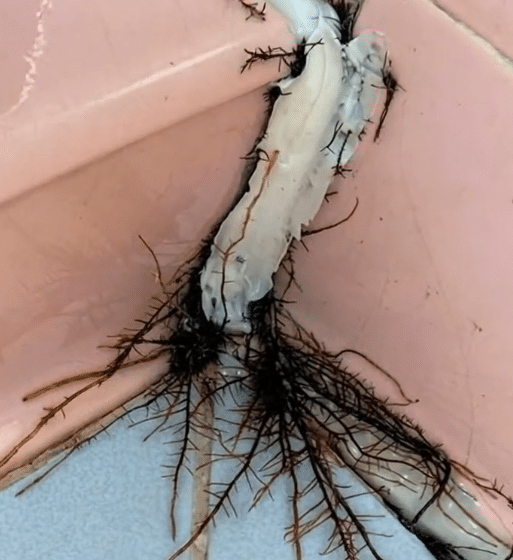
Although the growth may look like plant roots, it is usually connected to a type of wood-destroying fungus. In many cases, fungi that attack damp wood can form long, cord-like strands called rhizomorphs.
Rhizomorphs are made of tightly packed fungal threads. They act like transportation lines, helping the fungus move moisture and nutrients from one area to another. In simple terms, they are the fungus’s way of spreading through dark, damp spaces behind walls, under floors, or beneath bathroom tiles.
Unlike ordinary surface mold that appears as black, green, or fuzzy patches, this kind of fungal growth can be much more serious because it may be feeding on the wooden structure of the home.
Why Would This Happen in a Bathroom?
Bathrooms are naturally humid, but tile and grout should not be growing anything large or root-like. Tile, ceramic, and cement-based grout do not provide food for fungi. So, if something is emerging between the tiles, the real problem is usually hidden underneath.
For fungal rhizomorphs to grow, three conditions are usually present:
Moisture: A leak, failed waterproofing layer, cracked grout, or damaged pipe can allow water to collect beneath the tiles.
Food Source: The fungus needs organic material, such as wood framing, plywood subflooring, or paper-faced drywall.
Darkness and Poor Airflow: Hidden spaces under floors and behind walls create the perfect environment for fungal growth.
When these conditions come together, the fungus can grow quietly for months or even years before anything visible appears on the surface.
The Hidden Damage Beneath the Tiles
The most alarming part of this viral bathroom photo is not the visible growth itself. It is what the growth may reveal about the condition of the home.
If fungal structures are pushing through grout lines, it may mean the area behind the tile is already heavily contaminated. Water may have soaked into the subfloor, wall framing, or backing boards. Over time, that moisture can cause wood rot, weakening the structure that supports the bathroom.
In serious cases, floors can become soft, walls can lose strength, and expensive repairs may be needed. What looks like a strange “root” on the surface may actually be a warning sign of a much larger hidden problem.
Is It Dangerous?
The growth itself may not be poisonous in the way people imagine. It is not an insect, it does not bite, and it is not an alien creature. However, it should still be treated seriously.
A fungal outbreak of this kind can affect indoor air quality, especially if spores are released into the air. People with allergies, asthma, or respiratory sensitivity may experience irritation in damp or mold-contaminated spaces.
More importantly, the moisture that allows this growth to appear may also support other types of mold. That is why homeowners should not simply wipe it away and assume the issue is solved.
Why Bleach Alone Will Not Fix It
Many people’s first reaction is to spray bleach, vinegar, or a strong bathroom cleaner on the growth. While that may remove what you can see, it does not fix the source of the problem.
The visible “roots” are only part of the fungal system. The main colony may be behind the tile, inside the wall, or beneath the floor. As long as moisture remains, the growth can return.
A surface cleanup may make the bathroom look better temporarily, but the hidden leak or rotting material must be addressed to prevent the problem from coming back.
What Should You Do If You See This at Home?
If you notice root-like growths, strange discoloration, soft flooring, musty smells, or persistent dampness around bathroom tiles, take the situation seriously.
First, avoid disturbing the growth too much, especially if it appears dry or powdery. Breaking it apart can spread particles into the air. Keep children and pets away from the area until it can be inspected.
Next, look for signs of moisture. Check around the toilet, shower, bathtub, baseboards, and nearby walls. A rocking toilet, cracked grout, peeling caulk, bubbling paint, or a musty odor can all point to hidden water damage.
For serious cases, it is best to contact a licensed plumber, mold remediation specialist, or home inspector. Professionals can use moisture meters or thermal imaging tools to locate hidden leaks without immediately tearing everything apart.
If damage is confirmed, the repair may involve removing tiles, replacing rotted materials, fixing plumbing problems, and rebuilding the area with proper waterproofing.
How to Prevent This From Happening
The best way to avoid this kind of bathroom disaster is regular maintenance.
Inspect grout and caulk every few months. If you see cracks, gaps, or peeling silicone, repair them quickly. Water can enter even tiny openings and cause major damage over time.
Use the bathroom exhaust fan during and after showers to reduce humidity. Good ventilation helps prevent moisture from staying trapped in the room.
Keep tile surfaces clean and dry when possible. Soap scum, body oils, and damp corners can encourage microbial growth. A simple squeegee after showering can help reduce standing water.
Also, never ignore a musty smell. A bathroom can look clean while hiding moisture behind the walls or under the flooring.
Final Thoughts
The strange “roots” growing out of bathroom tiles may look like something from a horror movie, but the truth is grounded in science. They are most likely fungal rhizomorphs, formed when moisture and organic material create the perfect hidden environment for wood-destroying fungi.
While the image may be viral because it looks shocking, the real lesson is practical: water damage should never be ignored. A small leak today can become a major structural repair tomorrow.
So, if you ever see something unusual coming from your tiles, do not just clean the surface and move on. Investigate the source, fix the moisture problem, and protect your home before the damage spreads.


