For more than two decades, a mountain lion named Mufasa lived a life no wild animal should ever endure.
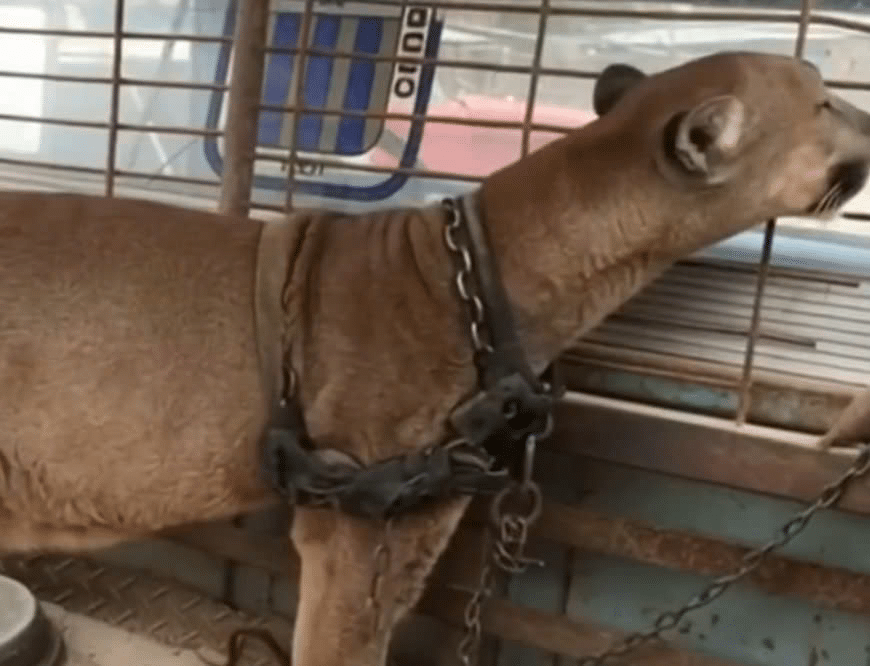
Instead of roaming through forests, climbing through natural terrain, or resting quietly beneath open skies, he was chained to the back of a truck. For years, he was used by an illegal traveling circus in Peru, forced to exist in a world of noise, movement, metal, and confinement.
His story is painful, but it is also powerful.
Mufasa’s rescue became a symbol of hope for animal welfare advocates and a reminder that wild animals do not belong in chains, cages, or traveling entertainment acts. After 20 years of captivity, his first moments of freedom touched people around the world.
A Life Stolen From the Wild
Mufasa was taken from his natural environment when he was young and sold into the exotic animal trade. From there, he became part of a traveling circus, where his life was reduced to performance, transport, and restraint.
The name Mufasa may remind many people of strength and nobility, but his reality was far from that image. He did not have open land to explore. He did not have trees, shelter, or space to behave like a mountain lion. He did not even have a proper enclosure.
For much of his life, he was reportedly kept chained to the bed of a pickup truck.
That meant he could not move freely, stretch properly, or escape the stress of constant human activity. His world was limited to the length of a chain.
The Rescue Mission That Changed Everything
Mufasa’s life began to change when Animal Defenders International, known as ADI, found him during a major rescue operation in Peru.
The organization had been working with authorities to enforce laws against the use of wild animals in circuses. Although Peru had introduced a ban on wild animals in circuses, enforcement was still difficult, especially with traveling operations that moved from place to place.
ADI’s mission, called Operation Spirit of Freedom, aimed to locate and rescue animals trapped in illegal circus conditions. Over time, the operation helped free many animals, including lions, bears, monkeys, and other wildlife.
When rescuers found Mufasa, the situation was tense. Circus operators resisted, and the rescue reportedly involved a long standoff before officials could secure his release.
But finally, after years of captivity, the chains came off.
His First Reaction to Freedom
The moment Mufasa was freed was both beautiful and heartbreaking.
After the chains and restraints were removed, he stretched his body in a way he had likely not been able to do for years. For rescuers watching nearby, the moment revealed the full weight of what he had endured.
A simple stretch became something much bigger.
It showed how deeply his body had been restricted. It showed how unnatural his life had been. And it showed how much freedom had been taken from him.
For the first time in decades, Mufasa was no longer chained to a truck.
A Long Road to Recovery
After his rescue, Mufasa was taken to a rehabilitation facility near Lima, where veterinarians and caregivers began evaluating his health.
Years of poor conditions had left visible effects. He was underweight, weakened, and showed signs of long-term malnutrition. Emotionally, he was cautious and stressed, which was understandable after spending most of his life in captivity.
His care team created a recovery plan designed around patience.
He needed proper nutrition, medical attention, safety, and calm surroundings. He also needed time to adjust to a world that no longer demanded fear from him.
Slowly, small improvements appeared. His appetite grew stronger. His coat began to improve. His behavior became more relaxed. Each step forward was a victory.
Why He Could Not Return to the Wild
Although Mufasa was finally free from the circus, he could not be released into the wild.
That may sound sad, but it was the safest decision for him.
Because he had spent nearly his entire life in captivity, he had not learned the survival skills a wild mountain lion needs. He would not know how to hunt, avoid threats, establish territory, or survive independently in a natural ecosystem.
For animals rescued after long-term captivity, true wilderness is often no longer possible.
But a sanctuary can offer something deeply meaningful: space, safety, dignity, and a chance to live without chains.
A New Home in the Amazon
Once Mufasa became stable enough to travel, he was moved to the Taricaya Ecological Reserve in the Amazon rainforest.
This protected sanctuary provided what the circus never had: a natural environment, room to move, fresh air, shade, quiet, and respect.
When Mufasa arrived, he stepped cautiously into his new surroundings. The grass under his paws, the smell of trees, and the sounds of the forest were all new to him after so many years in confinement.
He moved slowly at first, observing everything around him.
Then, little by little, he began to explore.
For those watching, it was an emotional sight. Mufasa could finally walk, stretch, rest, and experience life without a chain holding him back.
A Symbol of Animal Welfare
Mufasa’s story spread worldwide because it showed the hidden suffering behind illegal wildlife entertainment.
Many people see circus animals only during performances, but they rarely see what happens behind the scenes: the confinement, transport, stress, lack of proper habitat, and years of physical and emotional damage.
His rescue helped shine a light on why wildlife protection laws matter and why enforcement is just as important as passing the law itself.
Through Operation Spirit of Freedom, more than 100 animals were rescued and given a second chance. Some were moved to sanctuaries, while others were placed in specialized care facilities where their needs could be met.
Each rescue carried the same message: wild animals deserve more than survival. They deserve dignity.
The Legacy of Mufasa’s Freedom
Mufasa’s life was marked by suffering, but his rescue gave meaning to his story.
He became a reminder that compassion must be matched with action. Laws matter. Rescue organizations matter. Sanctuaries matter. And public awareness can help stop the exploitation of animals used for entertainment.
Even though Mufasa could never return fully to the wild, his final chapter was different from the life he had known.
He could walk without chains.
He could rest under trees.
He could feel the earth beneath his paws.
After 20 years of captivity, those simple freedoms became extraordinary.
The Real Story
Mufasa was a mountain lion who spent more than two decades chained as part of an illegal circus in Peru. After being rescued by Animal Defenders International, he was rehabilitated and moved to a sanctuary where he could finally live with safety and dignity.
His reaction to freedom was unforgettable because it showed what captivity had taken from him — and what compassion was finally able to give back.
Mufasa’s story is not just about one animal.
It is about resilience, rescue, and the responsibility humans have to protect wild creatures from exploitation.
Sometimes freedom comes late.
But even late freedom matters.


