Some old tools are easy to mistake for something else. A heavy metal object with a flat base, a handle, and a sharp blade might look like a doorstop, a paperweight, or a strange piece of garage clutter to someone who has never used one.
But decades ago, this sturdy tool was a must-have in woodshops, garages, barns, and home workshops.
It is a vintage hand plane.
A hand plane is a traditional woodworking tool used to smooth, flatten, trim, and shape wood. Before electric sanders, power planers, and modern woodworking machines became common, hand planes were essential tools for carpenters, cabinetmakers, furniture builders, and home repair enthusiasts.
For many families, a good hand plane was the kind of tool that was passed down from father to son, from master craftsman to apprentice, and from one workshop generation to the next.
What Is a Hand Plane?
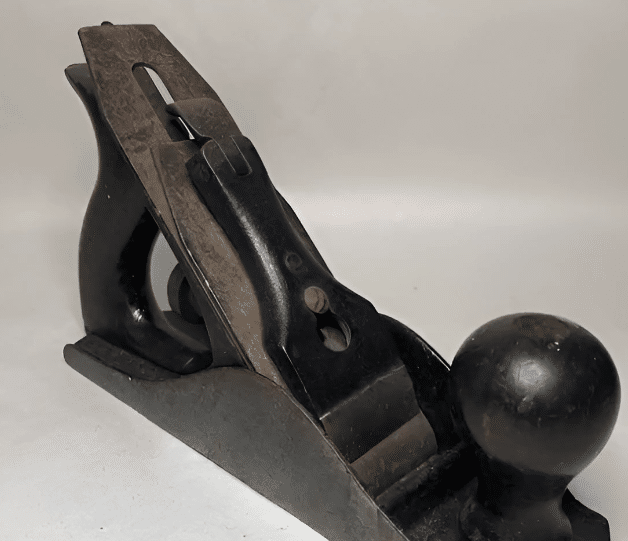
A hand plane is a woodworking tool designed to shave thin layers from the surface of wood.
It usually has a flat bottom, called the sole, which glides across the wood. A sharp blade, often called the iron, is set at an angle inside the body of the plane. As the user pushes the tool forward, the blade cuts a thin shaving from the wood surface.
This helps make rough boards smoother, uneven surfaces flatter, and edges cleaner.
A typical hand plane includes several main parts: the body, the blade or iron, a lever cap or wedge to hold the blade in place, and handles for control. Many metal planes have a rear handle called a tote and a front knob for steady guidance.
The tool may look simple, but using it well takes skill, patience, and a sharp blade.
What Was It Used For?
Vintage hand planes were used for many woodworking tasks.
A carpenter might use one to flatten a board. A cabinetmaker might use one to smooth a tabletop. A furniture restorer might use one to trim an edge so two pieces fit perfectly together. A home woodworker might use one to remove rough spots, adjust a door, or shape a piece of lumber.
The beauty of a hand plane is control. Instead of tearing through wood quickly like a power tool, it removes fine shavings. This allows a skilled user to make precise adjustments.
In experienced hands, a hand plane can leave a surface so smooth that little sanding is needed.
Common Types of Vintage Hand Planes
Not all hand planes are the same. Different styles were made for different jobs.
A bench plane is one of the most common types. These are used for general smoothing, flattening, and shaping on flat surfaces. Popular examples include the No. 4 smoothing plane and the No. 5 jack plane.
A block plane is smaller and easier to hold in one hand. It is often used for trimming end grain, rounding sharp edges, and working on smaller projects.
A jointer plane is longer and used to flatten long edges or prepare boards so they can be joined together cleanly.
There are also many specialty planes, including rabbet planes, shoulder planes, molding planes, and router planes. Each was designed to solve a specific woodworking problem.
Wood-Bodied and Metal-Bodied Planes
Vintage hand planes were made in both wood and metal.
Older wooden planes often have a warm, traditional feel. Many were handmade or produced in small shops, and they are admired for their simplicity and character. A wood-bodied plane may show years of use through worn handles, darkened surfaces, and smooth areas where hands held it over time.
Metal-bodied planes became especially popular in the late 19th and early 20th centuries. Cast-iron planes from companies like Stanley became workshop standards and remain highly collectible today.
Metal planes are often heavier and more adjustable than wooden ones. Their durability is one reason many still work well decades after they were made.
Why Stanley and Other Makers Matter
Collectors often pay close attention to the brand or maker of a vintage hand plane.
Well-known names include Stanley, Sargent, Record, Millers Falls, and Bailey. Stanley planes, especially Bailey-pattern models, are among the most recognized and collected.
Brand markings, patent dates, model numbers, and original parts can all affect interest and value. Some collectors search for specific versions, while others simply want a solid old plane that can still be restored and used.
A plane with clear markings, original handles, and a good blade will usually attract more attention than one with missing or broken parts.
Are Vintage Hand Planes Still Useful?
Yes. Many vintage hand planes are still fully functional.
In fact, some woodworkers prefer old planes because they were built with quality materials and can be tuned for excellent performance. A well-restored vintage plane can be just as useful today as it was generations ago.
Woodworkers still use them for flattening boards, smoothing surfaces, trimming edges, fitting doors, restoring furniture, and doing fine carpentry.
The key is condition. The sole should be reasonably flat, the blade should be intact and sharpenable, and the adjustment mechanisms should work. Surface rust can often be cleaned, but cracks, missing parts, or badly damaged castings can reduce usefulness.
Why Collectors Love Them
Vintage hand planes appeal to collectors because they combine craftsmanship, history, and function.
They are not just decorative antiques. They were working tools that shaped homes, furniture, barns, cabinets, shelves, doors, and countless handmade projects.
A hand plane with worn handles and a darkened body may have spent decades in a working shop. It may have been used by a carpenter, a furniture maker, or someone’s grandfather repairing things around the house.
That human connection gives these tools emotional value beyond their price.
They also look beautiful on display. Many people use old hand planes as workshop décor, farmhouse accents, or part of a vintage tool collection.
What Affects the Value?
The value of a vintage hand plane depends on several factors.
Brand is important. Stanley, Sargent, Record, Millers Falls, and other respected makers often attract collectors. Age also matters, especially for planes from the 1800s or early 1900s.
Condition is another major factor. A plane with original paint, smooth handles, minimal rust, an intact blade, and working adjustments is more desirable than one that is cracked, heavily corroded, or missing parts.
Rarity can also raise value. Common bench planes may be affordable, while unusual specialty planes or rare models can be worth more.
Originality matters too. Replacement handles, non-original blades, or missing parts may lower collector value, although they may still be fine for practical woodworking.
How to Care for an Old Hand Plane
If you find a vintage hand plane, avoid treating it like scrap metal. Start by checking whether it is complete. Look for the blade, lever cap, handles, adjustment wheel, and any maker markings.
Do not aggressively sand or repaint it if you want to preserve collector value. Gentle cleaning is usually better. Light rust can often be removed carefully, and the blade can be sharpened if the tool will be used.
Store it in a dry place to prevent further rust. If displaying it, keep it stable so it does not fall or damage the blade.
A little care can turn a forgotten garage find into a beautiful and useful tool again.
The Real Answer
So, what is this old object that is not a doorstop and not a paperweight?
It is a vintage hand plane — a classic woodworking tool used to smooth, flatten, trim, and shape wood.
For generations, it was one of the most important tools in any serious woodshop. It helped craftsmen build furniture, fit boards, repair doors, and create smooth wooden surfaces by hand.
Today, vintage hand planes are valued by both woodworkers and collectors. They are reminders of a time when skill, patience, and sharp tools shaped the world one shaving at a time.


