Most kitchens have one. It sits in a drawer or utensil holder, usually right beside the spatula, ladle, and wooden spoon. You have probably used it many times without thinking much about it.
It is the spaghetti spoon — that long-handled pasta server with little prongs around the edge and a hole in the center.
Most people know what it does. The prongs help grab slippery noodles, making it easier to lift spaghetti, linguine, or fettuccine from the pot. The hole in the middle also seems useful because it lets water drain away as you serve the pasta.
But here is the part many people never learned: that hole may also help measure a single serving of dry spaghetti before you cook it.
For anyone who has ever cooked way too much pasta for one person or somehow made too little for dinner, this tiny detail can be surprisingly useful.
What Is a Spaghetti Spoon?
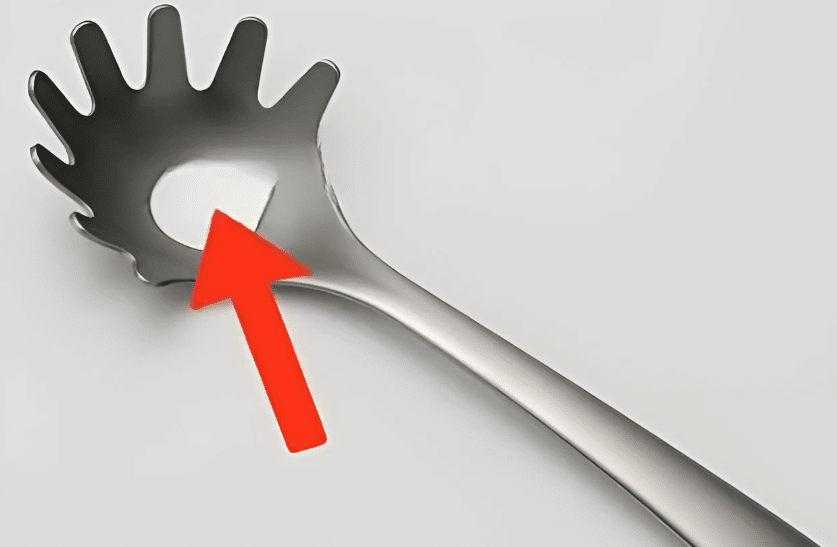
A spaghetti spoon, also called a pasta server, is a kitchen utensil designed to lift and serve long noodles. Its pronged edges help catch strands of pasta so they do not slide off the spoon.
Unlike a regular serving spoon, it is made specifically for pasta. The curved shape helps scoop, the teeth help grip, and the center hole allows excess water to drain back into the pot.
But many versions of this utensil include another clever feature. The center hole can be used as a rough portion guide for uncooked spaghetti.
It is a small design detail hiding in plain sight.
The Real Purpose of the Hole
Many people assume the hole in the spaghetti spoon is only there for draining water. That is partly true. It does help liquid escape when you scoop pasta from boiling water.
However, in many pasta spoons, the hole can also act as a measuring guide. Before cooking, you can place dry spaghetti through the hole. The amount that fits is often close to one serving.
A common serving size for dry spaghetti is around 2 ounces, which becomes roughly 1 cup of cooked pasta after boiling. For people who want better portion control, this simple trick can help reduce guessing.
Instead of throwing a random handful of spaghetti into the pot and hoping it is enough, the spoon gives you a quick visual guide.
How to Use the Spaghetti Spoon Hole
Using the hole is easy.
Before boiling the pasta, take a small bundle of dry spaghetti and slide it through the hole in the center of the spoon. Fill the hole without forcing the noodles. That bundle is usually considered about one serving.
Then cook it as usual.
This method is especially helpful when cooking for one or two people. It can help you avoid the classic pasta problem: making enough spaghetti for an entire neighborhood when you only wanted dinner for yourself.
Of course, not every spaghetti spoon is exactly the same size. Some holes are larger or smaller depending on the design, so it should be treated as a helpful estimate rather than a perfect measurement.
Why Portion Size Matters
Pasta is one of those foods that is very easy to overestimate. Dry spaghetti looks small before cooking, but it expands in boiling water. A handful that looks reasonable can quickly turn into a mountain of noodles.
That is why portion measurement matters.
Using the hole in a spaghetti spoon can help reduce food waste, control serving sizes, and make meal planning easier. It is also useful for families trying to cook just the right amount without ending up with too many leftovers.
For anyone focused on personal finance, grocery budgeting, or reducing household waste, this tiny kitchen trick can actually save money over time. Cooking the right amount means fewer leftovers thrown away and better control over pantry staples.
Why Most People Never Learn This Trick
The reason this trick surprises so many people is simple: most kitchen tools do not come with detailed instructions.
People buy a spaghetti spoon, toss it into the drawer, and use it the way they have always seen others use it. If parents, grandparents, roommates, or cooking shows never mention the measuring trick, many people never discover it.
Another reason is that the draining function is obvious. The measuring function is not. When you see a hole in a spoon, it makes sense to assume it is there so water can drain. That explanation feels complete, so most people never question it.
But good design often does more than one thing.
Does the Hole Work for Every Type of Pasta?
No. This trick mainly works for long, thin pasta such as spaghetti.
It will not help much with penne, macaroni, shells, bowties, or rotini. For shorter pasta shapes, a measuring cup or kitchen scale is usually a better option.
It also may not be accurate with every spaghetti spoon. Some pasta servers have oversized holes designed mainly for drainage, while others have smaller holes that work better as portion guides.
So the best way to think of it is this: the hole can be a useful estimate, but it is not always a precise measuring tool.
Other Ways to Measure Spaghetti
If your spaghetti spoon does not work well for measuring, there are other simple methods.
A kitchen scale is the most accurate option. Measuring about 2 ounces of dry pasta per person is a common guideline.
You can also use a pasta measuring tool, which has different-sized holes for one, two, three, or four servings.
Another common trick is to make a bundle of dry spaghetti about the diameter of a U.S. quarter for one serving. This is not perfect, but it can help when you do not have a scale nearby.
A Small Detail That Changes How You See Kitchen Tools
The spaghetti spoon hole is a reminder that ordinary objects often have hidden features. Many kitchen tools are designed with small details that people overlook for years.
A vegetable peeler may have a pointed edge for removing potato eyes. A pan handle hole can sometimes hold a spoon while cooking. A can opener may include a built-in bottle opener. Even a simple utensil can have more purpose than it first appears.
That is what makes this little pasta spoon detail so fun. It turns an everyday object into something a little more clever.
The Real Answer
So, what is the hole in your spaghetti spoon really for?
It helps drain water, but in many designs, it can also help measure a single serving of dry spaghetti before cooking.
It is simple, practical, and surprisingly easy to miss.
The next time you make pasta, take a closer look at your spaghetti spoon. That tiny hole in the middle may save you from cooking far too much — or not nearly enough.
Sometimes the smartest kitchen tricks are the ones that have been sitting in the drawer the whole time.


