Old houses often hide objects that feel like clues from another lifetime. A strange metal tool in a basement, attic, shed, or garage can make anyone stop and wonder what it was used for.
If you found a heavy metal object with long arms, sharp curved points, and a handle at the top, there is a good chance it is a pair of vintage ice tongs.
Despite the name, this has nothing to do with “ICE” in the modern sense. Antique ice tongs were tools used to lift, carry, and move large blocks of ice before electric refrigerators became common in American homes.
For families living in the late 1800s and early 1900s, this tool was not unusual at all. It was part of everyday life. Before modern refrigeration, people relied on iceboxes to keep food cool, and large blocks of ice had to be delivered, stored, and handled by hand.
That is where ice tongs came in.
What Are Vintage Ice Tongs?
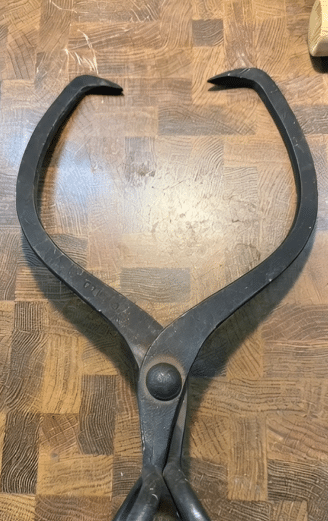
Vintage ice tongs are metal gripping tools designed to pick up large blocks of ice. Most were made from wrought iron or steel and built to be strong, simple, and durable.
They usually have two long arms with sharp points that curve inward. When the user lifts or pulls the handle, the points dig slightly into the ice block, allowing the person to carry or drag it securely.
These tools are also known by several other names, including:
Ice tongs
Ice block tongs
Antique ice tongs
Ice harvesting tongs
Ice delivery tongs
Vintage ice tools
No matter the name, the purpose was the same: moving heavy, slippery blocks of ice safely and efficiently.
Why Were Ice Tongs Needed?
Before electric refrigerators became widely available, many homes used an icebox. An icebox was an insulated cabinet that kept food cold with the help of a large block of ice.
The ice did not magically appear in the kitchen. It had to be delivered.
Ice companies would bring blocks of ice to homes, often by wagon or truck. The delivery worker used ice tongs to lift the block from the vehicle and carry it into the house. The ice would then be placed inside the family’s icebox to help preserve milk, meat, butter, and other perishable foods.
In a home built in 1924, finding a tool like this makes perfect sense. That period was right in the era when many families still used ice delivery services, especially before electric refrigeration became standard in every household.
Ice Harvesting: Where the Blocks Came From
Ice tongs were not only used by delivery workers. They were also used in the ice harvesting industry.
Before mechanical refrigeration, natural ice was often cut from frozen lakes, ponds, and rivers during winter. Workers sawed the ice into large blocks, pulled them from the water, and stored them in ice houses packed with insulating materials such as sawdust.
Those blocks could then be used for months during warmer seasons.
Ice harvesting was hard, cold, physical work. Tools like ice saws, hooks, picks, and tongs were essential. Ice tongs helped workers grip and move blocks that were too heavy and slippery to handle with bare hands.
Today, those tools are reminders of a time when keeping food cold required planning, labor, and a whole delivery system.
How to Identify Antique Ice Tongs
A pair of vintage ice tongs usually has a few clear features.
The body is made from heavy metal, often iron or steel. The arms are long and hinged. The ends are pointed, curved, and designed to bite into ice. The handle is usually at the top, allowing the tool to tighten naturally when lifted.
Many old ice tongs have a dark brown, black, or rusty surface. That aged surface is known as patina, and collectors often like it because it shows honest age and use.
Some examples may have stamped markings, maker names, numbers, or regional identifiers. Others are plain and rugged with no branding at all.
If the tool looks handmade, heavy, worn, and practical, it may be an authentic antique or early vintage piece.
Is It Really Antique?
If the item came from a grandfather’s house or an old home built in the 1920s, there is a good chance it could be a genuine vintage tool. However, reproductions and decorative farmhouse-style pieces do exist.
To judge whether it is older, look for natural wear. Real antique ice tongs often show uneven aging, worn grip points, old rivets, forged metal texture, and signs of practical use.
A reproduction may look too clean, too uniform, or artificially distressed. It may be lighter than expected or made mainly for wall décor.
The best clues are construction, weight, metal wear, markings, and family history. If it was stored in an old shed, barn, basement, or utility area for decades, that background can support its authenticity.
Why Collectors Like Ice Tongs
Vintage ice tongs are popular with collectors because they connect to several areas of history: early refrigeration, ice delivery, farming life, primitive tools, and old household technology.
They also make attractive rustic décor. Many people hang them on walls in kitchens, bars, restaurants, cabins, barns, garages, or farmhouse-style homes. Their shape is instantly eye-catching, and their history makes them a great conversation piece.
For collectors, these tools are valuable not only because they are old, but because they tell a story. They remind us of the days when food preservation depended on ice blocks, delivery routes, and hard manual work.
Are Ice Tongs Dangerous?
Ice tongs are not dangerous in the way a weapon is, but they should still be handled carefully.
The pointed ends can be sharp, and old metal may have rust or rough edges. They should not be left where children can play with them. If used as decoration, they should be mounted securely so they do not fall.
If the metal is rusty, gloves are a good idea when handling it. A gentle cleaning is fine, but heavy sanding or aggressive polishing may remove the aged character that collectors appreciate.
Should You Restore Them?
In most cases, it is better not to over-restore antique ice tongs. A light wipe with a dry cloth or soft brush can remove dust and loose dirt. If you want to preserve them, keep them dry and away from moisture.
Avoid grinding, heavy polishing, or painting unless the item is badly deteriorated and has no collector appeal. The natural patina is part of the object’s charm.
For display, many people leave the tool mostly as found, especially if it has a strong rustic look.
The Real Answer
So, what is the mysterious metal object found in an old 1924 home?
It is most likely a pair of vintage ice tongs — a tool once used to lift and carry large blocks of ice before electric refrigerators became common.
It may look strange today, but it was once an essential household and delivery tool. It helped move ice from wagons, trucks, ice houses, and storage areas into family iceboxes.
Today, it is a fascinating collectible tied to early refrigeration, ice delivery, and everyday life from a time when keeping food cold required real physical effort.
A simple metal tool, yes — but also a piece of history.


