For years, various articles, social media posts, and online discussions have suggested that breast size can provide clues about a woman’s hormonal balance.
Some claim that smaller breasts indicate low estrogen levels, while others suggest larger breasts are a sign of stronger hormonal activity.
While hormones do play an important role in breast development, the reality is far more complicated.
According to medical experts, breast size alone is not a reliable measure of hormonal health.
What Determines Breast Size?
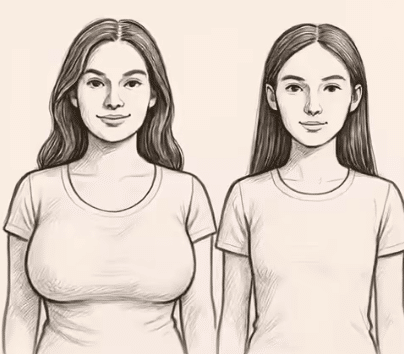
Breast size is influenced by several factors that work together throughout life.
These include:
- Genetics
- Body fat percentage
- Hormonal changes during puberty
- Age
- Pregnancy history
- Weight fluctuations
- Overall body composition
Because so many variables are involved, two women with identical hormone levels may have very different breast sizes.
Likewise, women with similar breast sizes may have completely different hormonal profiles.
The Important Role of Estrogen
Estrogen is one of the primary hormones involved in breast development.
During puberty, rising estrogen levels stimulate the growth of breast tissue and contribute to physical changes associated with maturation.
However, once breast development is complete, breast size no longer serves as a reliable indicator of current estrogen levels.
A woman with smaller breasts can have perfectly healthy estrogen production, while a woman with larger breasts may have average hormone levels.
The relationship is not nearly as simple as many myths suggest.
Why Body Fat Matters
One reason breast size varies so widely is that breasts contain both glandular tissue and fatty tissue.
A significant portion of breast volume often comes from fat rather than hormone-producing structures.
As a result, body composition can have a major impact on breast size.
Women with higher body fat percentages may naturally have larger breasts regardless of their hormone levels.
This is one reason healthcare providers do not use breast size as a tool for evaluating hormonal health.
Normal Hormonal Changes Throughout Life
Hormones can temporarily affect breast appearance and fullness at different stages of life.
Common examples include:
Menstrual Cycles
Many women notice changes in breast tenderness or fullness before their menstrual period.
Pregnancy
Hormonal shifts during pregnancy often lead to significant breast enlargement as the body prepares for breastfeeding.
Breastfeeding
Breast tissue changes continue throughout lactation and may fluctuate daily.
Menopause
Declining hormone levels during menopause can alter breast density and composition.
Hormonal Contraceptives
Birth control methods may also influence breast fullness in some individuals.
These changes are typically normal and do not necessarily indicate health problems.
When Breast Changes Should Be Evaluated
Although breast size itself is usually not a health concern, certain changes should be discussed with a healthcare professional.
Examples include:
- Sudden enlargement
- Significant new asymmetry
- Persistent breast pain
- Unexplained nipple discharge
- New lumps or tissue changes
- Skin changes affecting the breast
Prompt evaluation can help identify whether additional testing is needed.
Hormonal Conditions That Can Affect Breast Tissue
Several medical conditions involving hormones may influence breast appearance, sensitivity, or tissue composition.
These include:
- Polycystic Ovary Syndrome (PCOS)
- Thyroid disorders
- Elevated prolactin levels
- Menopause-related hormone changes
- Hormone replacement therapy
In most cases, these conditions produce additional symptoms beyond breast changes.
Individuals may also experience:
- Irregular menstrual cycles
- Fertility challenges
- Changes in skin or hair
- Weight fluctuations
- Fatigue
- Mood changes
Healthcare providers evaluate the complete picture rather than focusing on one physical characteristic.
How Doctors Assess Hormonal Health
When evaluating hormones, medical professionals typically consider multiple factors, including:
- Menstrual cycle patterns
- Symptoms and medical history
- Physical examinations
- Blood hormone testing
- Ovulation patterns
- Reproductive health history
Breast size alone is not used to diagnose hormonal conditions.
A comprehensive assessment provides much more accurate information.
The Importance of Avoiding Health Myths
Health-related myths often spread quickly online because they offer simple explanations for complex topics.
However, the human body rarely works in such straightforward ways.
Breast size varies naturally among healthy women and is influenced by numerous genetic, developmental, and lifestyle factors.
Making assumptions about someone’s health based solely on appearance can be misleading and inaccurate.
The Bottom Line
Scientific evidence does not support the idea that breast size alone reflects a woman’s hormonal health.
While hormones contribute to breast development, genetics, body composition, age, pregnancy history, and many other factors often play a much larger role in determining breast size.
If you have concerns about hormonal balance, symptoms such as irregular periods, fertility challenges, unexpected breast changes, persistent fatigue, or other health issues are far more meaningful indicators than breast size alone.
The healthiest approach is to focus on overall wellness, regular medical care, and evidence-based health information rather than common myths.
Understanding the facts can help people make informed decisions about their health while avoiding unnecessary worry based on physical appearance alone.


