Take a look at your favorite pair of jeans.
Hidden inside one of the front pockets is a tiny extra pocket that seems almost too small to be useful. Most people have seen it thousands of times without ever questioning why it’s there.
Some use it for coins. Others tuck away a key, a lighter, or a piece of gum.
But the truth is that this little pocket wasn’t created for any of those things.
Its origins go back more than 150 years and tell a fascinating story about the history of denim itself.
The Original Purpose of the Tiny Pocket
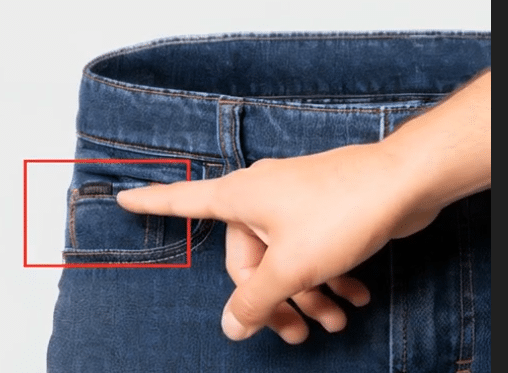
Long before smartphones, smartwatches, and even wristwatches existed, people needed another way to carry their timepieces.
The solution was the pocket watch.
During the 19th century, pocket watches were valuable possessions. To protect them from damage while working, many people carried them in a small dedicated pocket sewn into their clothing.
When early denim work pants were created, designers included a special pocket specifically for this purpose.
The tiny pocket became known as the “watch pocket.”
For workers, ranchers, miners, and cowboys, it provided a secure place to store a watch while performing physically demanding jobs.
Why Early Workers Needed It
Jeans weren’t originally designed as fashion items.
They were workwear.
Durable denim pants became popular among laborers because they could withstand tough conditions far better than many other fabrics available at the time.
A pocket watch hanging loosely from clothing could easily become scratched, damaged, or lost.
The watch pocket offered protection while keeping the watch accessible throughout the workday.
In many ways, it was the 1800s version of a protective case.
The History Behind Denim
The story of the tiny pocket is closely tied to the history of jeans themselves.
The fabric known as denim traces its roots to Europe, particularly the French city of Nîmes.
The term “denim” is widely believed to come from the phrase “de Nîmes,” meaning “from Nîmes.”
The durable material eventually gained popularity for work clothing because of its strength and reliability.
In 1873, Levi Strauss and tailor Jacob Davis patented reinforced denim pants that featured metal rivets for extra durability.
These early designs helped establish what would become one of the most recognizable garments in history.
And yes—the tiny watch pocket was already part of that design.
Was It Really the Fifth Pocket?
Many people refer to the tiny compartment as the “fifth pocket.”
Interestingly, that’s not entirely accurate.
The earliest versions of jeans originally featured:
- Two front pockets
- One back pocket
- One watch pocket
That means the watch pocket was actually the fourth pocket.
The second back pocket wasn’t added until years later.
By that point, the watch pocket had already become a familiar feature.
Why Has It Survived So Long?
Fashion trends have changed dramatically over the decades.
Jeans have evolved through countless styles, including:
- Bootcut
- Skinny jeans
- Relaxed fit
- Acid wash
- High-waisted designs
- Distressed denim
Yet the tiny pocket has remained.
Why?
Partly because it has become an iconic part of traditional jean construction.
Even though most people no longer carry pocket watches, manufacturers continue including the feature as a nod to denim’s history and heritage.
What People Use It For Today
Modern users have found creative new purposes for the pocket.
Common uses include:
- Coins
- Keys
- Earbuds
- Guitar picks
- USB drives
- Lighters
- Small keepsakes
Some people rarely use it at all, while others consider it one of the most convenient parts of their jeans.
Despite changing technology and lifestyles, the pocket continues to adapt.
Fun Facts About the Tiny Pocket
Here are a few interesting details many people don’t know:
It Has Several Nicknames
Depending on who you ask, it may be called:
- Watch pocket
- Coin pocket
- Ticket pocket
- Fob pocket
It Was Once Larger
Early pocket watches were bulkier than many people realize, so original watch pockets were often slightly deeper and wider.
Some Versions Included Flaps
Certain early designs featured small buttoned flaps for additional security.
It Has Outlived Countless Fashion Trends
The watch pocket has remained part of jeans for more than a century and a half—longer than many entire fashion movements.
A Small Feature With a Big Story
At first glance, the tiny pocket on your jeans may seem insignificant.
But its history connects modern fashion to a time when workers carried pocket watches instead of smartphones and when denim was built purely for function rather than style.
The next time you slip on a pair of jeans, take a closer look at that little pocket.
What appears to be a simple design detail is actually a small piece of fashion history that has survived for generations.


