Every so often, a photo of an unfamiliar object appears online and leaves thousands of people scratching their heads.
Recently, one such image sparked a lively discussion across social media.
Some people believed it was a piece of farm equipment.
Others guessed it was used in construction.
A few even suggested it might be part of an antique machine.
The real answer is much simpler—and surprisingly practical.
It’s a bumper jack, also known as a farm jack, ratchet jack, or the classic Hi-Lift-style jack.
What Is a Bumper Jack?
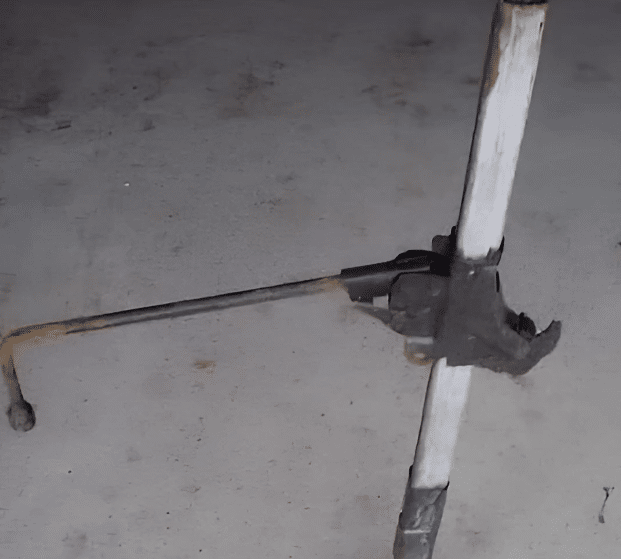
A bumper jack is a mechanical lifting device designed to raise vehicles off the ground.
Unlike modern hydraulic floor jacks, bumper jacks use a long steel beam and a ratcheting mechanism to create lifting force.
Older vehicles often featured strong metal bumpers specifically designed to support this type of jack.
Drivers could position the jack beneath the bumper and gradually lift one side of the vehicle to change a tire or perform roadside repairs.
For decades, bumper jacks were standard equipment in many cars and trucks.
Why Were They So Popular?
Before compact hydraulic jacks became common, bumper jacks offered several advantages:
- Simple mechanical design
- No hydraulic fluid required
- Durable construction
- Easy storage in vehicle trunks
- Effective for lifting vehicles in rough terrain
Their rugged design made them especially useful in rural areas where drivers often traveled on dirt roads, farms, and undeveloped terrain.
The Evolution Into the Farm Jack
Over time, the design evolved into what many people today recognize as a farm jack or Hi-Lift-style jack.
These heavy-duty tools became popular among:
- Farmers
- Ranchers
- Off-road enthusiasts
- Jeep owners
- Recovery and towing operators
Because they can lift vehicles higher than many standard jacks, they remain useful for off-road recovery situations where tires become stuck in mud, sand, or deep ruts.
Why They Look So Different From Modern Jacks
Most modern vehicles include compact scissor jacks or hydraulic bottle jacks.
Compared to those tools, vintage bumper jacks look surprisingly large and complicated.
Their long vertical beam and exposed ratcheting mechanism often cause people to mistake them for agricultural equipment or industrial tools.
In reality, their unusual appearance is simply the result of older engineering methods that prioritized strength and versatility.
Are They Still Used Today?
Yes—but mostly by enthusiasts and professionals who understand their operation.
Modern safety standards have largely replaced bumper jacks in everyday passenger vehicles because improper use can be dangerous.
The tall lifting height and narrow contact points require careful positioning and attention during operation.
However, farm jacks and Hi-Lift-style jacks remain valuable tools for:
- Off-road vehicles
- Agricultural equipment
- Recovery operations
- Certain maintenance tasks
When used correctly, they are incredibly versatile and durable.
A Piece of Automotive History
For many people, finding an old bumper jack in a garage, barn, or workshop sparks memories of a different era of driving.
Long before roadside assistance apps and modern emergency kits, drivers often relied on simple mechanical tools and their own problem-solving skills.
The bumper jack represents that era perfectly.
It may look mysterious today, but it once played an important role in helping drivers stay mobile when problems occurred far from home.
Final Thoughts
If you guessed that the strange object was a bumper jack, farm jack, or vintage Hi-Lift-style jack, you were right.
What appears to be a puzzling piece of machinery is actually a classic automotive tool that helped generations of drivers handle roadside repairs and challenging terrain.
And judging by the heated debates online, it’s still good at getting people talking decades later.


