There’s nothing quite as frustrating as spotting ants marching across your kitchen counter first thing in the morning.
At first, it’s just one.
Then suddenly there’s an entire trail appearing from nowhere.
For many homeowners, ant invasions become a constant battle involving expensive sprays, traps, and chemical cleaners that never seem to solve the real problem.
But according to many DIY enthusiasts, one simple homemade mixture may help stop ants naturally using ingredients already found in most kitchens.
Why Ants Keep Coming Back
Ants don’t randomly wander through homes.
They follow invisible scent trails left behind by scout ants that locate food and water sources.
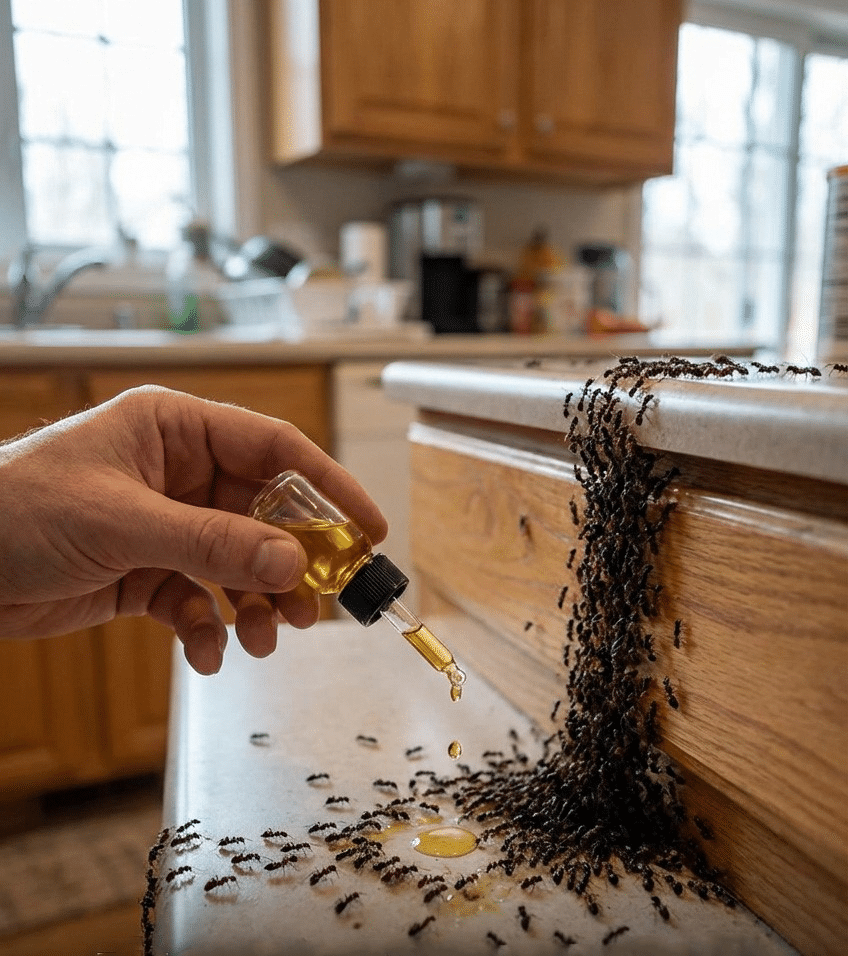
Once one ant discovers crumbs, sticky residue, or moisture inside your home, it leaves behind a chemical trail that guides the rest of the colony directly to the source.
That’s why killing a few ants rarely solves the problem.
Unless the trail itself is disrupted, more ants usually continue arriving.
The Homemade Ant Spray Recipe
Many people use a simple natural spray made from common household ingredients:
Ingredients
- ½ cup white vinegar
- ½ cup water
- 1 tablespoon dish soap
- 10–15 drops peppermint essential oil (optional)
Why These Ingredients Work
Each ingredient serves a specific purpose:
White Vinegar
Vinegar helps break down and erase the scent trails ants use for navigation.
Without those trails, ants struggle to relocate food sources or communicate pathways to the colony.
Dish Soap
Dish soap helps the spray stick to surfaces and can disrupt ants’ protective outer layer on contact.
Peppermint Essential Oil
Many insects strongly dislike strong mint scents.
Peppermint oil may help discourage ants from returning to treated areas.
It also leaves the home smelling fresh instead of chemical-heavy.
How to Make the Spray
The preparation is simple:
- Pour the vinegar and water into a spray bottle
- Add the dish soap
- Add peppermint oil if desired
- Shake gently before each use
That’s it.
The mixture is ready to use immediately.
How to Use It Effectively
1. Find the Entry Points
Look carefully around areas where ants appear most often:
- Window frames
- Door cracks
- Baseboards
- Kitchen counters
- Under sinks
- Pantry shelves
Ant trails usually lead directly back to their entry point.
2. Spray the Trails Thoroughly
Apply the mixture directly onto:
- Ant trails
- Entry points
- Corners where ants gather
- Nearby surfaces
The goal is not only to repel ants but also to erase the invisible scent paths they rely on.
3. Repeat for Several Days
Ant colonies can be persistent.
Many homeowners report needing to spray repeatedly during the first few days before activity fully stops.
Consistency is important.
4. Maintain Prevention Areas
After the ants disappear, occasional spraying near doors and windows may help discourage future invasions.
Why Many People Prefer Natural Solutions
One major reason people try homemade sprays is to avoid harsh chemical insecticides inside the home.
Natural mixtures are often preferred around:
- Children
- Pets
- Food preparation areas
- Kitchens and pantries
They’re also inexpensive compared to repeatedly purchasing commercial pest-control products.
Other Tips to Prevent Ants Indoors
In addition to using homemade sprays, experts recommend reducing things that attract ants in the first place.
Helpful prevention steps include:
- Wiping counters regularly
- Sealing food containers tightly
- Cleaning sticky spills immediately
- Taking trash out frequently
- Repairing water leaks
- Sealing cracks around doors and windows
Combining prevention with trail disruption is often the most effective long-term approach.
A Simple Solution That Helped Many Homeowners
While severe infestations may still require professional pest control, many people say this homemade spray significantly reduced everyday household ant problems.
Sometimes the simplest solutions really do work best.
And for homeowners tired of watching ants invade the kitchen every summer, this natural mixture may be worth trying before reaching for stronger chemicals.


