At first, it may seem harmless.
A few itchy bumps.
Small red dots.
Maybe a rash that looks like bug bites or dry skin.
Most people assume it’s an allergic reaction, irritation, or eczema.
But in some cases, those symptoms could actually be caused by something far more uncomfortable hiding beneath the skin.
Doctors say one overlooked condition continues to spread because many people fail to recognize the early warning signs.
That condition is scabies.
And despite common myths, it has nothing to do with being dirty.
What Is Scabies?
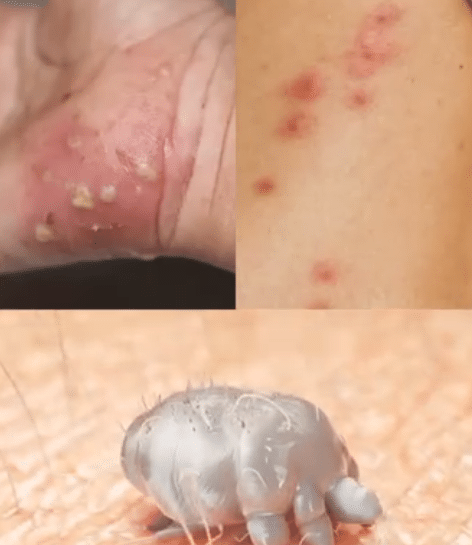
Scabies is a highly contagious skin condition caused by microscopic mites known as Sarcoptes scabiei.
These tiny parasites burrow into the upper layer of the skin where they live, feed, and lay eggs.
Because the mites are nearly invisible to the naked eye, most people never actually see them.
Instead, they notice the symptoms they leave behind.
And for many people, those symptoms can become unbearable.
The Early Symptoms Most People Miss
One reason scabies spreads so easily is because the symptoms often resemble common skin problems.
Early signs may include:
- Small red bumps
- Tiny blister-like spots
- Pimple-like rashes
- Thin wavy lines under the skin
- Severe itching, especially at night
The itching tends to become much worse while sleeping because the mites are more active during nighttime hours.
Many people describe the sensation as intense and impossible to ignore.
Where Scabies Usually Appears
Doctors say scabies commonly affects certain areas of the body, including:
- Between the fingers
- Around the wrists
- Elbows
- Armpits
- Waistline
- Inner thighs
- Around the private areas
In young children and infants, the rash may also appear on:
- The scalp
- Face
- Palms of the hands
- Soles of the feet
Because constant scratching damages the skin, secondary infections can sometimes develop if treatment is delayed.
Why Symptoms Sometimes Take Weeks to Appear
One of the most frustrating parts of scabies is how long symptoms can remain hidden.
According to medical experts, someone infected for the first time may not develop symptoms for four to six weeks.
During that time, they can unknowingly spread the mites to others.
People who have previously had scabies may develop symptoms much faster — sometimes within just a few days.
This delayed reaction is one reason outbreaks can quickly spread through households, schools, or crowded living spaces.
Why Scabies Is Frequently Misdiagnosed
Scabies is often mistaken for:
- Eczema
- Allergic reactions
- Hives
- Contact dermatitis
- Bug bites
Even experienced doctors occasionally miss it during the first examination.
That’s because the itching and rash are actually caused by an allergic reaction to:
- The mites themselves
- Their eggs
- Their waste products
Without proper treatment, the condition usually does not improve on its own.
And unfortunately, scratching only makes the situation worse.
How Scabies Spreads So Easily
Many people incorrectly believe scabies only affects people with poor hygiene.
That is completely false.
Scabies spreads primarily through prolonged skin-to-skin contact.
Anyone can become infected.
The mites commonly spread through:
- Shared bedding
- Clothing
- Towels
- Close personal contact
- Crowded living conditions
Outbreaks are especially common in places such as:
- Nursing homes
- Dormitories
- Daycare centers
- Correctional facilities
- Group living environments
Although the mites cannot jump or fly, they crawl surprisingly well and can survive on surfaces for several days under certain conditions.
The Severe Form Known as Crusted Scabies
Doctors also warn about a much more serious version called crusted scabies.
This severe condition causes thick crusts to form on the skin and may contain thousands — or even millions — of mites.
Crusted scabies is extremely contagious and usually occurs in people with weakened immune systems.
Because of the massive number of mites involved, treatment often requires specialized medical care.
How Doctors Diagnose Scabies
If symptoms become severe or begin affecting sleep, doctors recommend seeking medical attention quickly.
Diagnosis may involve:
- Skin examinations
- Microscopic skin scraping tests
- Dermoscopy (special skin imaging)
- Evaluation of rash patterns
During skin scraping tests, doctors examine tiny skin samples under a microscope to look for:
- Mites
- Eggs
- Waste material
A proper diagnosis is important because many over-the-counter creams or allergy treatments will not eliminate scabies.
Treatment Usually Works Quickly
The good news is that scabies can usually be treated successfully.
Doctors often prescribe medicated creams or oral medications designed to kill both the mites and their eggs.
However, treatment typically involves more than just applying medication.
To prevent reinfection, experts recommend:
- Washing all clothing and bedding in hot water
- Vacuuming furniture and mattresses
- Treating close household contacts
- Avoiding skin contact until treatment is complete
Even after treatment, itching may continue for several weeks while the skin heals.
When You Should Seek Immediate Medical Attention
Doctors say certain symptoms should never be ignored.
Seek medical care immediately if you experience:
- Fever
- Severe pain
- Signs of infection
- Swollen or pus-filled sores
- Rapidly spreading rash
- Worsening skin irritation
People with weakened immune systems should be especially cautious because complications can become more serious.
Why Awareness Matters
Scabies may not sound dangerous at first.
But untreated cases can spread rapidly and cause significant discomfort, stress, sleep problems, and skin infections.
The condition also carries unnecessary stigma because many people mistakenly associate it with poor cleanliness.
In reality, scabies can affect anyone.
Recognizing the symptoms early is one of the best ways to stop outbreaks before they spread further.
Don’t Ignore Persistent Itching
If you notice unusual itching that becomes worse at night, especially combined with tiny bumps or lines on the skin, it’s important not to panic.
But it’s equally important not to ignore it.
A simple medical evaluation can quickly determine whether the problem is scabies or another skin condition.
And early treatment can prevent weeks — or even months — of discomfort.
Sometimes the smallest skin symptoms are your body’s way of warning you that something more serious is happening beneath the surface.


