A disturbing viral story claiming that a “half pig, half human baby” was born and survived has once again sparked debate about how easily fake news spreads online.
The bizarre images shocked social media users around the world, with many people believing the creature was real.
At first glance, the story seemed terrifyingly believable.
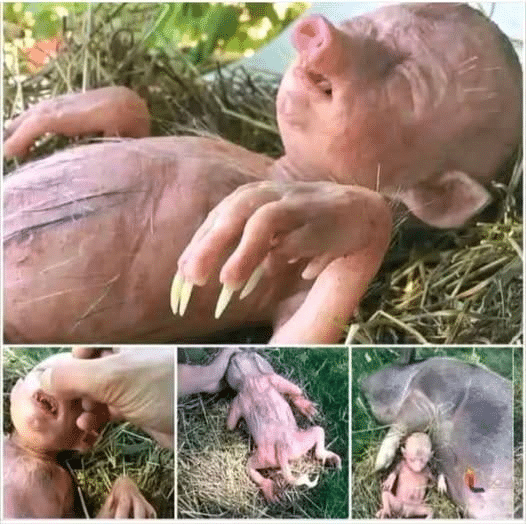
Photos circulating online showed a strange creature with human-like facial features, unusual skin, long nails, and characteristics resembling both a baby and a pig. Captions claimed the creature had been discovered in Kenya and had somehow survived after birth.
The internet reacted immediately.
Some users expressed horror.
Others claimed it was proof of genetic experiments or mutations.
But the truth turned out to be far less mysterious — and far more important.
The Creature Was Not Real
According to multiple reports, the viral “pig-human hybrid baby” was actually a highly detailed art creation made by an Italian artist.
It was never a living creature.
The realistic model was designed to shock viewers and spark curiosity, which explains why so many people were fooled when the images began spreading online without context.
Once the original source was investigated, it became clear the story had been completely fabricated.
No verified scientific reports, hospitals, or authorities ever confirmed the existence of such a creature.
Why So Many People Believed It
Experts say viral hoaxes like this spread quickly because they trigger strong emotional reactions.
Fear, curiosity, shock, and disbelief make people far more likely to share content before checking whether it is true.
Social media algorithms also tend to amplify sensational stories, especially bizarre claims involving strange creatures, mutations, or unexplained discoveries.
And because the images looked realistic, many viewers assumed they had to be authentic.
The Problem With Viral Fake News
Stories like this may seem harmless at first, but misinformation can spread rapidly when people repost emotional content without verification.
In recent years, countless fake stories involving “mutant animals,” “hybrid creatures,” and mysterious discoveries have gone viral online before eventually being debunked.
Some are digitally altered.
Others involve sculptures, artwork, movie props, or AI-generated images presented as real events.
That’s why experts recommend checking trusted news sources before believing or sharing shocking claims online.
A Reminder to Question What You See
The viral “half pig, half human baby” story ultimately became another example of how convincing internet hoaxes can appear.
And while many people admitted feeling relieved after learning the truth, the story also highlighted just how quickly misinformation spreads when curiosity overrides skepticism.
In today’s digital world, not everything shocking is real — no matter how convincing it looks.
Sometimes, the truth behind the image is far stranger than the headline itself.


