A massive magnitude 8.8 earthquake struck off the eastern coast of Russia’s Kamchatka Peninsula, triggering tsunami warnings and emergency alerts across large parts of the Pacific region.
According to seismic monitoring agencies, the earthquake occurred approximately 119 kilometers east-southeast of Petropavlovsk-Kamchatsky at a relatively shallow depth of around 19 kilometers. Experts say the shallow depth significantly increased the risk of tsunami activity spreading across the Pacific Ocean.
The powerful quake is being described as one of the strongest seismic events to strike the region in decades.
Tsunami Waves Reach Hawaii
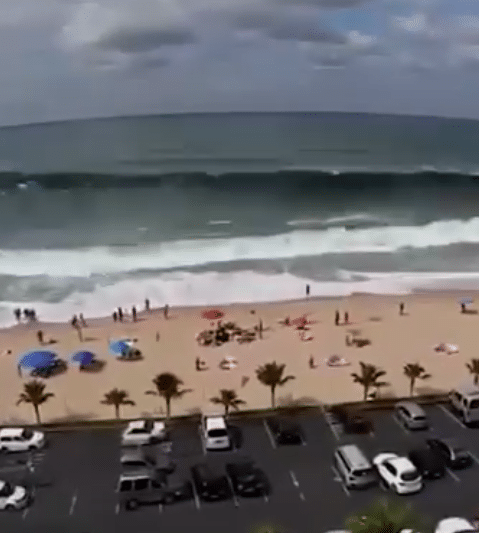
Following the earthquake, tsunami waves began reaching parts of Hawaii as emergency officials urged residents to evacuate vulnerable coastal areas.
Monitoring stations recorded elevated wave activity across several islands:
- Kauai recorded waves roughly 3 feet above normal sea level.
- Oahu’s North Shore measured wave amplitudes near 4 feet.
- Maui also reported wave activity approaching 4 feet in some coastal areas.
Although initial wave heights were smaller than worst-case projections, authorities warned that dangerous conditions could continue for many hours because tsunamis often arrive in multiple surges rather than a single wave.
Minor flooding and coastal water surges were reported in some areas, though officials have not confirmed major structural damage at this time.
Emergency shelters were opened while evacuation orders were issued for low-lying coastal zones throughout the islands.
Pacific Nations Placed on Alert
The tsunami threat quickly expanded beyond Hawaii, leading to alerts and evacuation warnings across multiple countries and territories throughout the Pacific Rim.
Japan Issues Evacuations
In Japan, officials detected tsunami waves reaching approximately 1.3 meters along some coastal areas. Authorities ordered precautionary evacuations involving millions of residents, particularly in regions still sensitive to memories of the 2011 Fukushima disaster.
Despite widespread warnings, officials reported no major injuries or severe infrastructure damage during the initial wave activity.
Russia Reports Flooding and Damage
In parts of Russia’s Far East, including Severo-Kurilsk, waves reportedly reached heights between 3 and 5 meters.
Flooding damaged infrastructure, disrupted port operations, and caused power outages in some communities. Officials also reported several injuries, though no fatalities had been officially confirmed in early updates.
U.S. West Coast Monitors Threat
Tsunami advisories and watches were also issued for portions of the U.S. West Coast, including California, Oregon, Washington, and parts of British Columbia in Canada.
Authorities closed beaches and warned boat operators to leave harbors as a safety precaution. Forecast models suggested some coastal areas could experience elevated wave conditions and dangerous currents.
Officials Warn Threat Is Not Over
Emergency management officials continue monitoring wave activity closely across the Pacific.
Experts stressed that tsunamis are not isolated events and can continue producing dangerous surges for several hours or even days after the original earthquake. Strong aftershocks also remain possible.
Residents in affected areas have been urged to:
- Stay away from beaches and shorelines
- Follow evacuation instructions immediately
- Avoid harbors, rivers, and coastal roads
- Wait for official all-clear notices before returning home
Authorities emphasized that even relatively modest tsunami waves can create powerful currents capable of causing severe injuries and damage.
One of the Strongest Pacific Earthquakes in Recent History
Seismologists say the earthquake is the strongest to impact the Pacific region since the devastating 2011 Japan earthquake and tsunami.
Global monitoring agencies continue tracking wave patterns and aftershock activity as emergency teams remain on standby throughout affected regions.
Additional updates are expected as officials gather more information about damage, flooding, and potential injuries linked to the event.


