What started as a completely normal morning quickly became something out of a horror story. One woman woke up and noticed tiny white “grains” scattered across her bed sheets. At first glance, she assumed her husband had accidentally spilled rice or crumbs during the night.
But moments later, she realized something was terribly wrong.
As she leaned closer for a better look, one of the tiny white specks moved.
That single moment changed everything.
After searching online for answers, she discovered the truth: the mysterious white particles were actually bedbug eggs — one of the earliest warning signs of a potential home infestation.
What Bedbug Eggs Really Look Like
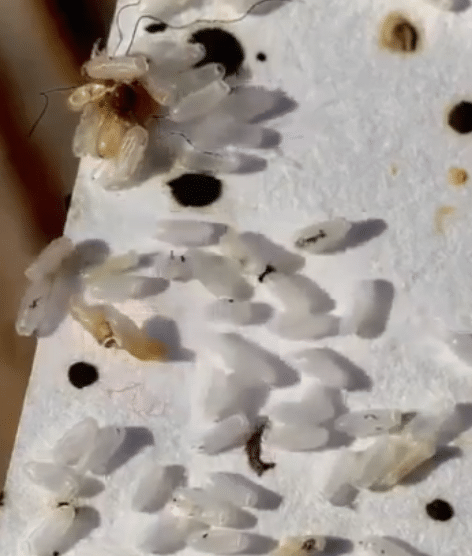
Many people never recognize bedbug eggs until it’s too late. Because of their appearance, they can easily be mistaken for food crumbs, grains of rice, or tiny seeds.
Bedbug eggs are usually:
- About 1 millimeter in size
- White or translucent in color
- Oval-shaped and slightly shiny
- Sticky enough to cling to surfaces
They are commonly hidden in places such as:
- Mattress seams
- Pillow edges
- Furniture joints
- Cracks in wooden frames
- Behind baseboards or wallpaper
Since they are incredibly small, most homeowners overlook them during routine cleaning.
Why Bedbugs Spread So Fast
One of the biggest dangers of bedbugs is how quickly they multiply. Female bedbugs can lay several eggs per day, and those eggs typically hatch within 6 to 10 days.
Once hatched, young bedbugs immediately begin searching for blood meals.
Although bedbugs are not known for spreading major diseases, they can still cause serious problems, including:
- Itchy red bite marks
- Skin irritation and allergic reactions
- Sleep disruption and insomnia
- Stress and anxiety related to infestation
If ignored, a few eggs can rapidly become a large infestation in just a matter of weeks.
How Bedbugs Enter Your Home
Many people believe poor hygiene causes bedbugs, but that’s a myth. Bedbugs can appear in even the cleanest homes because they travel by hitchhiking on everyday items.
Common ways bedbugs spread include:
Travel and Hotels
Bedbugs often hide inside luggage, backpacks, and clothing after trips. Hotels, public transportation, and airports are common transfer points.
Second-Hand Furniture
Used couches, mattresses, and chairs may already contain hidden eggs or live bugs.
Apartment Buildings
In apartments or condos, bedbugs can move between units through wall cracks, vents, and electrical outlets.
Shared Laundry Areas
Infested fabrics can spread bugs through communal washing or storage spaces.
Warning Signs You Should Never Ignore
Besides finding eggs, there are several other clues that may point to a bedbug problem:
- Small blood stains on sheets
- Tiny dark spots from bug droppings
- Shed insect skins near mattresses
- Musty odors around sleeping areas
- Unexplained bites appearing overnight
Catching these signs early can make a major difference in stopping an infestation before it spreads throughout the home.
How to Get Rid of Bedbugs Effectively
Experts say early action is critical. Once bedbugs establish themselves, they become extremely difficult to eliminate without aggressive treatment.
Here are some of the most effective methods:
Deep Cleaning
Vacuum mattresses, furniture seams, bed frames, and floor edges carefully. Dispose of vacuum contents immediately outside the home.
High-Temperature Washing
Wash all bedding, clothing, and soft fabrics in water at 60°C (140°F) or higher to kill both eggs and live bugs.
Steam Treatment
Steam cleaners are highly effective because heat penetrates deep into fabric and furniture where bedbugs hide.
Reduce Clutter
Bedbugs thrive in crowded spaces with many hiding spots. Keeping rooms organized can help reduce infestation risks.
Professional Pest Control
In severe cases, licensed exterminators are often necessary for complete removal. Professional heat treatments and insecticide programs can target hidden colonies more effectively than DIY methods.
Early Detection Can Save Thousands
The woman who discovered the eggs says she now feels lucky she noticed them before the infestation became uncontrollable. Had she ignored the strange white grains for even another week, the situation could have escalated dramatically.
Bedbugs reproduce quickly, hide extremely well, and are notoriously difficult to remove once established.
That’s why experts recommend taking immediate action anytime you notice suspicious signs in your bedding or furniture.
Sometimes, the smallest warning signs can prevent the biggest household nightmares.


