Imagine walking down the street and suddenly spotting a massive cluster of bees hanging from a tree branch, wrapped around a fence, or gathered on the side of a car. Your heart races. Your first instinct might be to run, call emergency services, or even try to get rid of them immediately.
But here’s the surprising truth: in many cases, those bees are completely harmless.
What you’re witnessing is often a natural migration process known as a “resting swarm.” These incredible insects are simply taking a short break during their journey to a new home. And believe it or not, they usually stay for less than 24 hours before moving on peacefully.
Understanding what’s really happening can turn fear into respect—and maybe even admiration.
What Is a Traveling Bee Swarm?
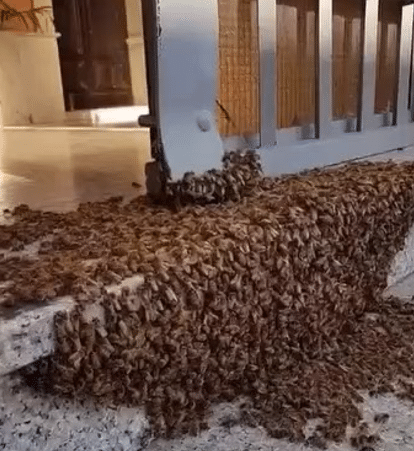
A traveling swarm happens when a colony of bees leaves its old hive to search for a new place to live. Think of it like a family road trip with a quick stop along the way.
During this process, thousands of bees gather tightly together around their queen while scout bees search nearby for a permanent location. Because the swarm is focused on protecting the queen and conserving energy, the bees are typically calm and non-aggressive.
That’s why experts often say the best thing you can do is simple:
Leave them alone.
In most situations, they do not want to bother humans. They’re exhausted travelers looking for a temporary resting spot before continuing their journey.
Why You Should Never Harm Migrating Bees
Bees are far more important than many people realize. These tiny pollinators support ecosystems, agriculture, gardens, and food production across the globe.
Without bees, countless plants would struggle to reproduce. Fruits, vegetables, nuts, and flowers all depend heavily on pollination. In many ways, bees are like silent workers keeping nature’s engine running behind the scenes.
Hurting a swarm out of fear can unintentionally damage local biodiversity and food systems.
And here’s the irony: the creatures many people fear are actually helping humanity survive every single day.
How Bees Help Feed the World
Take a moment and look at the foods you enjoy regularly:
- Apples
- Blueberries
- Almonds
- Cucumbers
- Watermelons
- Coffee
What do many of these have in common?
They rely on pollination.
Bees transfer pollen from one flower to another, allowing plants to grow fruits and seeds. Without that process, grocery store shelves would look very different.
Some scientists even describe bees as “the heartbeat of agriculture.” That may sound dramatic, but it’s surprisingly accurate.
One small swarm resting quietly on a tree branch may represent thousands of pollinators that will soon help farms, gardens, and forests thrive.
What You Should Do If You See a Swarm
Spotting a bee swarm can still feel intimidating, especially if you’ve never seen one before. The good news is that handling the situation is usually easy.
Stay Calm and Keep Your Distance
There’s no need to panic. Avoid sudden movements, loud noises, or attempts to disturb the swarm. Bees are much calmer when left alone.
Do Not Spray Chemicals
Using pesticides or chemicals can harm not only the swarm but also nearby plants, animals, and the environment.
Avoid Touching the Bees
Even though migrating swarms are generally peaceful, they should still be respected. Think of them like tired travelers at an airport—they don’t want trouble, but they also don’t want to be bothered.
Offer a Small Energy Boost
If you want to help, many beekeepers recommend placing a shallow tray or plate with sugar water nearby.
The bees may use it as a quick energy source before continuing their journey. It’s a small act of kindness that can make a big difference for exhausted pollinators.
Why Bees Are Struggling Around the World
Bee populations have faced increasing challenges in recent years. Climate change, habitat loss, pesticides, pollution, and reduced flower diversity all affect their survival.
In some regions, bee numbers have declined significantly, raising concerns among scientists and farmers alike.
That’s why public awareness matters so much.
The more people understand bee behavior, the more likely these important pollinators will be protected rather than feared.
Sometimes education changes everything. A swarm that once caused panic can become a moment of curiosity and appreciation instead.
The Incredible Intelligence of Bees
Bees aren’t just hardworking—they’re astonishingly intelligent.
They communicate through movement patterns often called the “waggle dance,” which helps other bees locate food sources miles away. They work together with remarkable organization and efficiency, almost like a tiny flying city operating in perfect sync.
Each bee has a role. Each movement serves a purpose.
And when you see a swarm resting together, you’re witnessing one of nature’s most fascinating survival strategies in action.
A Tiny Creature With a Massive Impact
It’s easy to overlook small things in life. Bees are tiny, after all. But their impact is enormous.
These insects support ecosystems, protect biodiversity, and help produce much of the food humans rely on daily. In many ways, they are one of nature’s quiet heroes.
So the next time you see a large cluster of bees resting somewhere unexpected, try to pause before reacting with fear.
They are not invading.
They are traveling.
They are resting.
And soon, they’ll continue their journey—helping the world bloom along the way.
Conclusion
Traveling bee swarms may look alarming at first glance, but they are usually peaceful groups of pollinators temporarily resting during migration. Instead of panicking or trying to remove them, people should understand their importance and allow them the space they need. Bees play a critical role in agriculture, ecosystems, and food production worldwide. Protecting them means protecting the delicate balance of nature itself. Sometimes, the smallest creatures carry the greatest responsibility—and bees are a perfect example of that truth.


