What began as a routine wildlife survey inside a remote Australian sanctuary quickly turned into a breakthrough moment for conservationists.
Researchers at Mt. Gibson Wildlife Sanctuary were conducting normal monitoring operations when they noticed something extraordinary: several female western quolls carrying tiny spotted babies in their pouches.
For conservation experts, the discovery was far more important than it first appeared.
It marked the first successful birth of western quolls ever recorded at the sanctuary — a major victory for one of Australia’s most ambitious wildlife recovery programs.
The Rare Creature Many People Have Never Heard Of
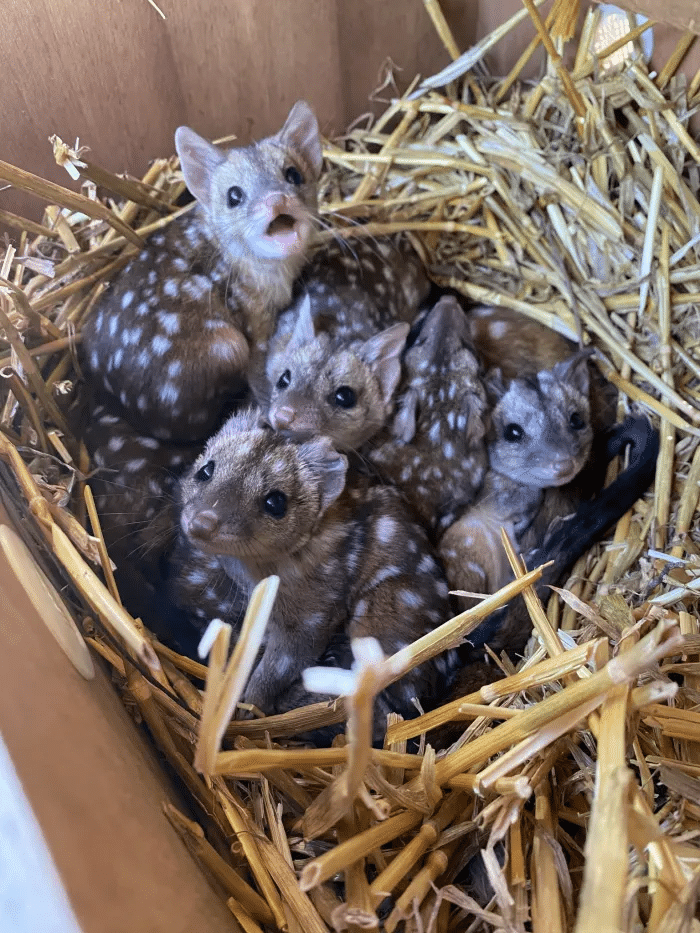
Western quolls, also known as chuditch, are carnivorous marsupials native to Australia. Roughly the size of a domestic cat, these animals are covered in distinctive white spots and play an important role in maintaining balance within local ecosystems.
They help control populations of:
- Small reptiles
- Insects and invertebrates
- Rodents
- Small birds
Despite their ecological importance, western quoll populations have declined dramatically over the past century.
Why Western Quolls Nearly Disappeared
According to wildlife conservation experts, western quolls once roamed across large parts of mainland Australia. However, habitat destruction, invasive predators, and human expansion caused their numbers to collapse.
Today, the species survives mainly in isolated areas of southwestern Australia.
Conservation organizations have spent years working to restore quoll populations through carefully managed breeding and reintroduction programs.
That’s why the recent discovery at Mt. Gibson Wildlife Sanctuary generated so much excitement among ecologists.
A Discovery That Signals Hope
Researchers first spotted the newborn quolls during a regular field survey. Tiny pouch young were seen wriggling safely inside their mothers’ pouches — a powerful sign that the animals were successfully adapting to their new environment.
For conservation teams, successful breeding in the wild is one of the strongest indicators that a species recovery effort is working.
“Seeing pouch young is a huge milestone,” conservation staff explained. It confirms that the relocated quolls are not only surviving but beginning to establish a stable population.
Why Reintroduction Programs Matter
Wildlife experts across Australia have been relocating western quolls to protected sanctuaries in an effort to rebuild healthy populations and restore ecological balance.
These programs involve:
- Habitat protection
- Predator management
- Veterinary monitoring
- Population tracking
- Long-term ecological research
The goal is not simply to prevent extinction, but to help native species thrive naturally again.
Climate Change and Habitat Loss Continue Threatening Wildlife
The western quoll’s struggle reflects a much larger global issue.
Around the world, habitat destruction, climate change, and urban development continue threatening countless species. Conservationists warn that many native animals could disappear forever without intervention.
Stories like this provide rare optimism in a time when environmental headlines are often filled with bad news.
The successful births at Mt. Gibson demonstrate that carefully planned conservation efforts can make a real difference.
Community Support Plays a Major Role
Experts also emphasize that wildlife recovery depends heavily on public awareness and support.
People can help conservation efforts through:
- Donations to wildlife organizations
- Volunteering programs
- Educational outreach
- Supporting habitat protection initiatives
- Sharing awareness online
Even small actions can contribute to protecting vulnerable species for future generations.
A Bright Future for the Species
The baby western quolls now represent far more than a cute wildlife moment.
For scientists and conservation teams, they symbolize hope that one of Australia’s unique native species may finally be recovering after decades of decline.
As monitoring continues, researchers remain optimistic that Mt. Gibson Wildlife Sanctuary could become a key stronghold for future western quoll populations.
In a world where many species are struggling to survive, the sight of these tiny spotted marsupials serves as a reminder that nature can recover when given the chance.