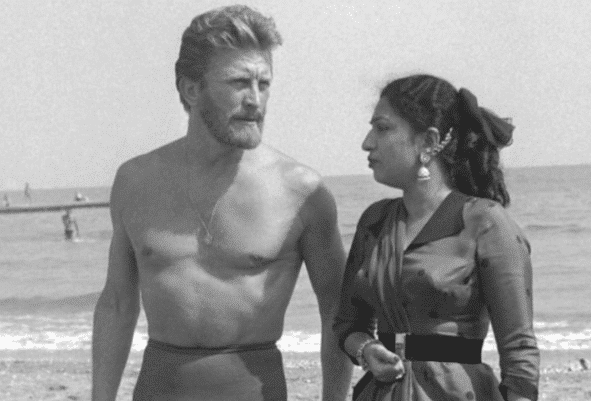
Some movie stars bring back more than a favorite scene. They remind us of Saturday matinees, downtown theaters with glowing marquees, and evenings when the whole family settled in to watch a film together.
Kirk Douglas belonged to that kind of Hollywood.
With his unmistakable chin, commanding voice, and restless energy, he could fill a screen before saying a word. Yet the reason his performances endure goes beyond his appearance. He gave audiences characters worth discussing on the ride home—men whose ambition, pride, or courage rarely came without a cost.
Looking back at his career offers more than a glimpse of a familiar face. It invites us to remember what made going to the movies feel like an occasion.
A Beginning Far From the Hollywood Spotlight
Douglas was born on December 9, 1916, in Amsterdam, New York, to Jewish immigrant parents. His childhood included financial hardship, and he worked while pursuing his education.
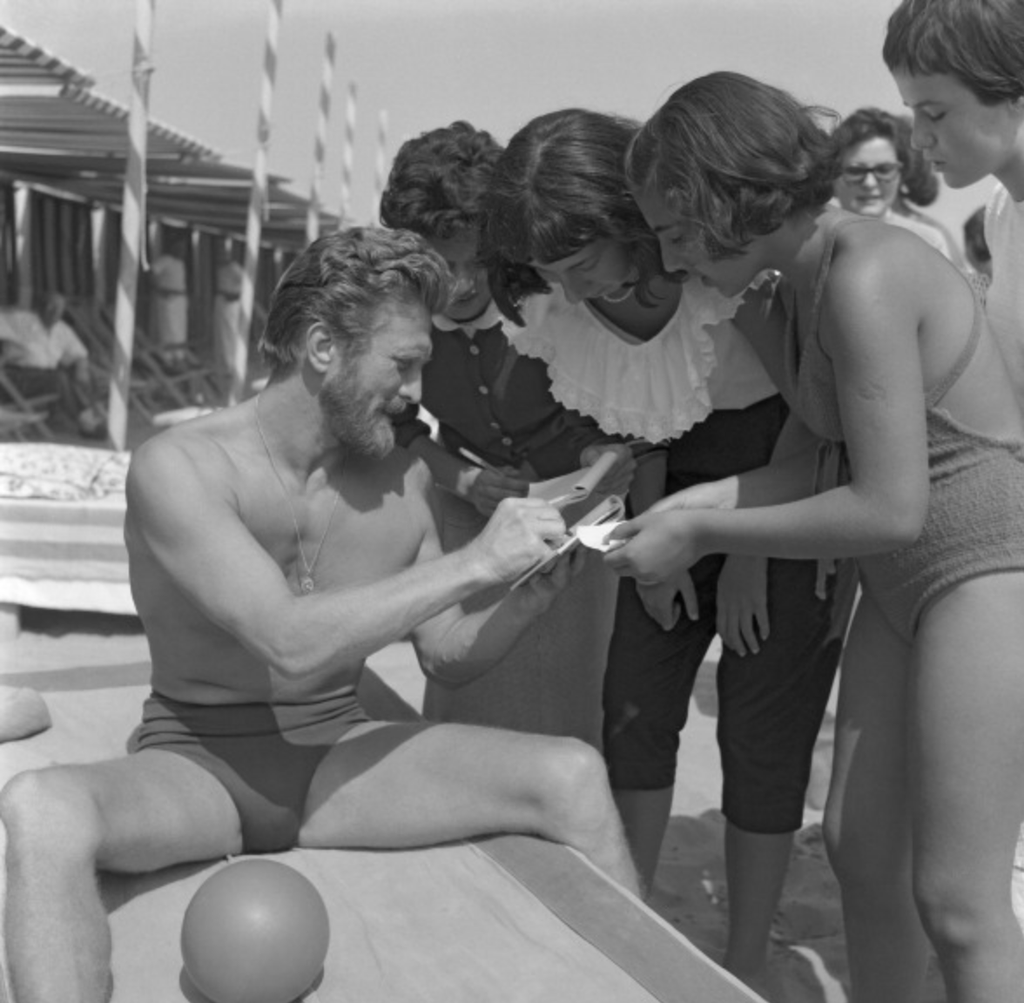
An interest in school dramatics eventually led him toward professional acting. Before movie audiences knew his name, he studied, performed onstage, and served in the U.S. Navy during World War II. His film debut came opposite Barbara Stanwyck in The Strange Love of Martha Ivers in 1946
That background gives his career a distinctly American resonance: a young man from modest circumstances finding a place in an industry that could seem impossibly far away.
For viewers who remember parents or grandparents working through difficult years, that journey may feel familiar even without the Hollywood ending. Opportunity often arrived after years of preparation rather than one sudden stroke of luck.
The Star Who Made Ambition Look Complicated
In Champion (1949), Douglas played Midge Kelly, a boxer whose determination to succeed comes at the expense of people around him. The performance brought his first Academy Award nomination and helped establish his reputation as a compelling leading man
What makes the role interesting to revisit is the distance between achievement and happiness. A character can keep moving upward while becoming less admirable with every step.
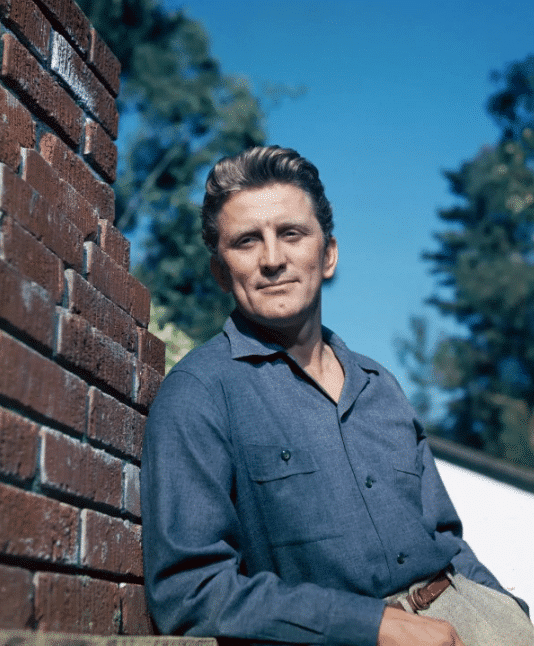
That tension gives the film something to offer viewers at different ages. A younger audience may focus on the drive to get ahead. Someone watching decades later may notice the relationships damaged along the way.
Douglas’s screen presence suited stories like this. He could make determination exciting while leaving room for the audience to question where it was leading.
Why His Characters Stayed With Us
Douglas was especially effective when confidence and vulnerability occupied the same scene.
In The Bad and the Beautiful, he portrayed a powerful movie producer. In Lust for Life, he took on Vincent van Gogh. Both performances earned Academy Award nominations, bringing his total Best Actor nominations to three.
These films offer very different worlds, but together they suggest why his work remains rewarding. Watching Douglas often means watching someone who wants something intensely—and discovering what that desire reveals about him.
For a classic movie evening, the contrast makes an appealing double feature. One film looks toward the machinery of Hollywood; the other turns toward artistic struggle. Neither requires the viewer to accept a simple, spotless hero.
There Was Room for Adventure, Too
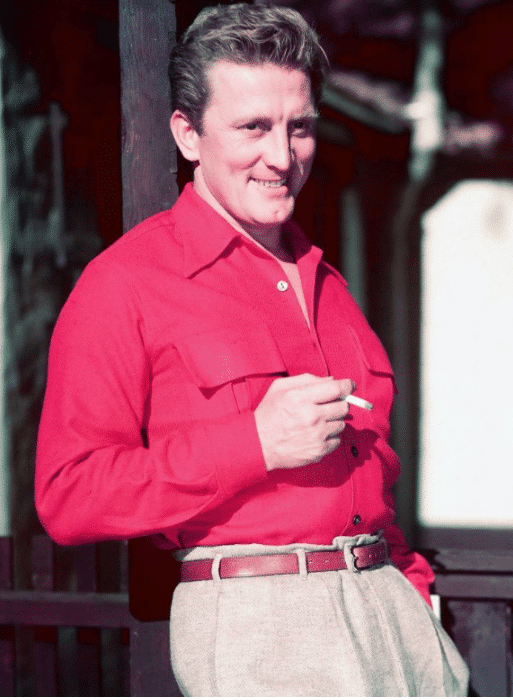
Remembering only his intense dramatic roles leaves out some of the pleasure of watching Kirk Douglas.
He also appeared in 20,000 Leagues Under the Sea (1954), bringing a more playful, adventurous presence to the screen. His career stretched across genres, including Westerns, historical spectacles, and smaller character dramas.
For families who discovered older movies through television, that variety mattered. A familiar actor could be the reason to try a film whose title meant little at first.
It also makes his work a useful bridge between generations today. A grandparent may remember the original theatrical experience, while a younger family member encounters the performance for the first time. The conversation afterward becomes part of the evening.
VIDEO: A retrospective of Kirk Douglas’s classic performances and contributions to American cinema.
The Decision Behind “Spartacus”
Few titles are more closely associated with Douglas than Spartacus (1960). He served as both star and executive producer, giving him influence beyond his performance.
One consequential decision involved screenwriter Dalton Trumbo, who had been working under the restrictions of Hollywood’s blacklist. Douglas insisted that Trumbo receive an onscreen writing credit.
The historical context deserves care. Spartacus was one of two films released in 1960, alongside Exodus, that openly credited Trumbo and helped bring the blacklist era to an end
For modern viewers, this adds another reason to revisit the film. Its place in movie history includes decisions made behind the camera, as well as the spectacle audiences saw in theaters.
Watching Familiar Films With Older Eyes
Returning to a movie after many years can be a surprisingly personal experience.
The performance remains the same, but our attention shifts. A scene about loyalty may carry more weight after a long marriage. A story about ambition may feel different after retirement. A character’s stubbornness may seem less impressive—or more understandable—once we have lived through our own difficult choices.
That is part of the lasting appeal of Douglas’s films. They leave room for changing interpretations.
There is no need to remember every plot detail to enjoy them again. Sometimes the pleasure lies in recognizing a voice, noticing a supporting actor, or remembering the person who first introduced us to the movie.
Recognition After Decades of Work

The American Film Institute honored Douglas with its Life Achievement Award in 1991. In 1996, he received an honorary Academy Award recognizing his contributions to the motion picture community.
Those honors offer milestones, but audiences often measure a career more personally.
They remember the Western watched with a father, the grand historical film seen on a date, or the late-night broadcast that became an unexpected favorite.
A long filmography provides many opportunities for those connections. The enduring achievement is that people still have reasons to return.
A Familiar Face Worth Revisiting
Douglas’s later life also included writing and charitable work. His autobiography, The Ragman’s Son, appeared in 1988, and he and his wife, Anne, supported civic and charitable causes through the Douglas Foundation.
He died on February 5, 2020, at age 103, leaving a career that connected generations of moviegoers
Perhaps the nicest way to remember him is to choose a film and make an evening of it.
Let the opening credits play. Put the phone aside. Watch the expressions between the lines.
Before long, that familiar face may bring back a whole roomful of memories—and offer something new to notice, too.
Chọn mô hìnhGPT-6.1 SolNhẹ nhàngKhông suy luậnNhanhNhẹ nhàngVừaCaoChuyên sâuMaxUltraLiên tục