In the age of social media, viral stories can spread faster than facts. One of the most talked-about examples in recent years involved a young woman who was rumored to have undergone dozens of cosmetic procedures to resemble a Hollywood icon.
The claim?
She had more than 50 surgeries to look like Angelina Jolie.
The reality, however, tells a very different story.
How the Viral Sensation Began
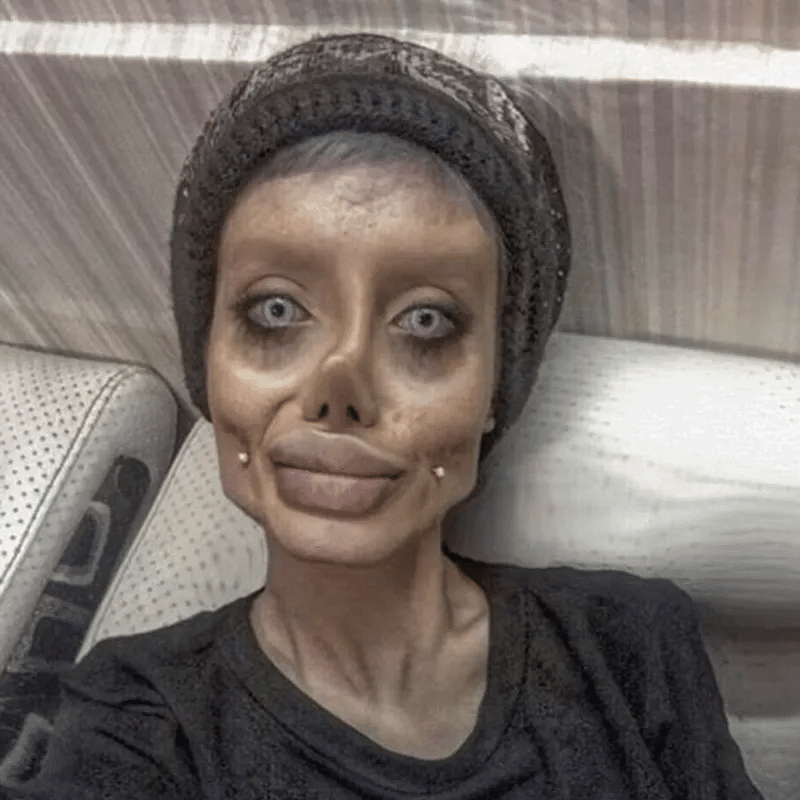
The woman at the center of the controversy is Sahar Tabar, born Fatemeh Khishvand, who gained global attention through a series of striking and highly unusual selfies posted online.
Her images quickly went viral.
With exaggerated facial features, dramatic makeup, and an almost surreal appearance, many viewers believed they were looking at the result of extreme cosmetic surgery. Social media users were shocked, confused, and curious—all at once.
The narrative spread rapidly: a young woman had drastically altered her appearance in pursuit of celebrity beauty.
But as it turns out, that narrative wasn’t entirely accurate.
The Truth Behind the Transformation
According to verified reports , Sahar’s look was not the result of dozens of surgical procedures.
Instead, it was largely created through:
- Advanced makeup techniques
- Digital photo editing
- Creative visual styling
- Only minimal cosmetic procedures
What many believed to be real was, in fact, a carefully crafted online persona.
Her images were designed to shock, provoke, and capture attention—and they succeeded.
Art, Identity, and Online Fame
For Sahar, her content wasn’t simply about appearance.
It was a form of expression.
She used her platform to challenge traditional beauty standards and explore how far visual transformation could go in the digital age. By pushing boundaries, she sparked conversations about what people consider “normal” or “beautiful.”
However, viral fame comes with risks.
Her growing popularity eventually drew the attention of authorities in her home country. In 2019, she was arrested in connection with her online activity, leading to widespread international concern.
She later spent around 14 months in custody before being released.
The Double-Edged Sword of Social Media
Sahar’s story highlights a powerful reality: the internet can both elevate and endanger.
On one hand, it provides opportunities for creativity, branding, and even financial growth—similar to how influencers today monetize content across industries like fashion, beauty, and even digital marketing.
On the other hand, it can distort reality.
False narratives, like the claim of “50 surgeries,” can spread quickly and shape public perception before the truth has a chance to catch up.
This phenomenon mirrors trends in other sectors, including cryptocurrency and online investing, where hype can often overshadow facts.
Beauty Standards in the Digital Age
At its core, this story taps into a deeper issue—society’s relationship with beauty.
From traditional media to modern social platforms, standards have constantly evolved. Filters, editing tools, and curated content have made it harder than ever to distinguish reality from illusion.
Sahar’s exaggerated look, while extreme, reflects something familiar:
The pressure to meet unrealistic expectations.
Her approach flipped that idea on its head—by making the illusion so obvious that people couldn’t ignore it.
Lessons From the Story
There are several key takeaways from this viral phenomenon:
- Not everything online is what it seems
- Viral fame can come with real-world consequences
- Creativity can challenge—but also confuse—public perception
Much like decision-making in finance or real estate, where understanding the full picture is essential, interpreting online content requires critical thinking.
Conclusion
What started as shocking images turned into a global conversation about beauty, identity, and the power of social media.
Sahar Tabar didn’t undergo 50 surgeries—but she did succeed in something just as impactful:
She made millions of people stop, question, and rethink what they were seeing.
And in today’s digital world, that might be the most powerful transformation of all


